
📍 6 stops · ⏱ ~9 h

A slow-paced, indoor-leaning day through Recoleta’s elegant streets — we start with coffee in a belle-époque café, spend the morning inside a museum that feels like a cabinet of curiosities, then drift through galleries and a bookshop before ending the evening in a hidden bar that regulars treat as their living room.
Want your own personalized plan for free?
Under the giant ombú tree on Recoleta’s plaza, La Biela has been a meeting point since the 1950s — racing drivers, writers, and locals who treat the corner terrace as their morning office. The interior is dark wood, brass, and old photographs of Fangio; outside, the tree canopy keeps the rain off the first row of tables.
Locals head straight for the tables under the ombú — they stay dry even in a downpour and catch the morning light filtering through the leaves. The indoor salon is quieter and warmer in winter, with a fireplace that gets lit on cold days.
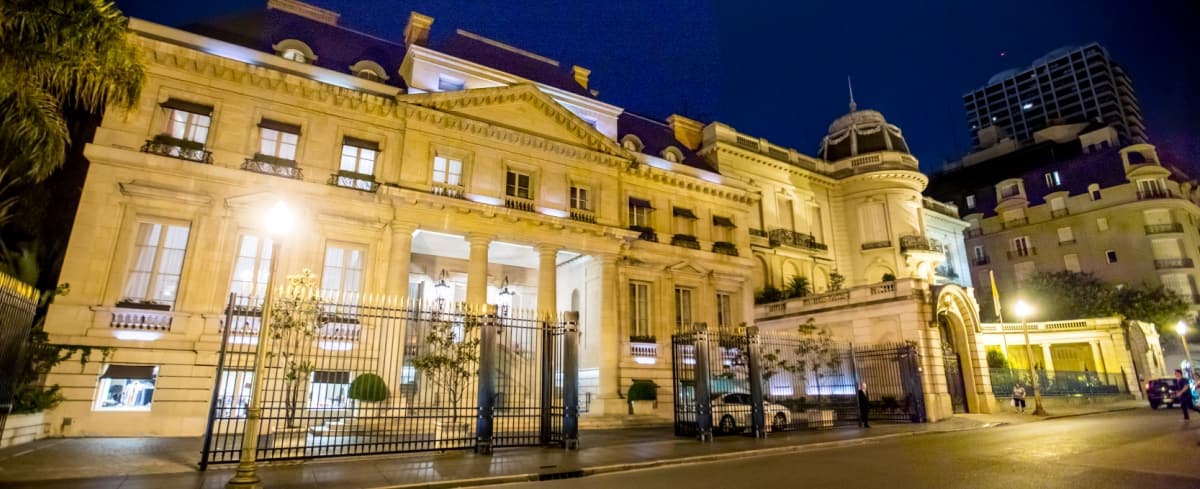
Housed in the palace, a 1911 neoclassical mansion designed by French architect , this museum is a walk through the domestic life of Argentina’s early-20th-century elite. Rooms are arranged as they were lived in — Louis XIV furniture, Flemish tapestries, a ballroom with a painted ceiling — but the real draw is the sense that the family just stepped out. The permanent collection includes European decorative arts from the 16th to 20th centuries, and the garden courtyard is a quiet spot even in grey weather.
Museo Nacional de Arte Decorati… · TicketsTiqetsBarrio Norte sits between Recoleta and Palermo, a residential pocket of apartment buildings with mansard roofs, ironwork balconies, and long arcaded sidewalks. On a rainy day the covered galleries along and Arenales let you walk for blocks without an umbrella. The neighbourhood has a quieter, lived-in feel than Recoleta proper — fewer tourists, more locals walking dogs and stopping at corner cafés.
A small, white-tablecloth bistro on a quiet corner of Barrio Norte, serves French-leaning Argentine cooking — think onion soup with a thick gratinée crust, or a steak au poivre with proper frites. The room has tall windows, dark wood chairs, and a calm, grown-up pace that suits a long lunch on a wet afternoon. It is the kind of place where the waiter remembers the regulars and the menu changes with what is good at the market.
One of Buenos Aires’ oldest private galleries, Rubbers has been operating since the 1950s in a first-floor apartment on . The rooms are domestic in scale — oil paintings on panelled walls, sculptures on mantelpieces — and the focus is on Argentine artists from the mid-20th century onward. The gallery represents estates of several important Argentine painters, so the exhibitions often mix historical works with contemporary pieces in a way that feels more like a curated home than a white cube.
The gallery is on the first floor of a 1920s residential building — ring the buzzer marked 'Rubbers' and take the old elevator with the folding metal gate. The apartment layout means each room holds a different artist or period, and the parquet floors creak in a way that adds to the feeling of visiting someone’s private collection.
Built in 1919 as a theatre, then converted to a cinema in the 1920s, is now a bookshop that retains the original stage, balconies, and frescoed ceiling. The stage itself holds a café where you can sit with a coffee under the proscenium arch, and the upper balconies are lined with reading nooks. Even on a busy day, the scale of the room — four tiers of boxes, a painted dome, crimson curtains — makes it feel more like a cultural stop than a retail one.
Before it was a bookshop, the building opened as the Teatro Grand Splendid — one of the early homes of tango in Buenos Aires. performed here, and the radio station that broadcast from the building in the 1920s helped turn tango into a national obsession. The frescoes on the ceiling, painted by Italian artist , depict an allegory of peace after the First World War.
Tucked at the back of a residential building on Calle Montevideo, Al Fondo Bar has no street signage — you walk through an unmarked door, down a corridor, and into a low-lit room that feels like a friend’s apartment from the 1970s. The walls are covered in vintage Argentine film posters and old record sleeves, the furniture is mismatched velvet armchairs, and the cocktails lean toward classic Argentine riffs — a fernet-and-cola, a well-made Negroni, a gin and tonic with local botanicals. On a rainy evening the windows fog up and the room fills with a quiet, regular crowd who treat it as their local.
Look for the plain wooden door on Montevideo just north of Avenida Las Heras — there is no sign, just a small brass number. Ring the buzzer and someone will let you in. The bar fills up after 19:00, so arriving earlier means getting one of the velvet armchairs by the window.
Barrio Norte’s long arcaded sidewalks — especially along Arenales and Santa Fe — are a gift on a wet day, but the side streets between them are a maze of one-way alleys and dead ends. Keeping a live map open means you can duck through the covered galleries without second-guessing which turn leads back to the main avenue.
Get an eSIMAiraloThe cemetery closes to visitors by early evening, but the streets around it — Junín, Guido, Vicente López — are worth a final walk. The high cemetery wall, the mausoleums visible above it, and the plane trees lining the sidewalks give the area a stillness that feels a long way from the city centre. On a wet evening the stone glistens under the streetlamps and the only sound is water dripping from the leaves.
From here it is a short walk back to the Recoleta plaza — the ombú tree where the day started is still there, and the cafés around the square are lit and warm. A good spot to sit for a last coffee before heading home, watching the rain fall on the church façade and the taxis circling the plaza.
 makes a personal plan in one tap. Tune it by mood, diet, time, budget, squad — and drop in your own places. Works in 65,000+ cities. It learns what you like, so every next plan fits better. Stop Searching. Start going.
Sources give mixed signals about this spot — we recommend confirming before visiting.
Tap outside to close
Tap outside to close

 squad
squad like
like