
📍 8 stops · ⏱ ~7 h · 🎟 from €10

A day designed for a first-time visitor, this walk traces the quietest and grandest corners of the old centre — from the cobbled calm of the Great Beguinage to the soaring Gothic drama of the Town Hall, with a long lunch at a repurposed railway station and an evening audio tour that ties the whole story together.
Want your own personalized plan for free?
The Groot Begijnhof sits just south of the ring road but feels a world apart. It was founded in the 13th century as a self-contained community for beguines — lay religious women who lived independently without taking formal vows. The streets are narrow, the brickwork is warm, and the sound of the Dijle river running through the middle is often the loudest thing you hear. The university now uses the houses as student residences, which keeps the place lived-in rather than museum-like.
A UNESCO World Heritage site and one of the best-preserved beguinages in the Low Countries, this quiet enclave of stepped-gable houses and cobbled lanes dates from the 13th century. Walk through the main gate on Schapenstraat and follow the narrow paths past the church of Saint John the Baptist — the houses still have the small saint figurines above the doors that marked each beguine's dwelling. The Dijle splits into two arms here, so you cross little bridges constantly.
Things to do nearby Leuven: Echoes of History Audio Tour
WeGoTrip
from €10
Leuven: Echoes of History Audio Tour
WeGoTrip
from €10
Most visitors come in through the main Schapenstraat gate. For a more gradual reveal, enter from the south side near the Dijle — the river path brings you in past the old bleaching meadows, and the transition from park to medieval street is barely noticeable.
This small city park sits right against the ring road, built on the old ramparts. The standout feature is a surviving fragment of the 12th-century city wall — a thick curve of stone with a round tower that once formed part of Leuven's first defensive ring. Locals come here to read on the benches under the plane trees; it is rarely busy, even on a Saturday.
The walk to Hal 5 takes you through the Vaartkom district, a former canal basin and industrial zone that has been slowly turning into a creative quarter. The wide cobbled streets and former warehouses now house design studios, coffee roasters, and the occasional pop-up gallery — it is a different texture from the medieval centre you just left.
This former freight station of the old Leuven railway has been turned into a lively food hall and community space. The high arched roof and original ironwork remain, and underneath you find a bakery, a market, several food stalls, and a bar. On a Saturday the place fills with families and groups of friends grazing across the different counters — pick a few small things from different stalls and grab a seat at one of the long communal tables. The pizza and the Vietnamese stall are the two that locals return to most often.
Hal 5 · Book onlinegoogle.comEstablished in 1738 by the university, this is the oldest botanical garden in Belgium. It is compact but dense — a series of themed beds, a small arboretum, and several glasshouses filled with tropical and subtropical species. The herb garden near the entrance is laid out according to medieval medicinal categories, a direct link to the garden's original teaching purpose. Entry is free, and on a Saturday afternoon it is mostly local residents strolling or reading on the benches. The greenhouse with the giant water lilies is the one not to miss.
The herb garden near the entrance is organised by the medieval humoral system — plants are grouped by whether they were thought to be hot, cold, dry, or moist. It is a small detail most people walk past, but it is the oldest part of the garden and still used for university teaching.
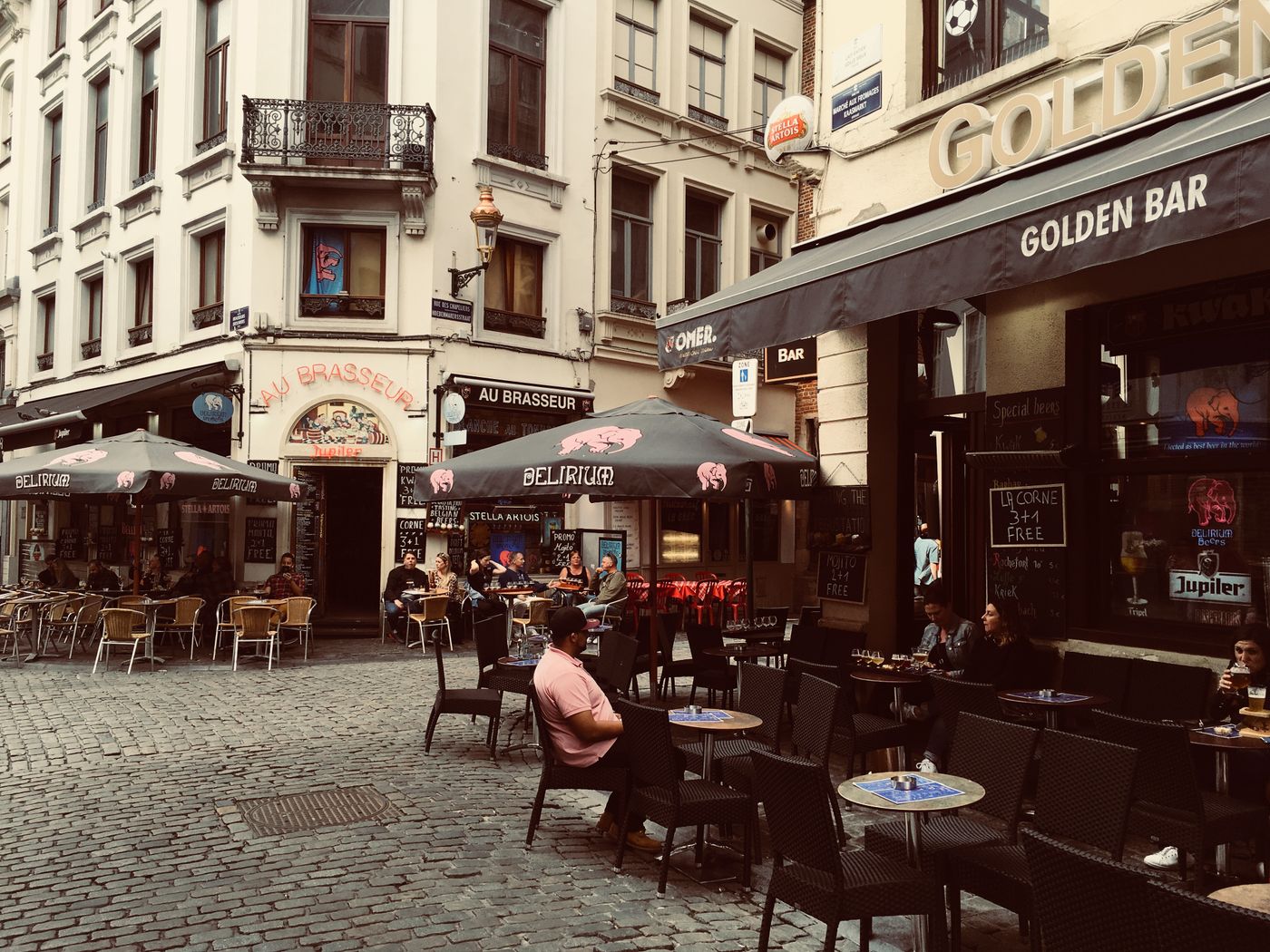
The Oude Markt is known as the longest bar in the world — a long rectangular square where every building houses a café or bar, and their terraces merge into one continuous row of tables. In the afternoon it is quieter; students and families share the space, and the Gothic facade of the old town hall peeks through the gap at the northern end. Pick a terrace on the sunny side, order a Belgian beer, and watch the square's slow afternoon pulse.
This long, narrow square has been the social heart of Leuven for centuries. Every building facing the square is a café or bar, and their terraces stretch the full length without a break. The name Oude Markt — old market — is literal: this was the city's main marketplace before the Grote Markt took over that role. The building at number 21, with the ornate Baroque gable, was once the guildhall of the archers. Grab a table outside at Domus, the house brewery on the eastern side, where the beer is brewed in copper kettles visible through the window.
Domus is the only house brewery on the square — the copper kettles sit right behind the bar window. Their seasonal beer changes every few months, and the current one is always worth trying. If the terrace is full, the courtyard at the back is quieter and catches the afternoon sun.
When you duck out of the Oude Markt into the side streets around the Town Hall, the medieval street plan gets twisty fast. Having a little data to pull up the map and find your way back to the Grote Markt without stopping keeps the afternoon flowing — the route from the square to the audio tour starting point is only a few minutes, but the lanes all look the same.
Get an eSIMAiraloThis self-guided audio tour starts on the and walks you through the city's history, from its medieval origins as a cloth-trading centre to its role as a university town. The narration covers the , , the university library, and several smaller stops in between — it is a well-paced introduction that connects the buildings you have been looking at all day into a single narrative. The tour takes about 75 minutes at a relaxed pace, and you can pause it whenever you want to linger at a spot.
Leuven: Echoes of History Audio… · Audio guidewegotrip.tp.stfrom €10Download the tour to your phone before you start — the app works offline once it is loaded, so you do not need a signal while walking between stops.
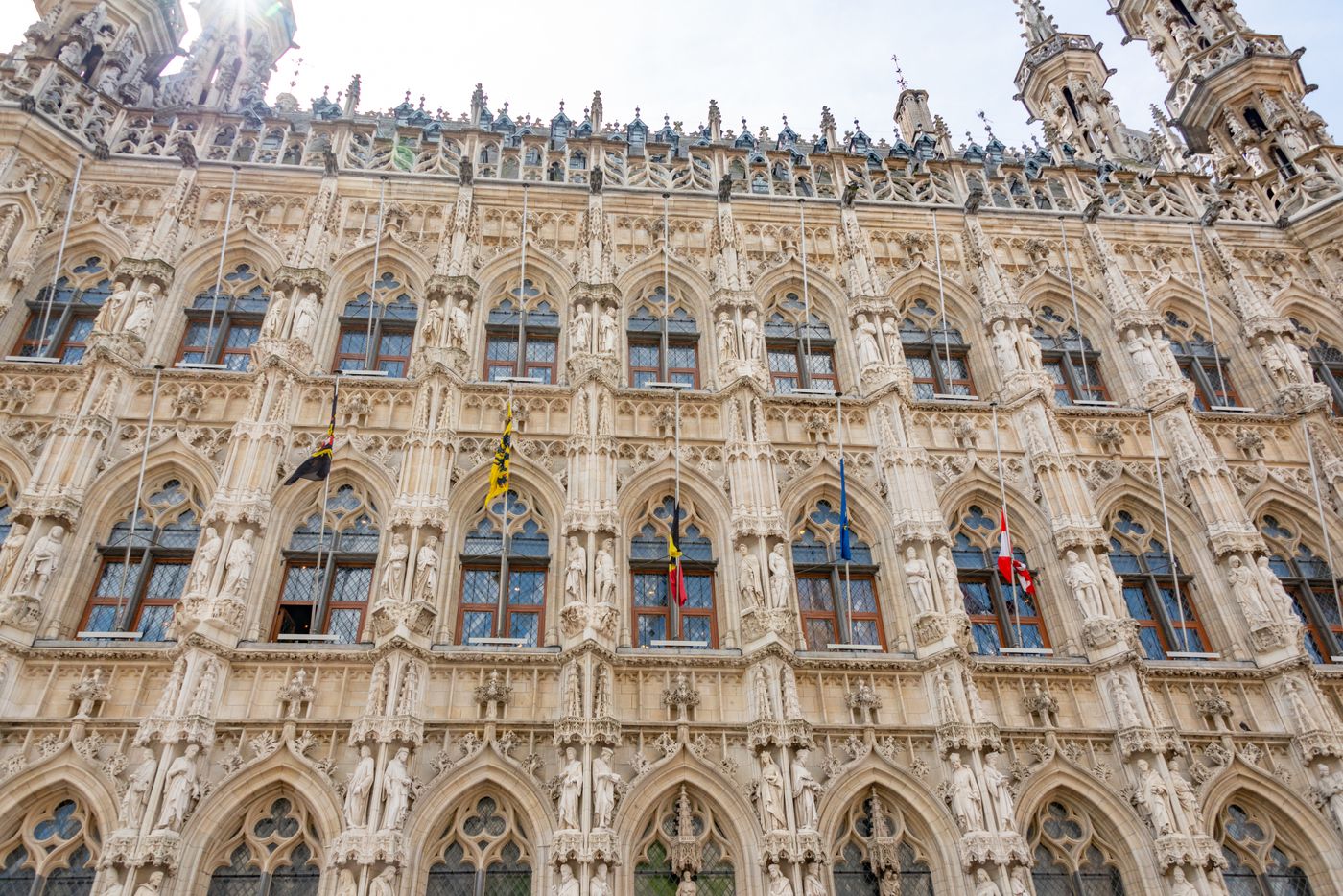
By late afternoon the catches the western light, and the 's facade — covered in 236 statues set into niches — glows a warm gold. This is the ceremonial centre of Leuven, and the three buildings that define it — the Town Hall, , and the old Cloth Hall — are among the finest examples of Brabantine Gothic architecture in Belgium. The square is large enough to step back and take in the full effect, but the detail work rewards getting close.
The Town Hall was built between 1439 and 1469 and is one of the most elaborate examples of late Gothic civic architecture in Europe. The facade is a riot of sculptural detail — three rows of statues depicting biblical figures, saints, and local rulers, added in the 19th century to replace the originals. The building still functions as the city's administrative centre, so you can step into the ground-floor hall during opening hours. Look for the small brass markers set into the cobblestones on the square — they show the historical measurements once used by cloth merchants trading here.
Set into the ground on the are small brass markers showing the old Leuven ell and other medieval cloth-measuring standards. Merchants used them to settle disputes on the spot — a quick glance down gives you the exact length of a bolt of fabric, as it was defined in the 15th century.
This Gothic church was begun in the early 15th century and was intended to have three colossal towers — only the base of the western tower was ever finished, giving the facade its distinctive truncated look. Inside, the church holds an important collection of Flemish Primitive painting, most notably 'The Last Supper' and 'The Martyrdom of Saint Erasmus' by , who was the city painter of Leuven in the 15th century. The oak choir stalls, carved in the 1440s, are among the finest in Belgium — look for the small humorous scenes carved into the misericords, the little shelf-seats the monks rested on during long services.
Saint Peter's Church · Book onlineGetYourGuide'The Last Supper' is in the north transept chapel — the light is best in the late afternoon, when the stained glass throws colour across the panel.
 makes a personal plan in one tap. Tune it by mood, diet, time, budget, squad — and drop in your own places. Works in 65,000+ cities. It learns what you like, so every next plan fits better. Stop Searching. Start going.
Sources give mixed signals about this spot — we recommend confirming before visiting.
Tap outside to close
Tap outside to close
 squad
squad like
like