
📍 8 stops · ⏱ ~7.5 h

A first-timer's walk through Liège's essential character: we start with the fine-arts collection at La Boverie in its island park, swing by Calatrava's soaring station, then cross into the old centre for the Prince-Bishops' square, a genuine Liège waffle, the climb up the Bueren steps, a local meatball lunch, and finish inside the Mosan Renaissance halls of the Grand Curtius — a day that moves from the Meuse riverbank up into the heart of the Cité Ardente.
Want your own personalized plan for free?
Before we step inside, the approach matters. sits on a narrow island where the Meuse splits around it, connected by footbridges on both sides. The park was laid out for the 1905 , and the museum building itself is a pavilion with a glass-roofed central hall. On a Saturday morning the lawns are quiet — joggers, a few families, the water moving slowly on both sides.
Housed in the 1905 pavilion, holds the city's fine-arts collection — Flemish and Dutch old masters downstairs, a strong run of Walloon painting from the 19th century, and a temporary exhibition wing that draws major touring shows. The permanent galleries are compact enough to see thoroughly in a couple of hours, and the glass-roofed central hall floods the space with daylight. Don't miss the view back toward the city from the museum terrace — the Meuse curves away toward the centre, and you can already see the Guillemins station roof from here.
Things to do nearby Self Guided Secrets of Liege Exploration Game Tour
Viator
from €20
Self Guided Secrets of Liege Exploration Game Tour
Viator
from €20
The building itself is part of the collection — the ornate ironwork in the central hall and the original facade on the park side survived both world wars. The terrace café is run independently and does a decent espresso; locals come here as much for the park as for the art.
The permanent collection is walk-in, but the big-name temporary shows — often Impressionist or modern masters — sell out weekend slots. Check the museum site a few days before and book a morning entry to walk straight in.
The station appears suddenly at the end of the boulevard: a vast white concrete-and-glass canopy that arches over the tracks like a frozen wave. Santiago designed it, finished in 2009, and it transformed what was a standard railway stop into one of Europe's most photographed transport buildings. The ribs of the roof catch the midday light, and the main concourse is entirely column-free — a cathedral of transit. Even if you're not catching a train, the building is worth the walk.
's station is the city's modern icon — a sweeping white canopy of steel, glass and concrete that vaults 32 metres above the platforms with no internal columns. Walk the full length of the concourse to see how the light shifts through the ribs, then climb the pedestrian ramp at the far end for a view back across the whole structure. The station also holds a small exhibition on the building's construction in the eastern wing, free to enter.
Tucked behind the university buildings on Rue Fusch, the feels like a secret. It opened in 1841 and still keeps its original layout: a formal French garden in front, an English-style landscaped section behind, and a row of Victorian glasshouses filled with tropical plants and towering tree ferns. On a July afternoon the greenhouses are warm and humid, the outside paths shaded by mature cedars.
The university's botanical garden is free to enter and spreads across several acres. The highlight is the greenhouse complex — three connected Victorian structures holding orchids, carnivorous plants, a giant water lily pond, and a collection of cycads that dates back over a century. Outside, the systematic beds are arranged by plant family, and there's a quiet bench under the old cedar near the back wall that catches the afternoon sun. A good place to sit for 15 minutes before heading into the centre.
This is the city's main square, built on the site of the former Saint-Lambert Cathedral — destroyed during the and never rebuilt. Metal inlays in the paving trace the cathedral's original footprint. On one side stands the , a vast Gothic-Renaissance complex that now houses the law courts; its facade is a textbook of Liège architectural history, with layers added from the 11th to the 19th century.
The square is the historical centre of Liège. Stand on the metal cathedral outline and look up at the Palace facade — the left wing is 16th-century Gothic, the right wing an 18th-century classical addition. On the opposite side, the modern glass entrance to the leads down to the excavated Roman and medieval foundations under the square.
Place Saint-Lambert · Book onlineGetYourGuideA small, no-frills waffle shop that does one thing and does it properly: the Liège waffle — dense, doughy, studded with pearl sugar that caramelises on the iron. They're made to order, served hot in a paper sleeve, and the queue moves fast. The classic plain version is the one to get; the chocolate-dipped variants are fine but mask the buttery, caramelised flavour that makes a Liège waffle distinct from its Brussels cousin.
The Liège waffle is smaller, denser, and richer than the rectangular Brussels version — it's made from a brioche-like dough rather than a batter, and the pearl sugar creates a crisp, caramelised crust. Locals eat them as a street snack, not a plated dessert.
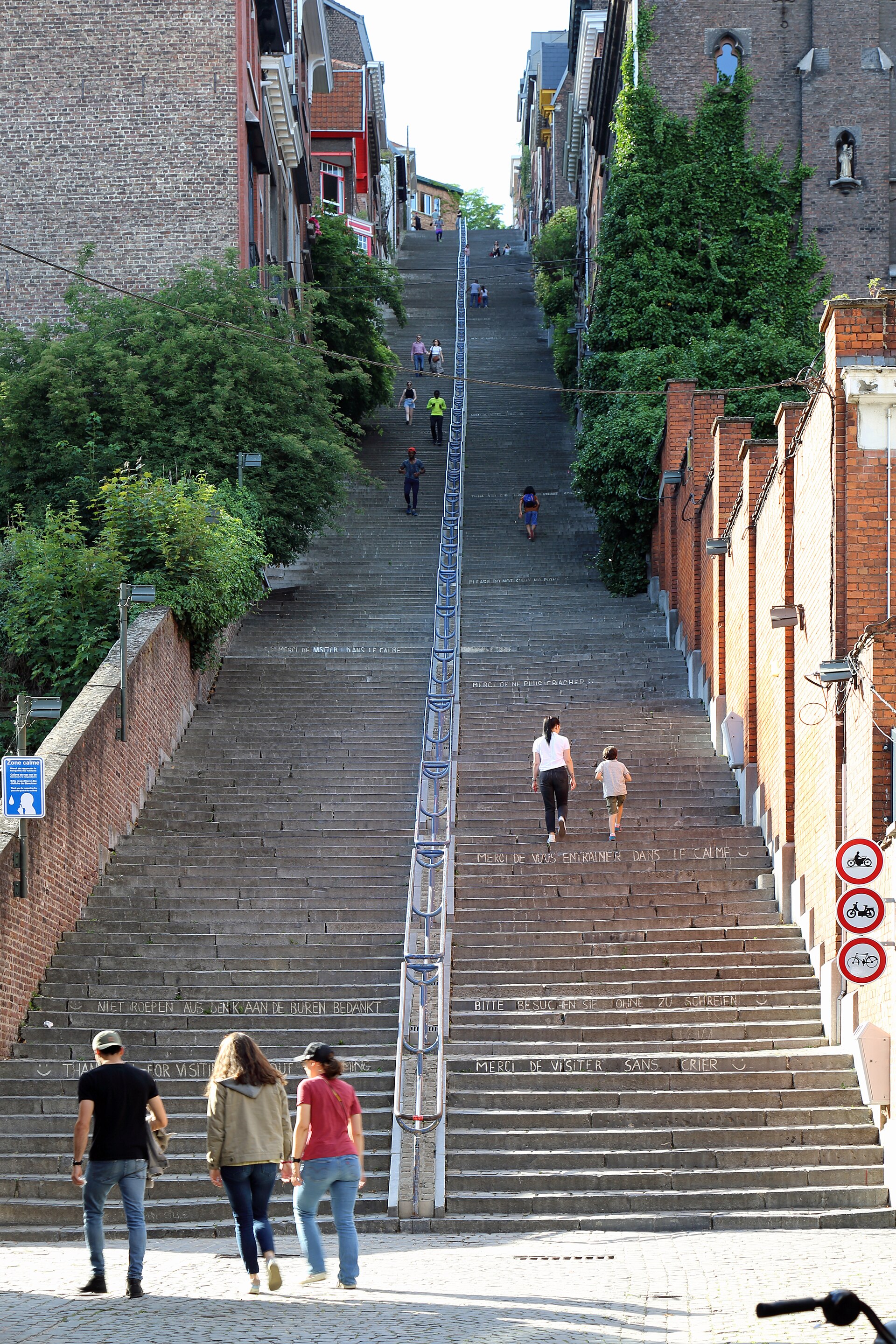
Built in 1881 to connect the city centre to the citadel above, the Bueren steps climb 374 risers in a single unbroken flight — one of the steepest urban staircases in Europe. The houses on either side are tall and narrow, and the steps are wide enough that you can pause halfway without blocking anyone. At the top, a small terrace opens onto a panoramic view: the Meuse winding north, the rooftops of the old city, and the green hills of the on the horizon.
The climb takes about five minutes at a steady pace, longer if you stop to look back at the city shrinking below. At the top, the view stretches from the Meuse valley to the wooded ridges beyond — on a clear July day you can see for miles. The citadel park behind the terrace has paths and benches; it's a natural place to catch your breath before heading back down.
An old-school Liège pub that has been serving the city's signature dish — boulets à la liégeoise, large meatballs in a sweet-sour sauce of sirop de Liège and onions — for decades. The interior is wood-panelled and unpretentious; the tables are close together, and the clientele is a mix of regulars and visitors who've done their homework. Order the boulets with frites and a local beer — the sauce is the real star, dark and sticky and unlike any other meatball dish in Belgium.
The key ingredient is — a dark, spreadable fruit syrup made from apples and pears, cooked down for hours. It gives the boulets their distinctive sweet-sour depth. You can buy jars of it at shops around the corner on Rue de la Goffe.
The museum occupies a former private mansion built in the late 16th century for , a Liège arms dealer who supplied half of Europe's armies. The building is a rare example of Mosan Renaissance style — red brick with stone quoins and stepped gables — and it sits directly on the Quai de Maestricht, its reflection broken by the river. Inside, the collection spans 7,000 years: prehistoric flints, Roman glass, medieval Mosan metalwork, and decorative arts from the 18th century.
The Grand Curtius is the city's history museum, and its collection is vast — the highlight is the Mosan art section, with 12th-century enamels and metalwork from the Meuse valley workshops that supplied churches across Europe. The arms and armour gallery reflects Liège's centuries as a weapons-manufacturing centre, and the decorative-arts wing has a beautiful collection of Liège glass and ceramics. The building itself is worth the visit: the inner courtyard, the carved stone fireplaces, and the view of the Meuse from the upper windows. The museum closes at 18:00 on Saturdays, so the late-afternoon slot gives you enough time to see the core galleries without rushing.
The Mosan art and the arms gallery are on the upper floors — go straight up and work your way down. The decorative arts on the ground floor are easier to skim if time runs short.
After the Curtius, the old lanes around and Hors-Château are easy to get turned around in — the streets bend and change names every block. Pulling up a map to find your way back to a bar or a bus stop takes a few seconds of data, and it means you can wander without worrying which alley you've ended up in.
Get an eSIMAiraloIf you're carrying a day-pack or a small bag, the has lockers at the entrance — but for anything larger, there are luggage storage points near the station and in the centre. Dropping a heavy bag before the museum means you can actually enjoy the upper galleries without bumping into display cases.
Store your bagsRadical Storage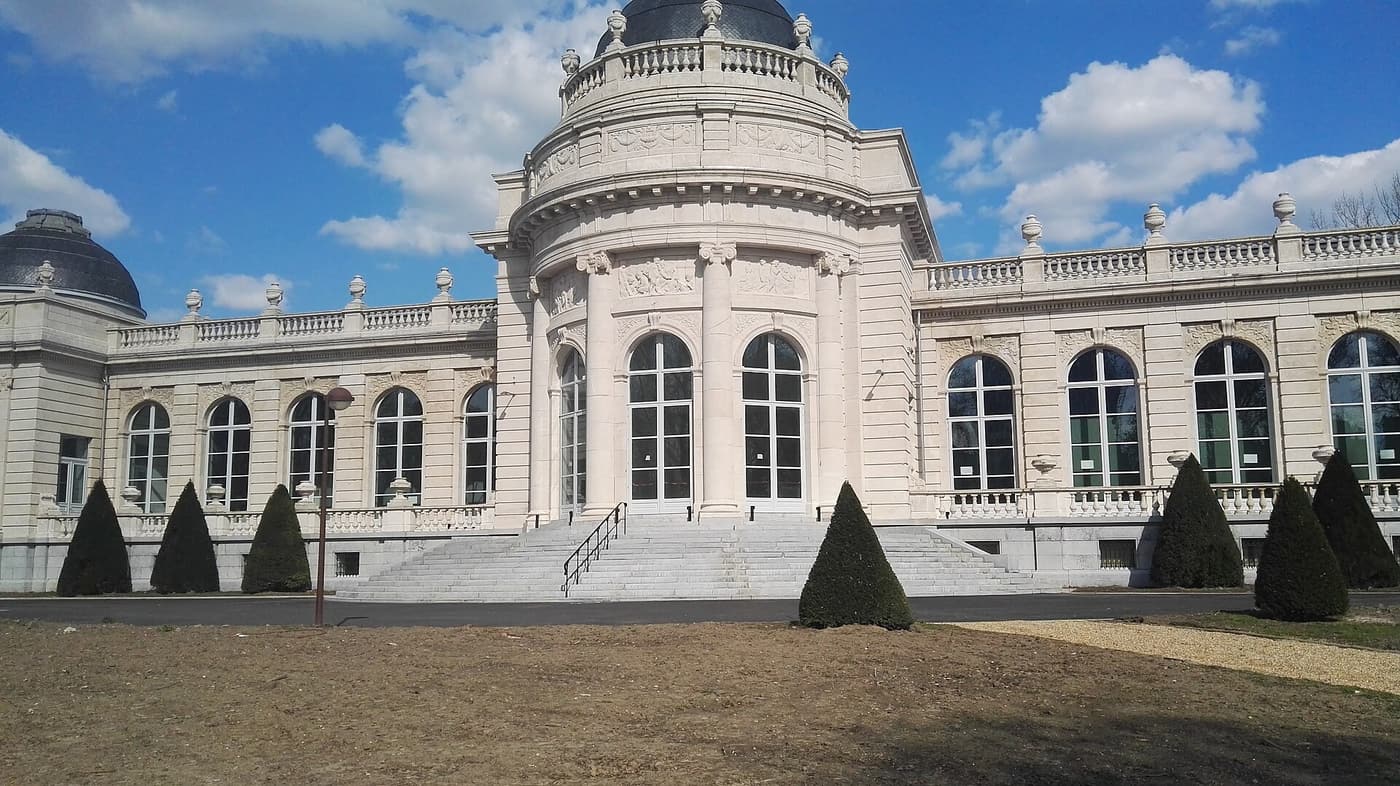 A Liège Food Day: La Boverie to Guillemins, Markets, Waffles and Jazz
 From Prince-Bishops to the Meuse: a first-timer's walk through Liège's grand history and riverside life
 Liège food crawl: from a Gothic church to a beer shop via waffles, market stalls, and a brewery
 Liège's Essential Character: From Curtius to Boverie, a Day of Art, Views, and the Meuse
 makes a personal plan in one tap. Tune it by mood, diet, time, budget, squad — and drop in your own places. Works in 65,000+ cities. It learns what you like, so every next plan fits better. Stop Searching. Start going.
Sources give mixed signals about this spot — we recommend confirming before visiting.
Tap outside to close
Tap outside to close
 squad
squad like
like