
📍 8 stops · ⏱ ~10 h

We spend the day eating our way through Sarajevo's old and new food rhythms — flaky pita for breakfast in Baščaršija, a slow lunch inside a house that refused to move, and an evening of craft beer with a live soundsystem in Centar.
Want your own personalized plan for free?
Before the day-trip crowds arrive, Baščaršija belongs to the bakers and the copper-smiths. The smell of fresh somun bread and grilled ćevapi drifts through the narrow lanes, and the first strong Bosnian coffees are being poured at tiny counters. This is the old Ottoman market quarter, still the city's living pantry.
A tiny, no-fuss bakery where the pita — flaky, coiled pastry filled with cheese, spinach, or meat — is pulled from the oven all morning. Locals queue from 7 a.m., and the cheese burek with a spoonful of yoghurt on the side is the breakfast that powers the old town.
Point at what looks good — the baker will weigh your piece and wrap it in paper. Ask for 'sa jogurtom' (with yoghurt) and eat it standing at the counter or on the low wall across the lane. The spinach and cheese one (zeljanica) is the morning classic; the meat one (burek) is heavier — save it for a second round if you are still hungry.
From the bakery, we wander west along Kazandžiluk — the coppersmiths' lane — where the first hammer-taps on metal trays start around 9 a.m. The shops are family-run, many by the grandsons of the original craftsmen, and the street still smells of polished copper and strong coffee.
A concept store tucked on a Baščaršija side street, gathers contemporary Bosnian craft — hand-thrown ceramics, woven textiles, and small-batch rakija — all made within the country. It is a quiet, beautifully curated space where the old bazaar's artisan spirit meets modern design.
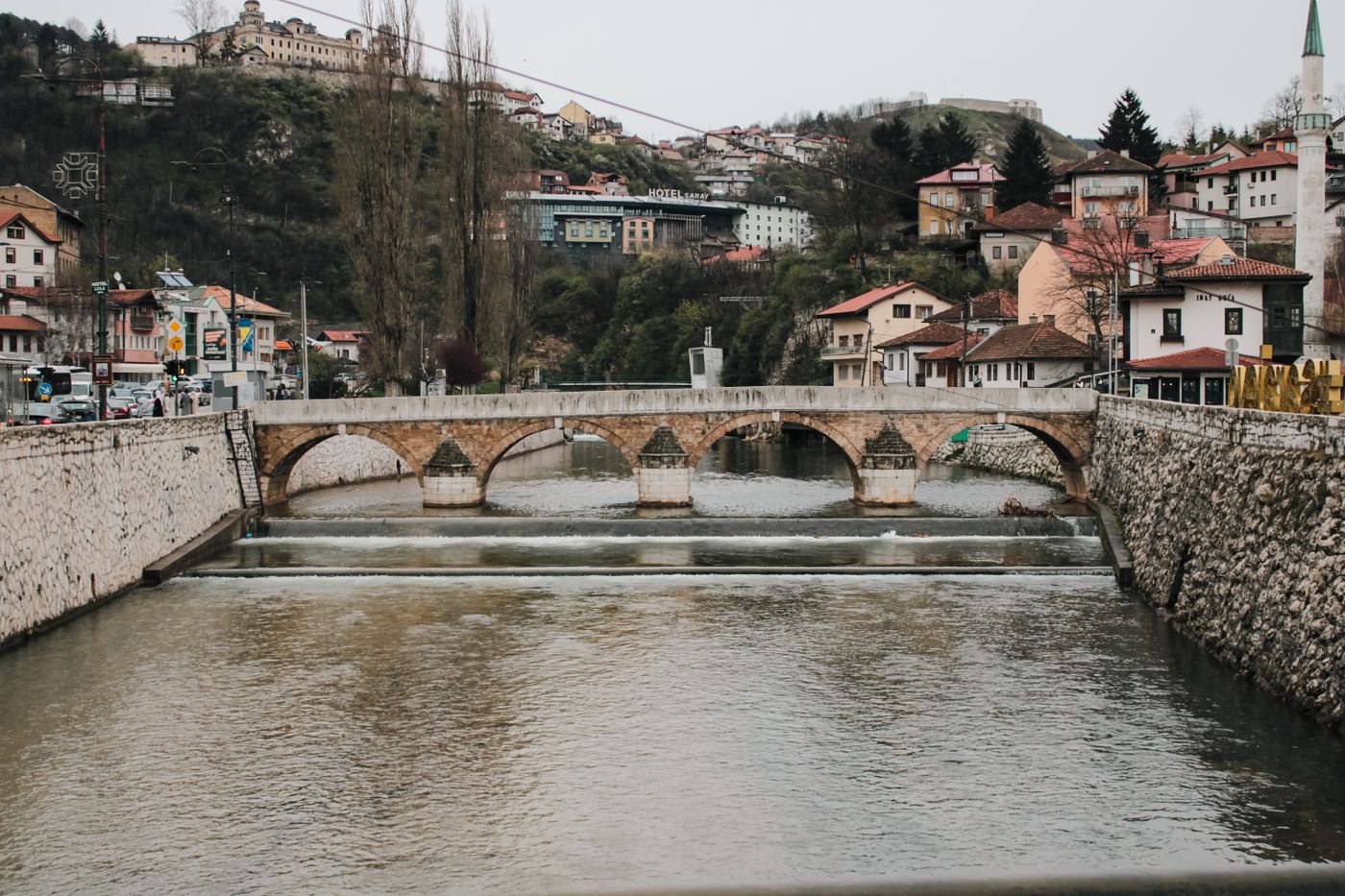
On the south bank of the , just across from the old town, stands a small Ottoman-era house with an outsized story. When Austro-Hungarian planners wanted the land for a new city hall in the 1890s, the owner refused to sell unless they moved his house — brick by brick — to the other side of the river. They did. Today it is a restaurant called Inat Kuća, the House of Spite.
The menu is traditional Bosnian — slow-cooked stews, stuffed vegetables, and tender dolma — served in a warren of small rooms with low ceilings and wooden balconies overlooking the river. The begova čorba (a velvety chicken and okra soup) and the klepe (Bosnian dumplings) are the dishes to build lunch around. The terrace catches the midday light and the view of the city hall opposite.
Inat Kuća · Book onlineGetYourGuideThe balcony tables fill up fast on Saturdays — call ahead or arrive right at 11:00 to grab one with a view of across the water.
Ferhadija is the pedestrian spine that connects the old bazaar to the newer, Habsburg-built centre. The architecture shifts mid-walk — from Ottoman stone to Viennese Secessionist facades — and the cafés along this stretch have been the city's living rooms for over a century.
Tucked behind the , Cafe Tito is a time capsule of Yugoslav nostalgia — the walls are covered with partisan posters, old radios, and portraits of the himself. The coffee is strong and the crowd is a mix of older regulars reading newspapers and curious younger locals. Order a Bosnian coffee — it comes on a copper tray with a cube of rahat lokum.
The coffee arrives in a džezva (a small copper pot) with an empty cup, a sugar cube, and a glass of water. Pour the coffee yourself, spoon off the foam and place it in the cup first, then pour the liquid over it. Sip the water between sips of coffee — it cleans the palate and stretches the moment. Never stir the grounds at the bottom.
A short walk west along Ferhadija brings us to the memorial, a gas flame burning continuously since 1946 in honour of the liberators of Sarajevo in World War II. From here the street opens into the broader Centar district, with its grand Austro-Hungarian buildings and quieter residential lanes.
A bar for old souls, Zlatna Ribica is an eccentric jewel box of a place — every surface is covered in vintage clocks, brass instruments, velvet drapes, and odd curios collected over decades. The drinks are classic: rakija, herbal brandies, and spritzes. Come for the interior, stay because the bartender treats everyone like a regular.
Hastahana Park in Marijin Dvor is a green pocket that comes alive in summer with the Festival Summer in the Park — open-air film screenings, pop-up food stalls, and live music on warm evenings. Even during the day it is a quiet place to sit under the trees and watch the neighbourhood go by.
A former railway depot turned public green space, Hastahana is one of the city's best summer spots — the park hosts the annual Summer in the Park festival from June through September, with food vendors, workshops, and evening concerts under strings of lights. Grab a bench, watch the kids play, and let lunch settle before the evening round.
A gastropub with a serious beer list — local Bosnian craft brews sit alongside imports, and the food menu runs from hearty burgers to modern takes on Bosnian classics. The Vučko name nods to the 1984 Sarajevo Olympics mascot, and the walls carry Olympic memorabilia. The terrace fills up on summer evenings.
is Sarajevo's leading craft brewery and taproom, pouring a rotating selection of IPAs, stouts, and seasonal ales brewed on-site. The industrial-chic space has long communal tables and a lively, unpretentious crowd. On this Saturday evening, the Jah Forcefield Soundsystem takes over for a night of reggae, dub, and bass-heavy rhythms — a regular event that draws a loyal local following. The third edition of Jah Forcefield Soundsystem at Brew Brothers brings a heavyweight reggae and dub selector to the taproom. Free entry, walk-in welcome — the music starts around 7 p.m. and builds through the evening. The crowd is a relaxed mix of craft-beer regulars and music heads, and the sound system is warm and room-filling.
The best spot for the soundsystem is the long table closest to the bar — the bass hits cleanly there, and you are first in line for the next round. The kitchen stays open late with loaded fries and burgers, so you do not need to eat beforehand.
When the night winds down, the walk back through Baščaršija's quiet lanes is half the charm — the fountains are lit, the cobblestones are empty, and the city feels like it belongs to you alone. Pulling up a map on the fly makes it easy to find the tucked-away streets that lead back toward the centre without doubling back.
Get an eSIMAiralo
 makes a personal plan in one tap. Tune it by mood, diet, time, budget, squad — and drop in your own places. Works in 65,000+ cities. It learns what you like, so every next plan fits better. Stop Searching. Start going.
Sources give mixed signals about this spot — we recommend confirming before visiting.
Tap outside to close
Tap outside to close
 squad
squad like
like