
📍 8 stops · ⏱ ~12 h

A day built for wet weather, moving through São Paulo's design, cinema, and literary corners before ending with Mozart by candlelight. We start at the Museu da Imagem e do Som in Jardim Europa, wander into the book-filled rooms of Livraria da Vila, then cross into Pinheiros for pizza, a sunset lookout, and an evening that climbs from a low-lit club to a 43rd-floor bar and a classical concert in a monastery.
Want your own personalized plan for free?
The occupies a crisp white mansion on Avenida Europa, a stretch of Jardim Europa where embassies and designer showrooms sit behind tall hedges. Inside, the permanent collection traces Brazilian audiovisual history — early radio broadcasts, telenovela costumes, experimental film — while temporary exhibitions often pull in international photography and immersive digital installations. The building itself is a calm, air-conditioned refuge on a rainy morning, with wide galleries and a quiet café tucked at the back. On a Saturday, the morning crowd is thin; you can move through the rooms at your own pace and still have the lower-level video archive almost to yourself.
Museu da Imagem e do Som (MIS) · Book onlinebileto.sympla.com.brTake the stairs at the far end of the top floor — there is a small open terrace overlooking the canopy of Avenida Europa. Even in light rain, the overhang keeps you dry, and the view of the jacaranda trees against the modernist façades across the street is worth the extra five minutes.
The temporary exhibitions here change every few months and are often the highlight — glance at the programme online the night before so you know which wing to hit first.
Livraria da Vila on Rua Fradique Coutinho is the kind of bookstore where the architecture competes with the stock — the front pivots open like a giant bookcase, and inside, shelves climb two storeys around a central atrium. The ground floor holds Brazilian fiction, art monographs, and a well-curated children's section; upstairs, a small café overlooks the reading crowd below. On a rainy afternoon, the skylight catches the grey light and the whole space feels like a warm, paper-scented cocoon. Locals linger in the armchairs tucked between the stacks, and the staff are happy to point you toward São Paulo-specific titles — architecture guides, catalogues, or contemporary Paulistano novels.
Grab a coffee at the second-floor café and take the single seat by the window overlooking Rua Fradique Coutinho — it is the best spot in the building to watch the neighbourhood go by while you flip through whatever you just pulled off the shelf.
Beco do Batman is a short alley in whose every surface is covered in large-scale graffiti and street art, repainted so often that the walls are a living archive of São Paulo's urban-art scene. On a rainy day the colours reflect off the wet asphalt and the lane is quieter than usual — no crowds of photographers, just a few skaters and someone touching up a mural with a spray can. The surrounding streets are lined with independent ateliers and tiny galleries that stay open through the afternoon.
The lane itself is only about a hundred metres long, but the murals change constantly — what was a portrait of a Tupinambá elder last month might be an abstract geometric piece today. Walk slowly and look up: the art climbs three storeys in places, and the best pieces are often tucked above doorframes or wrapped around drainpipes. The adjoining Travessa Alonso and Rua Medeiros de Albuquerque also carry spillover murals worth a detour.
Beco do Batman · Book onlineGetYourGuide Things to do nearby Downtown Photo Tour
Viator
from €134
Downtown Photo Tour
Viator
from €134
Starlane opened recently in a converted house with original hardwood floors, an indoor dining room, and a covered garden out back. The pizza is thin-crust, São Paulo-style — individual-sized rounds with toppings that lean local: catupiry cheese, calabresa sausage, heart-of-palm. The music programme is low-key during the day, more ambient than a full set, so you can hear yourself talk. On a wet Saturday, the garden is protected by a retractable awning, and the wood-fired oven keeps the main room warm. It is the kind of place where a lunch stretches easily into an hour and a half without anyone rushing you.
The catupiry and calabresa pizza is the one locals order — creamy cheese and smoky sausage on a crisp base. Pair it with a chopp (draft beer) if you are in the mood for something cold.
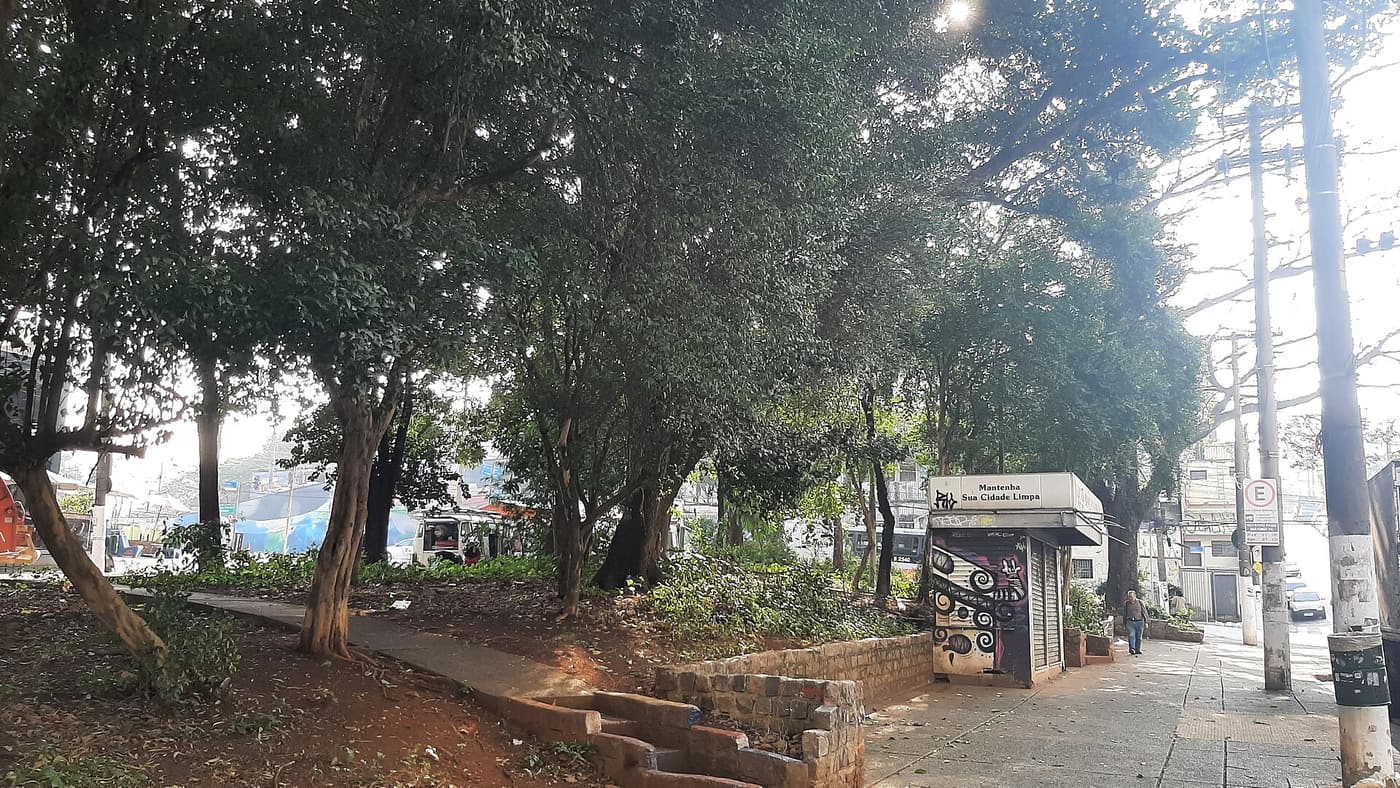
is a modest square at the top of a hill in , with a wide-open western view across the city. On clear evenings, the sunset draws a crowd — families on the grass, couples on the low stone wall, someone playing a guitar. Even on an overcast day, the panorama of rooftops and the distant spire of the Sé Cathedral is worth the walk. The square has a few benches and a small kiosk selling coconut water and pastel. In August, the light fades around 17:45, so you catch the last hour of daylight and the shift into dusk.
The stone wall on the far left side of the square, near the eucalyptus tree, has the least obstructed view — the benches closer to the kiosk get blocked by the tree canopy in summer.
is the pulsing centre of at night — a wide square ringed by bars, food stalls, and live-music venues. The crowd is a mix of university students, young professionals, and neighbourhood regulars who have been coming here for decades. On a Saturday evening, the square fills early, and the sound of samba and forró spills from doorways. The rain keeps the numbers manageable, and the covered areas under the awnings stay busy without feeling packed.
Dr. Banana is a recent addition to the Vergueiro area's nightlife, a club that channels the golden age of São Paulo's dance floors — low ceilings, red lighting, and a sound system tuned for warmth rather than volume. The bar serves classic Brazilian cocktails: caipirinhas made with cachaça from Minas Gerais, batidas de coco, and a short list of local craft beers. Early in the evening, before the DJ starts, the back room feels like a private lounge — velvet banquettes, vintage Brazilian album covers on the walls, and a crowd that skews more conversational than raucous. It is a good place to sit for an hour, have a drink, and let the day's walking settle before the next move.
The batida de coco here is made with fresh coconut milk and a heavy pour of cachaça — creamy, cold, and stronger than it tastes. One is usually enough before a long evening.
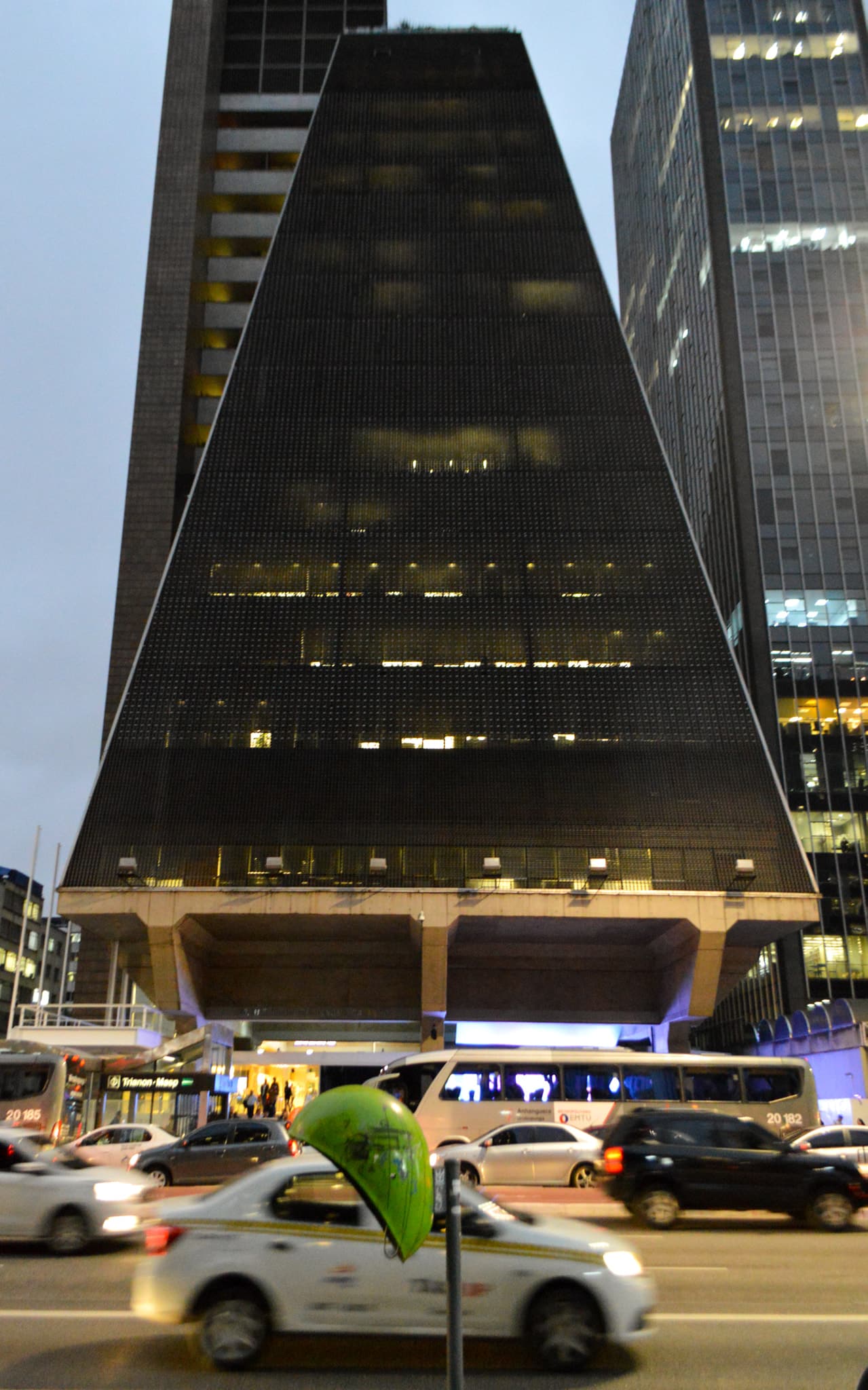
Iccarus is a cocktail bar, restaurant, and club on the 43rd floor of the , one of São Paulo's tallest buildings. The wrap-around windows give a near-360-degree view of the city — the lights of to the south, the serpentine curve of the elevated highway to the north, and the distant glow of the Zona Leste beyond. The sound system is custom-built, with audio-reactive lighting that pulses gently during the early-evening DJ set. Cocktails are elaborate — infusions, smoked glassware, local fruits like cajá and jabuticaba — and the crowd is dressed up but relaxed. Arrive before 20:00 and the bar is still quiet enough to grab a window table and watch the city transition from dusk to full dark.
Ask for a seat on the north side of the bar — the view toward the Serra da Cantareira is the most dramatic as the last light fades, and it is usually less crowded than the Paulista-facing windows.
The Candlelight series transforms the 's nave into a sea of flickering LED candles, with a string quartet performing and . The acoustics inside the monastery church — high vaulted ceilings, stone walls, no amplification — are extraordinary, every note hanging in the air. Tickets are required and should be booked ahead; these concerts often sell out. The setting is intimate, the music is familiar but deeply felt, and the candlelight turns the gilded Baroque altarpiece into something almost otherworldly. The concert runs about ninety minutes and ends around 22:00, leaving you in the quiet of the monastery courtyard afterward. The Mosteiro de São Bento was founded in 1598, though the current church dates from the early twentieth century — a blend of neo-Romanesque and Baroque, with an interior covered in gold leaf and frescoes by the German monk Adelbert Gressnigt. The Gregorian chant mass on Sunday mornings is a São Paulo institution, but on a Saturday evening the monastery is quieter, the courtyard lit by lanterns and the church open for concerts. The location, perched on a hill overlooking the Vale do Anhangabaú, feels removed from the city's noise even though you are in the centre of it.
Candlelight: Mozart & Beethoven · Ticketsticketmaster.com.brThese concerts sell out, sometimes weeks ahead — secure your seat online as soon as you know your date. Doors open thirty minutes before the start; arriving early gets you a spot closer to the quartet.
The route crosses from to the city centre in the evening — having a data connection lets you track the ride, check the concert start time, and pull up the monastery's exact entrance on the map without hunting for a signal. It is the kind of small thing that keeps the evening smooth when you are moving between neighbourhoods after dark.
Get an eSIMAiraloThe building has no cloakroom, and dragging a day bag up to the 43rd floor is a hassle. There are luggage storage points around , a short walk from the monastery — drop your things before heading up to Iccarus, and you will move through the evening with your hands free and your shoulders light.
Store your bagsRadical Storage
 makes a personal plan in one tap. Tune it by mood, diet, time, budget, squad — and drop in your own places. Works in 65,000+ cities. It learns what you like, so every next plan fits better. Stop Searching. Start going.
Sources give mixed signals about this spot — we recommend confirming before visiting.
Tap outside to close
Tap outside to close
 squad
squad like
like