
📍 8 stops · ⏱ ~8 h

A full day tracing Neukölln's restless creative energy, starting inside the repurposed industrial halls of the Malzfabrik, crossing the vast open horizon of Tempelhofer Feld, and winding through the Schillerkiez's quiet streets before ending along the bustling Landwehrkanal at the Turkish market.
Want your own personalized plan for free?
The is a former malt factory turned cultural campus in , its brick industrial buildings now housing studios, galleries, and event spaces. On a Saturday morning the courtyard is quiet, with only a few cyclists and locals heading to the café — the red-brick smokestack and old silos give the whole compound a calm, post-industrial gravity that feels worlds away from central Berlin.
is a new multifunctional venue that opened in late June 2026 on the grounds, built as a platform for electronic music, culture, and creative exchange. The space occupies one of the old factory halls, with high ceilings and raw industrial bones left intact. Exhibitions, workshops, and talks rotate through the program, and the café area is a good spot to linger with a coffee and watch the morning light move across the brickwork.
The main hall gets the attention, but the smaller side buildings around the courtyard often host small-scale artist studios and pop-up installations. Walk the full loop of the grounds before leaving — the old loading docks and railway spur at the back are some of the most photogenic parts, and almost no one goes there.
The streets between the and are classic Berlin residential fabric — wide pavements, plane trees, and the occasional corner Kneipe. This stretch of Tempelhof is unglamorous and lived-in, and on a Saturday morning it moves slowly: families on bikes, older residents at the bakery, the city waking up without hurry.
is the former turned into one of Europe's largest inner-city open spaces — a 300-hectare expanse of runways and grassland where Berliners come to cycle, skate, kite-fly, barbecue, and do absolutely nothing. The old terminal building looms on the northern edge, a heavy monument, while the runways stretch south in long, straight lines that mess with your sense of distance. On a July Saturday the field fills with a cross-section of the city: families, longboarders, community gardeners, and people just lying in the grass with a book.
Tempelhofer Feld · TicketsGetYourGuide Things to do nearby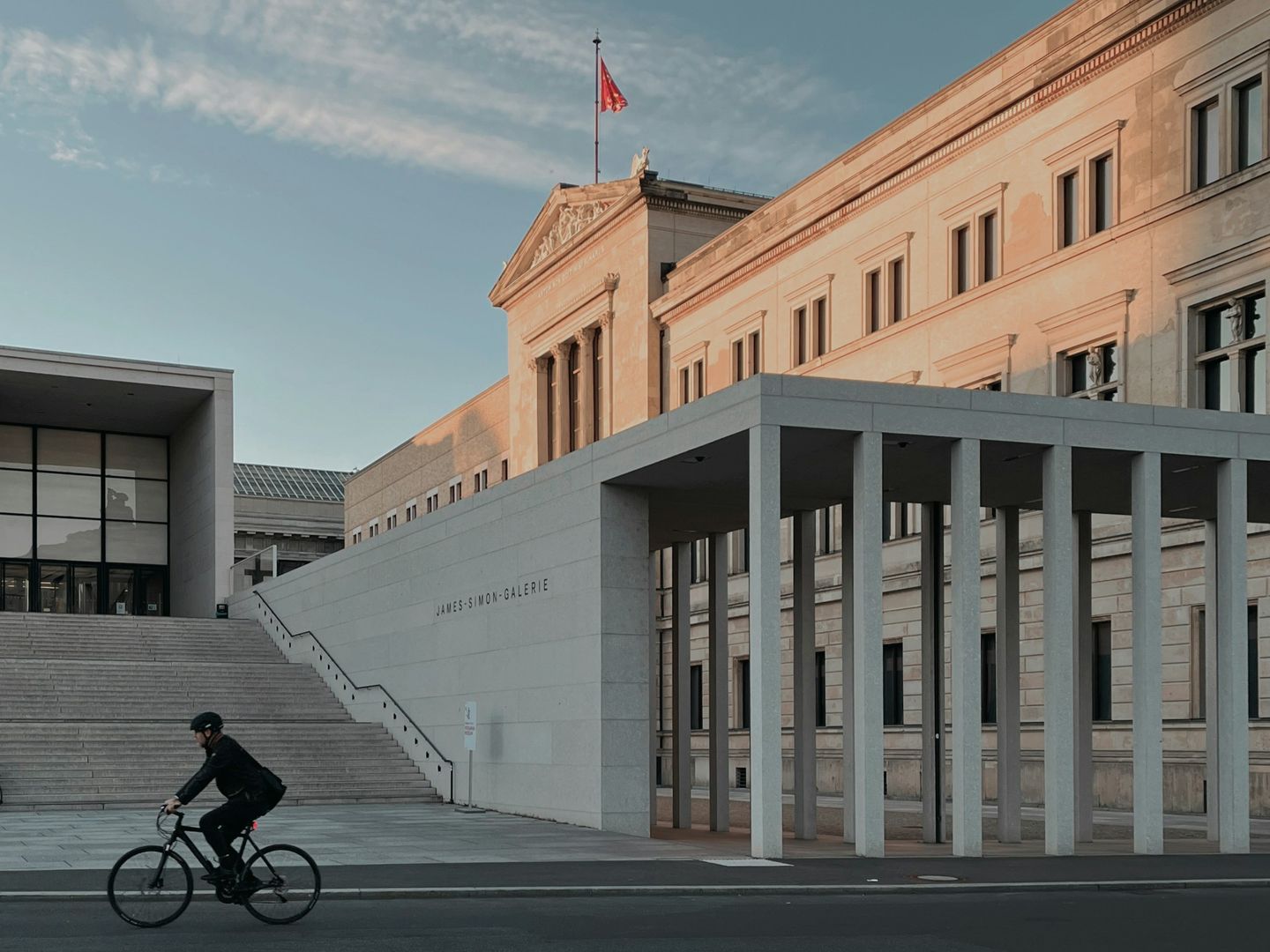 Berlin: Neues Museum Ticket & Audio Tour with a City Walk
WeGoTrip
from €21
Berlin: Neues Museum Ticket & Audio Tour with a City Walk
WeGoTrip
from €21
Most visitors enter from the north near the terminal building, but coming from the south side — through the Oderstraße entrance — you hit the quieter end of the field first, where the community gardens and the less-crowded stretches of runway are. It's a better entry for this route, and the view of the terminal from a distance is more striking than walking straight up to it.
The Schillerkiez is a pocket neighborhood wedged between and , named after the Schillerpromenade that runs down its center. It's one of those Berlin quarters that feels like a small town — cobbled streets, old chestnut trees, and a slower rhythm than the rest of . The architecture is largely late-19th-century Altbau, with ornate facades and high-ceilinged apartments, and the absence of through-traffic keeps the streets quiet even on weekends.
The Schillerkiez is not a single venue but a neighborhood to wander through — the central spine is the Schillerpromenade, a wide, tree-lined median with benches and a playground, flanked by Altbau facades. Walking the promenade from end to end takes about 15 minutes, but the real pleasure is drifting into the side streets, where small independent shops, ateliers, and the occasional courtyard garden appear. The area has a strong local community feel, with residents who have lived here for decades alongside newer arrivals, and the cafés and bars are neighborhood-scale rather than destination spots.
Ä is a small, understated restaurant in the Schillerkiez that serves a short, seasonal menu built around vegetables and careful sourcing. The room is narrow and warm, with an open kitchen at the back and a handful of tables — it feels more like eating in someone's dining room than a restaurant. Lunch is relaxed and un-rushed, and the dishes change frequently depending on what's available from local producers.
is a small, formal park tucked into a former gravel pit in , built in the early 20th century with a sunken garden layout, a central fountain, and a neoclassical orangery at one end. It's only about two hectares, but the design — terraced flower beds, a reflecting pool, and a colonnaded gallery — gives it a surprising grandeur. On a Saturday afternoon, local families and couples fill the benches, and the café in the orangery serves cake and coffee with a view over the gardens.
is a plant-filled, light-soaked café on Pannierstraße that has become a institution for its brunch plates and specialty coffee. The space is airy and calm, with big windows, hanging greenery, and a relaxed crowd of locals reading or working on laptops. Their avocado toast and pancake stacks are the things people line up for, but in the late afternoon it's quieter — a good moment to grab a flat white and a slice of cake before the evening stretch.
Weserstraße runs east-west through the heart of , lined with Altbau facades, independent bars, vintage shops, and the kind of small, unpolished businesses that give the neighborhood its texture. In the late afternoon, the street wakes up — people spill out of cafés onto the pavement, the bars start setting up their outdoor tables, and the mix of old Turkish bakeries and new natural-wine spots captures the layered character of the area.
Weserstraße is not a single destination but a street to walk slowly — the stretch between Weichselstraße and Kottbusser Damm is dense with small vintage clothing stores, record shops, and bars that don't open until evening but whose facades are worth seeing during the day. The street has a lived-in, slightly rough charm; it's not polished like or , and that's the point. Duck into a vintage shop or two, browse the bookstores, and watch the street shift from afternoon quiet to early-evening energy.
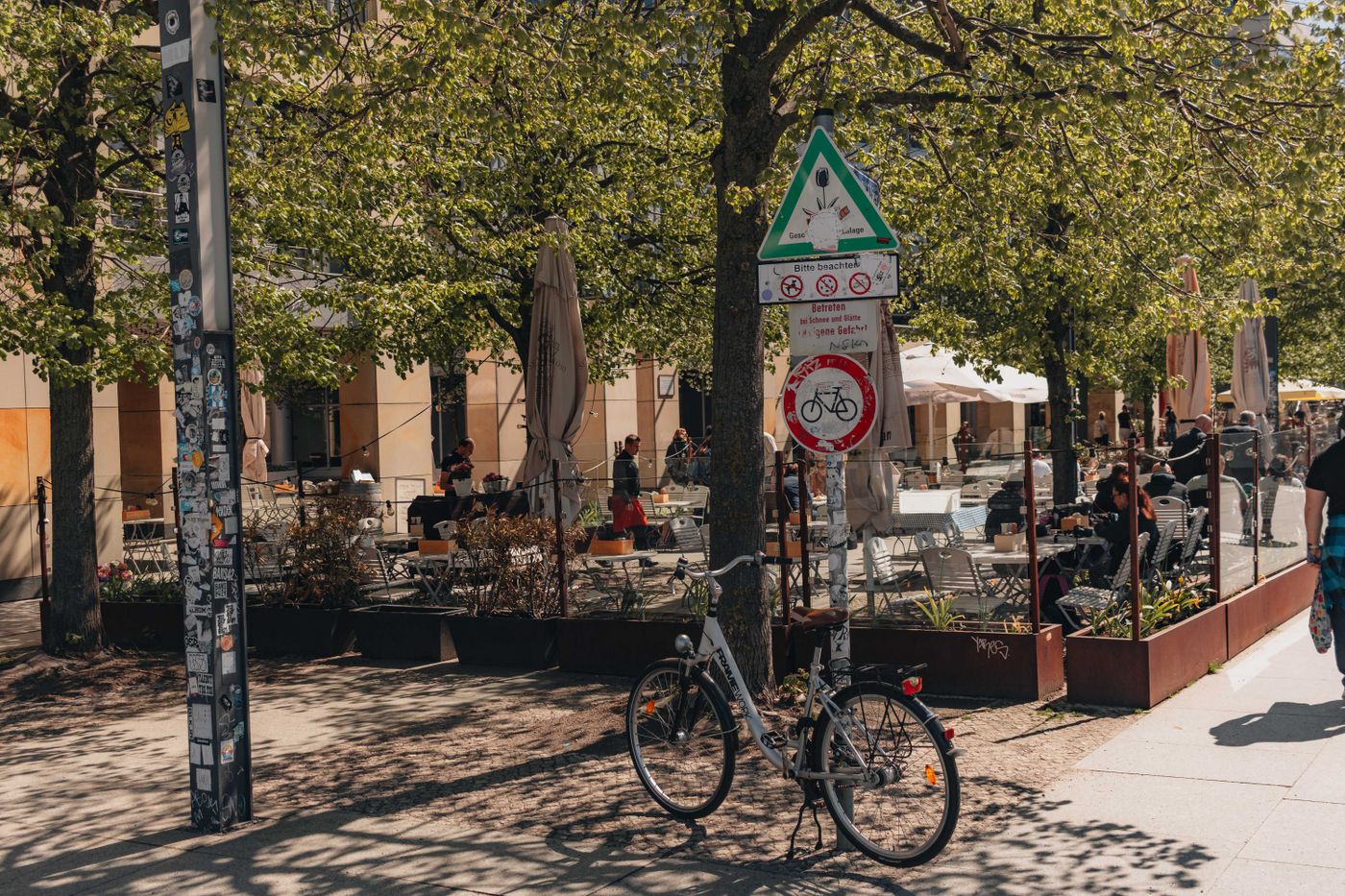
The is a twice-weekly open-air market that runs along the Landwehrkanal, with stalls selling fresh produce, Turkish specialties, fabrics, and street food. On a Saturday evening, the market is in its final hours — the vendors are relaxed, the light is golden over the canal, and the crowd is a mix of local families doing their weekly shop and people just wandering with a gözleme in hand. It's one of the most atmospheric spots in , and the canal-side setting with the trees and the water makes it feel far from the city even though it's right in the middle of it.
Gözleme is a thin, filled Turkish flatbread cooked on a griddle — the stalls at the Maybachufer market make them fresh to order with spinach and feta, potato, or minced meat. Grab one, then walk a few meters down to sit on the canal bank with your feet over the water. It's the best way to end the day here, watching the light fade over the while the market packs up around you.
The Maybachufer market runs Tuesdays and Fridays, and the dates can shift around holidays — checking the open days on the fly while sitting by the canal means we know exactly when to come back for the fresh flatbreads and the fabric stalls.
Get an eSIMAiralo
 makes a personal plan in one tap. Tune it by mood, diet, time, budget, squad — and drop in your own places. Works in 65,000+ cities. It learns what you like, so every next plan fits better. Stop Searching. Start going.
Sources give mixed signals about this spot — we recommend confirming before visiting.
Tap outside to close
Tap outside to close
 squad
squad like
like