
📍 8 stops · ⏱ ~7.5 h

We trace the World Cup energy from Colonia Americana's street-art lanes and indie cafés into the historic centre, closing at the vast Mercado Libertad as the afternoon crowd swells — a full day on foot through the city's match-day rhythm.
Want your own personalized plan for free?
A compact, forward-thinking space in that doubles as a café by day and a music venue by night. The walls carry a rotating set of local art and the sound system is serious — even a morning coffee here comes with a low, well-curated playlist. During the World Cup, this stretch of the neighbourhood fills early with fans drifting between watch spots.
The place opens early and stays mellow until about noon. Grab the corner seat by the window; by lunchtime the sidewalk fills with groups heading toward Avenida Chapultepec and the match-day screens.
We cut across , one of the city's broad east–west boulevards. The architecture here is a mix of mid-century modern and neocolonial, and on a World Cup Saturday the median strips and bus stops carry clusters of fans in green jerseys. The avenue links the leafy residential pockets of Americana to the denser commercial centre.
We step onto Avenida Chapultepec, the pedestrian-friendly spine of Colonia Americana. On Saturdays the wide central promenade becomes a low-key street fair: artisans set up folding tables with jewellery and prints, skaters carve between the benches, and every other restaurant rolls out a screen for the day's matches. The crowd is mostly local, mostly under forty, and the energy is relaxed rather than frantic — people are here to wander, not to rush.
The avenue runs north–south through the heart of Colonia Americana, lined with early-20th-century mansions converted into restaurants, bars, and concept stores. On a World Cup match day the whole strip turns into an informal fan zone: outdoor tables fill, big screens appear in courtyards, and the pedestrian median becomes a slow-moving parade of locals. Even without a ticket to a game, the collective rhythm of the street is the closest you get to the stadium atmosphere.
Avenida Chapultepec · Book onlineGetYourGuide Things to do nearby Guadalajara's Hidden Gems Audio Tour
WeGoTrip
from €10
Guadalajara's Hidden Gems Audio Tour
WeGoTrip
from €10
A small, independent café tucked on a residential street just east of the avenue. The menu is short — good espresso, fresh sandwiches, a daily soup — and the crowd is a mix of remote workers and locals who live on the block. The back patio is shaded and surprisingly quiet, a good place to reset before the afternoon walk.
has become one of the city's most concentrated stretches of large-scale mural work. The walls here change constantly — local and visiting artists repaint facades every few months, so the street never looks the same twice. On a World Cup weekend, several of the pieces incorporate football motifs, national colours, and portraits of Mexican players, turning the walk into a blend of art crawl and pre-match ritual.
A short east–west street in Colonia Americana that functions as a rotating outdoor exhibition. The murals range from photorealistic portraits to abstract geometric pieces, and the scale is impressive — some cover entire three-storey building sides. The street itself is residential and quiet, so you can stand back and take in the work without jostling through a crowd.
A neighbourhood bar and live-music spot with an unpretentious, slightly worn-in feel — the kind of place where the bartender knows the regulars by name. The programming leans toward rock, jazz, and cumbia, and on a Saturday afternoon during the World Cup the doors are open to the street and the match plays on a projector inside. Grab a local craft beer or a mezcal and settle into the late-afternoon lull before the evening crowd arrives.
The blocks leading to the plaza are lined with small shops selling instruments, charro suits, and leatherwork. On a World Cup Saturday, the usual musicians who gather here are joined by an even larger crowd — fans spilling out from nearby bars, families taking photos, and groups of friends singing along to the bands that play in the open air. The plaza itself is compact but dense with sound and colour.
A small, historic square in the centre of the city, known as the traditional gathering point for mariachi musicians. Bands in embroidered suits play for tips, and the surrounding arcades house cantinas that have been pouring tequila for decades. During the World Cup, the plaza takes on a festival atmosphere — fans in green jerseys request favourite songs between match updates shouted from doorways.
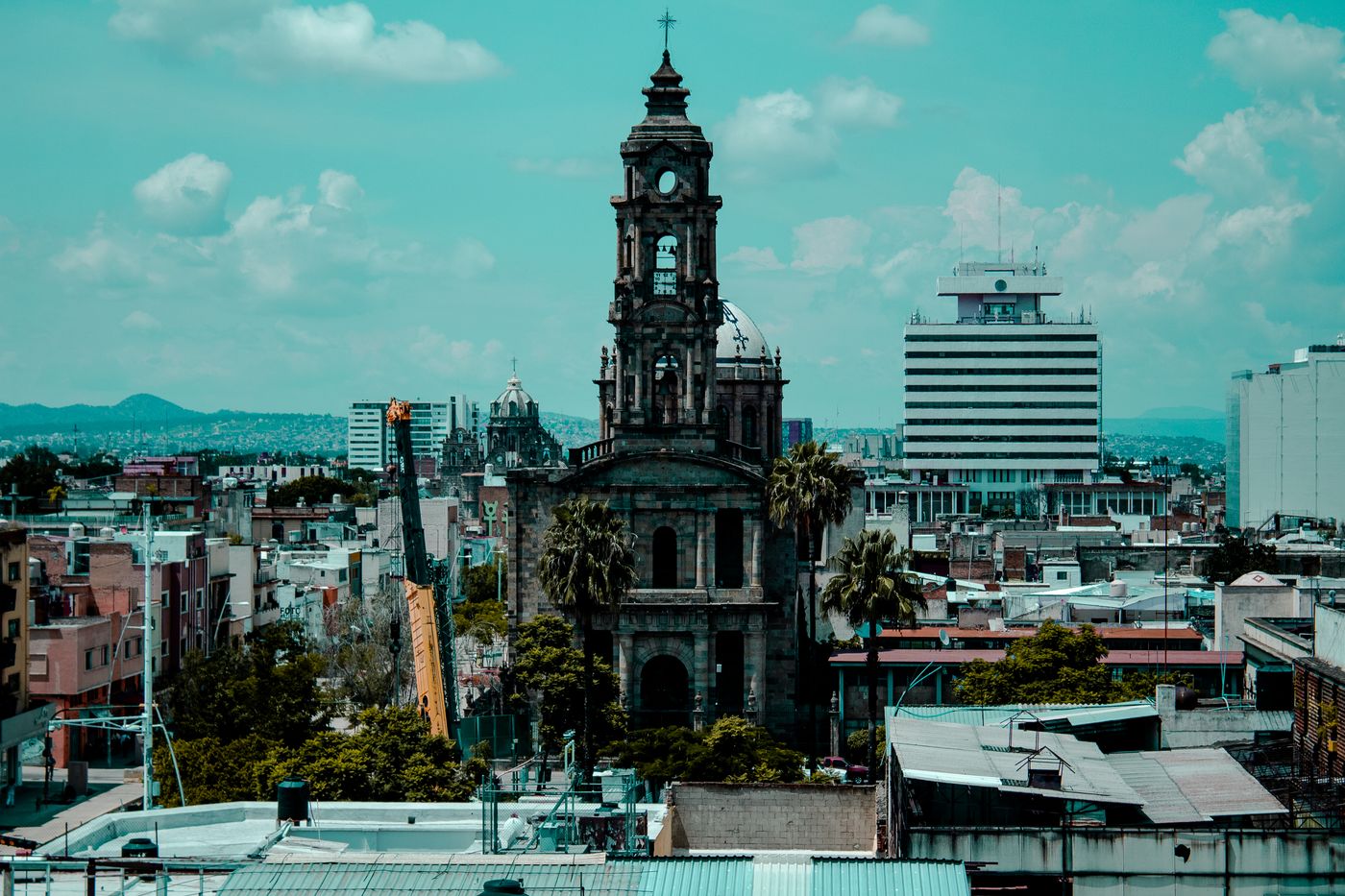
This broad plaza sits between the and the , two of the city's most recognisable landmarks. The stone expanse is often used for public events, and during the World Cup it becomes a gathering point — fans sprawl on the steps, street vendors sell elotes and raspados, and the cathedral bells ring out over the crowd. The neoclassical theatre facade at the far end glows in the late-afternoon light.
One of the largest public squares in the historic centre, flanked by the cathedral on one side and the on the other. The plaza was built in the mid-20th century and has hosted everything from political rallies to concerts. On a match day, the open stone expanse fills with fans watching the game on a giant screen, and the steps of the theatre become informal seating for hundreds.
One of the largest indoor markets in Latin America, spread across three levels and hundreds of stalls. You can find everything here — fresh produce, handmade leather goods, electronics, and some of the city's best street food. The upper floor is dedicated to prepared food: , , pozole, and fresh aguas frescas. On a World Cup Saturday, the market is packed with locals doing their weekly shopping and fans grabbing a pre-match or post-match meal, and the din of commerce mixes with cheers from televisions scattered among the stalls.
Things to do nearby Guadalajara Market Food Tour & Historic Landmarks Walk
Viator
from €62
Guadalajara Market Food Tour & Historic Landmarks Walk
Viator
from €62
The food stalls on the upper floor are the real draw — follow the smell of slow-cooked birria and look for the counters with the longest queues of locals. The market closes at 21:00 on Saturdays, so arriving in the late afternoon gives you a good hour to eat and browse before the vendors start packing up.
The is enormous — three floors, hundreds of stalls, and the layout shifts depending on the day. Pulling up a map from inside the building helps you retrace your steps to that one birria counter you loved, or find the quickest exit toward the taxi stand when your hands are full.
Get an eSIMAiraloIf you are carrying a daypack or a small suitcase from an early checkout, stash it before entering the market — the aisles are narrow and the crowd is dense. There are secure luggage-drop points near the historic centre; hands-free, you can weave through the stalls and eat standing up without juggling a bag.
Store your bagsRadical Storage
 makes a personal plan in one tap. Tune it by mood, diet, time, budget, squad — and drop in your own places. Works in 65,000+ cities. It learns what you like, so every next plan fits better. Stop Searching. Start going.
Sources give mixed signals about this spot — we recommend confirming before visiting.
Tap outside to close
Tap outside to close
 squad
squad like
like