
📍 7 stops · ⏱ ~8 h

When the rain settles in over Hobart, the city folds inward — into its sandstone museums, its creaking bookshops, and the warm, low-lit bars where locals wait out the weather. This day moves through the Tasmanian Museum and Art Gallery, a sprawling independent bookstore, a couple of well-placed food and drink stops, and the artist studios tucked behind Salamanca Place, ending with a wander through the old streets of Battery Point as the light fades.
Want your own personalized plan for free?
sits right on the waterfront in a complex of heritage sandstone buildings, and it is the kind of museum that rewards a slow, dry morning. The permanent collection traces Tasmania's natural and colonial history — think thylacine specimens, early colonial furniture, and a strong holding of 19th-century landscape painting. The temporary exhibitions often pull in contemporary Tasmanian artists, and the whole place is free to enter, so you can dip in and out of the galleries without watching the clock. On a wet Saturday, the courtyard café is a good spot to sit under cover and listen to the rain on the flagstones.
Tasmanian Museum and Art Gallery · Book onlineGetYourGuideMost visitors drift straight into the main entrance hall and miss the Bond Store — the oldest part of the complex, built in the 1820s. The stairs are narrow and the ceilings low, and the rooms upstairs hold the colonial art and decorative pieces. It is usually quieter up there, and the windows look out onto the docks.
Collins Street runs east–west through the centre of Hobart and still carries the weight of the city's 19th-century trading history. The buildings here are a mix of Georgian and Victorian sandstone, with wrought-iron balconies and narrow laneways cutting through to the waterfront. On a rainy day the stone darkens to a deep ochre, and the covered arcades between the main thoroughfares become the best route through the city.
Fullers is a Hobart institution, occupying a large, light-filled space on Collins Street with floor-to-ceiling shelves and a café tucked inside. The selection leans heavily into Tasmanian authors, natural history, and art books, and the staff are the kind who actually read what they sell. Even if you are not buying, it is a good place to kill an hour out of the rain — pull a book off the shelf, grab a coffee from the in-store café, and settle into one of the armchairs by the window.
Pablos sits on a side street off the main drag, and from the outside it is easy to walk straight past — the entrance is unmarked, and the interior is all low light, velvet, and mismatched furniture. By day it is quiet, the kind of place where you can get a long lunch and a well-made cocktail while the rain drums on the awning outside. The menu leans Latin American — arepas, empanadas, ceviche — and the bar staff know their way around a pisco sour. It is a good midday anchor before the afternoon's market and gallery stops.
Bathurst Street between Murray and Elizabeth transforms on Saturdays into the Farm Gate Market — a stretch of stalls selling seasonal produce, artisan bread, and small-batch preserves. Even on a wet day the stallholders are out under their awnings, and the smell of fresh coffee and wood-fired flatbread cuts through the damp air. It is a working market, not a tourist setup, and the crowd is mostly locals doing their weekly shop.
The Farm Gate Market runs every Saturday along Bathurst Street and is Hobart's answer to the big-city farmers' market — smaller, friendlier, and fiercely local. Stallholders sell what they grow or make themselves: heirloom vegetables, free-range eggs, sourdough, honey, and the odd bottle of Tasmanian cider. It is a good place to pick up a snack for later or just wander through and chat with the producers. The market wraps up by early afternoon, so arriving around 2pm means you catch the last hour when the crowds have thinned and the stallholders are more relaxed.
Ethos sits in a converted warehouse on Elizabeth Street, with high ceilings, exposed brick, and a kitchen that turns out some of the most interesting food in Hobart. The menu changes regularly and leans Mediterranean — wood-fired meats, fresh pasta, and a short but sharp wine list heavy on Tasmanian pinot noir. The room is warm and the service is unhurried, making it a natural spot for an early dinner before the evening's gallery stop. The restaurant also doubles as a low-key art and music space, with local work on the walls and occasional live sets in the corner.
The walk from Ethos down to takes you past St. David's Park — a small, walled green space that was once Hobart's first burial ground. The headstones have been moved to the perimeter, and the park itself is now a quiet spot with old oaks and a view of the harbour. It is worth the two-minute detour, especially when the rain has just stopped and the stone paths are still dark with water.
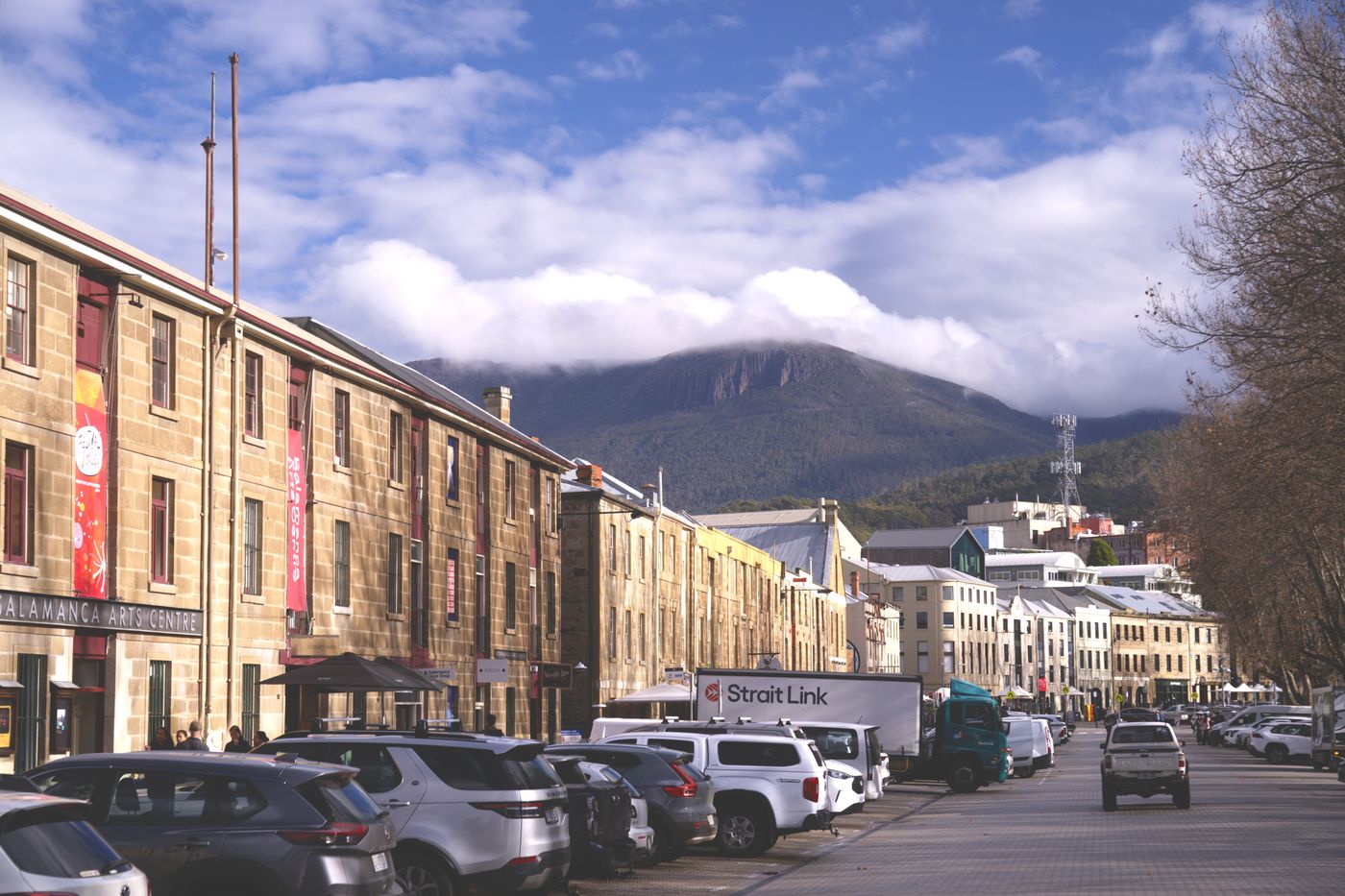
is a row of 1830s sandstone warehouses that once stored whale oil, grain, and wool bound for the colonies. Today the warehouses house galleries, studios, and bars, and the cobbled street between them is one of the most atmospheric stretches in Hobart. On a Saturday evening, the market stalls are long gone and the street settles into a quieter rhythm — the lights from the galleries spill out onto the wet stone, and you can hear piano or conversation drifting from the upper windows.
The occupies several of the old warehouses at the heart of , and inside is a warren of artist studios, small galleries, and performance spaces. The exhibitions change frequently — you might find a printmaker's open studio, a group show by Tasmanian ceramicists, or a contemporary installation in the . Entry is free, and the building itself is worth the visit: the old timber beams, the narrow staircases, and the way the light falls through the high windows onto the stone floors. On a Saturday afternoon, many of the resident artists keep their studio doors open, and you can wander in and talk to them about their work.
Most visitors stick to the ground-floor galleries and miss the artist studios on the upper levels. Take the narrow staircase at the back of the — the studios up there are where the real work happens, and the artists are often happy to chat if the door is open.
Battery Point is a warren of narrow lanes, Georgian cottages, and hidden gardens perched on the hill above . It was Hobart's first residential district, built in the early 1800s for the merchants and ship captains who worked the docks below. Today it is one of the best-preserved colonial neighbourhoods in Australia, and walking through it at twilight — when the lamps come on and the stone walls glow — feels like stepping into a different century. Arthur Circus, a tiny round park ringed by whitewashed cottages, is the quiet heart of the area and a good place to end the day.
Battery Point is not a single viewpoint but a whole neighbourhood that rewards aimless wandering. The streets are steep and the houses are small and old, with picket fences, climbing roses, and glimpses of the Derwent River between the rooftops. The best approach is to walk up from , follow the curve of Hampden Road past the old pubs and corner shops, and then lose yourself in the back streets. Arthur Circus is the highlight — a perfect little Georgian circle with a green in the middle — and from there you can loop back down toward the waterfront as the evening sets in. On a wet day, the cobblestones are slick and the air smells of woodsmoke and damp earth.
The streets of Battery Point twist and double back on themselves, and it is easy to lose your bearings once the light fades. Having a map on hand makes it simple to trace the route back down to the waterfront — the path along the river past the old slipyards is the prettiest way back to the city, and the lights of the harbour reflect off the water once the rain clears.
Get an eSIMAiralo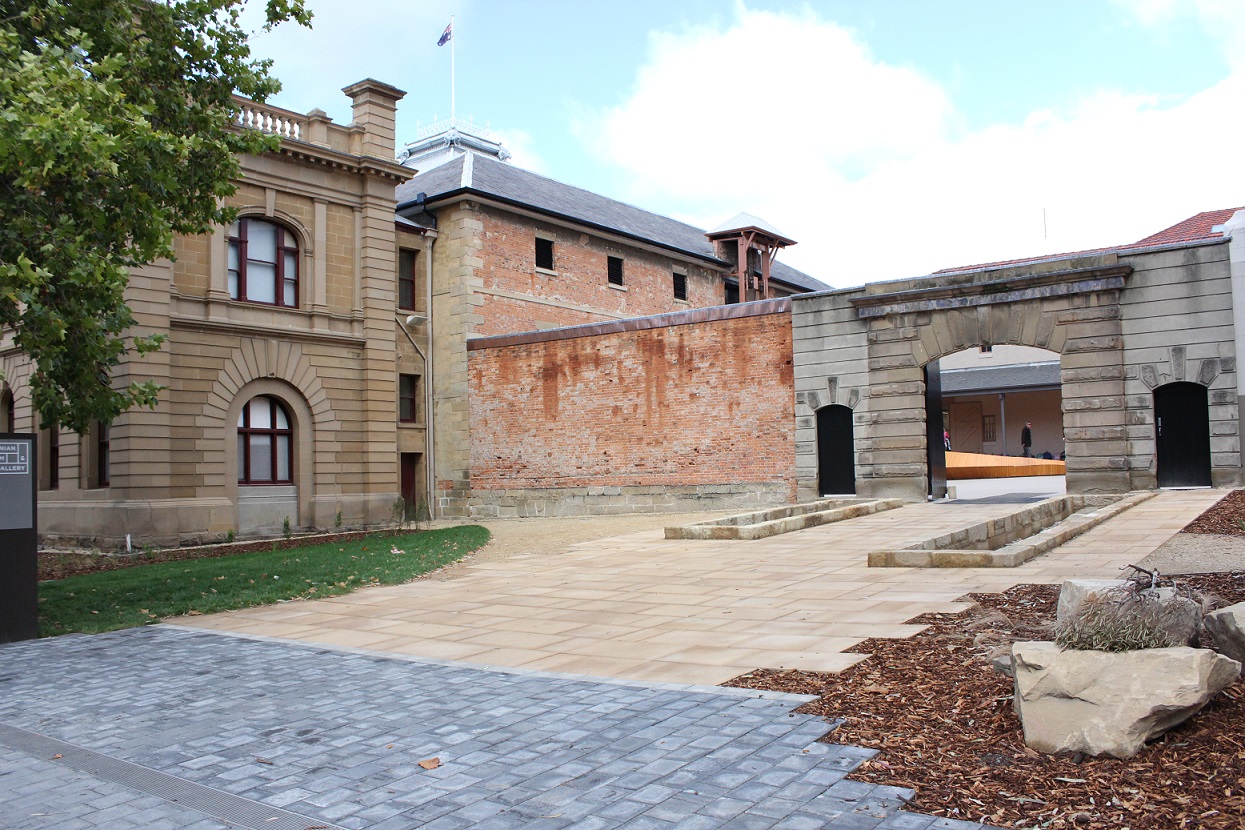 A rainy-day wander through Hobart's museum halls, heritage pubs, and Salamanca's sandstone lanes
 Artist-run spaces, a vinyl café and Salamanca's back streets — an indoor Hobart day
 A winter feast at Dark Shed, then Salamanca bites, waterfront drinks and North Hobart dinnerNorth Hobart bagels to waterfront markets, a Blues show in between
 makes a personal plan in one tap. Tune it by mood, diet, time, budget, squad — and drop in your own places. Works in 65,000+ cities. It learns what you like, so every next plan fits better. Stop Searching. Start going.
Sources give mixed signals about this spot — we recommend confirming before visiting.
Tap outside to close
Tap outside to close
 squad
squad like
like