
📍 7 stops · ⏱ ~6.5 h

A full day looping through Bruges' historic core, from the climb up the Belfry and the grandeur of Burg Square to the Flemish Primitive masterpieces of the Groeningemuseum, ending in the quiet of the Beguinage. We move through the Markt, pause for a local lunch, and trace the canals that give the city its shape — a first-time walk that earns every cobblestone.
Want your own personalized plan for free?
The 83-metre medieval bell tower dominates the Markt, its carillon of 47 bells still ringing out across the city. The climb is 366 steps — narrow and winding — past the old treasury room and the impressive clock mechanism, and the reward is a panoramic view over the stepped gables and red-tiled rooftops of the historic centre.
Belfry of Bruges · Book onlineGetYourGuideThe staircase is single-file for long stretches and the top platform holds only a handful of people. Arriving at opening time means you climb without a crush behind you and have the view almost to yourself — by 11:00 the line often snakes across the square.
Timed-entry tickets are available online and are worth securing for the first slot — weekends and summer Saturdays sell out by mid-morning.
The historic marketplace has been Bruges' commercial heart since the 10th century, ringed by ornate guildhalls with their distinctive crow-stepped gables. The Provinciaal Hof dominates the eastern side in neo-Gothic brick, while the statue of and — leaders of the 1302 — stands at the centre. On a Saturday morning the square is alive with flower stalls, bicycles and the sound of the carillon above.
A small independent café on Ezelstraat that does a creative, unfussy brunch — the kind of place locals drop into on a Saturday. The menu leans seasonal and the coffee is pulled short and strong. It is a good pause between the morning's monuments and the afternoon's art.
Burg is a concentrated showcase of Bruges' power across the centuries. The 14th-century Gothic Stadhuis (City Hall) dominates one side with its delicate stone tracery and turrets, while the sits in the corner — a Romanesque lower chapel and a lavishly decorated Gothic upper chapel. The square feels more solemn and enclosed than the Markt, a place of ceremony rather than commerce.
The administrative heart of Bruges since the 9th century, is framed by some of the city's most significant buildings. The Stadhuis, completed in 1421, is one of the oldest civic buildings in the Low Countries, its facade a riot of statues and gilded details. Standing in the square, you can trace the layers of power — civic, religious and judicial — that shaped the medieval city.
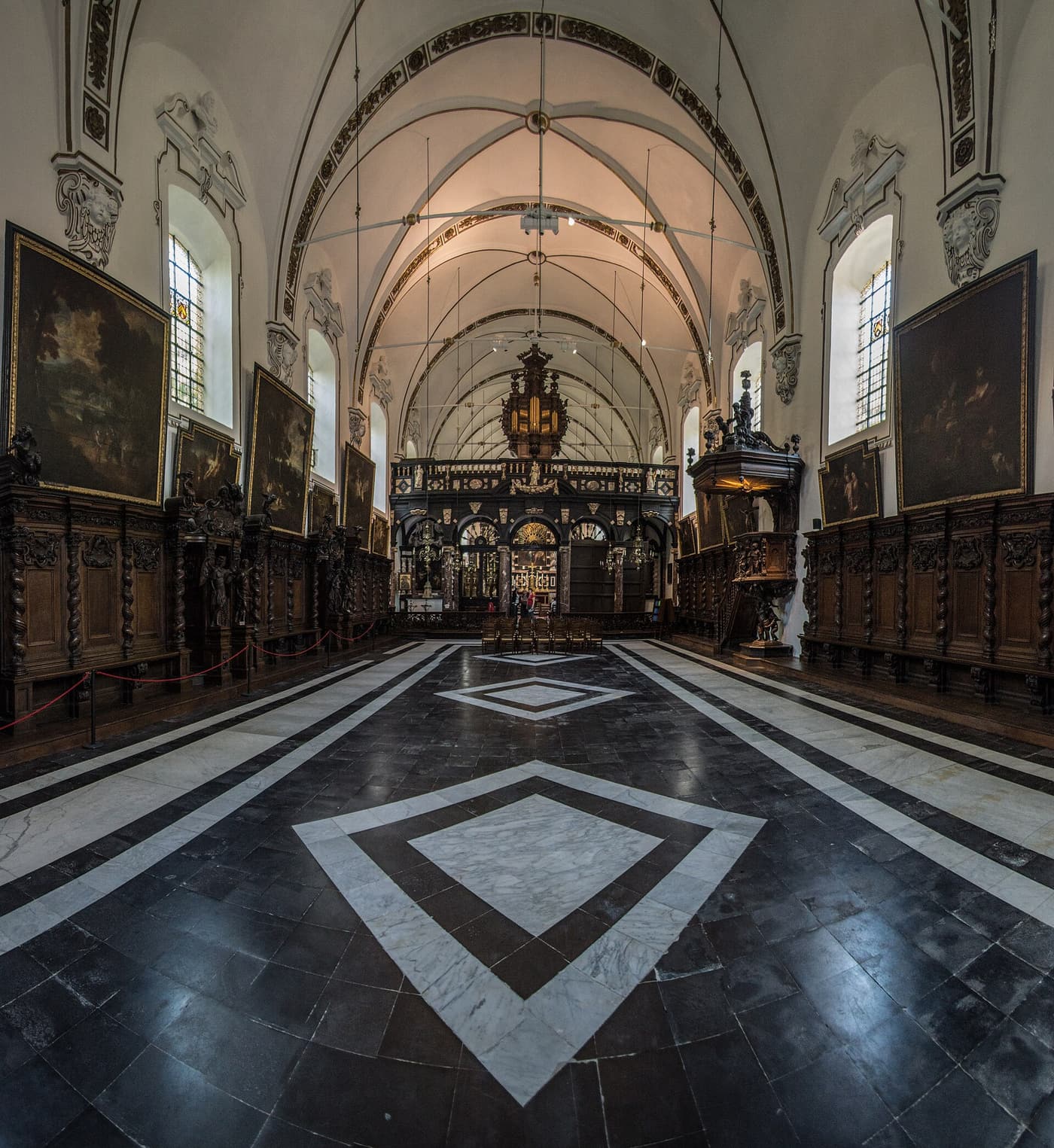
Tucked into the corner of , this double chapel houses a venerated relic — a cloth said to contain the blood of Christ, brought to Bruges after the Second Crusade. The lower Romanesque chapel is austere and heavy, while the upper Gothic chapel, rebuilt in the 19th century, glows with stained glass and painted murals. The relic itself is presented for veneration at set times, a moment of quiet ritual amid the tourist flow.
Basilica of the Holy Blood · TicketsViatorThe holds the city's finest collection of Flemish Primitive painting, with 's 'Madonna with Canon van der Paele' and 's 'Moreel Triptych' as its anchors. The collection spans six centuries of Belgian art, but the 15th-century rooms are the reason to come — the luminous detail of the oil paintings, the burgher portraits, and the religious panels that made Bruges a centre of European art. The museum is compact enough to see thoroughly in two hours without fatigue.
Groeningemuseum · TicketsGetYourGuideIf you plan to visit the Stadhuis or other city museums, the Musea Brugge Card covers the and several other stops and pays for itself quickly.
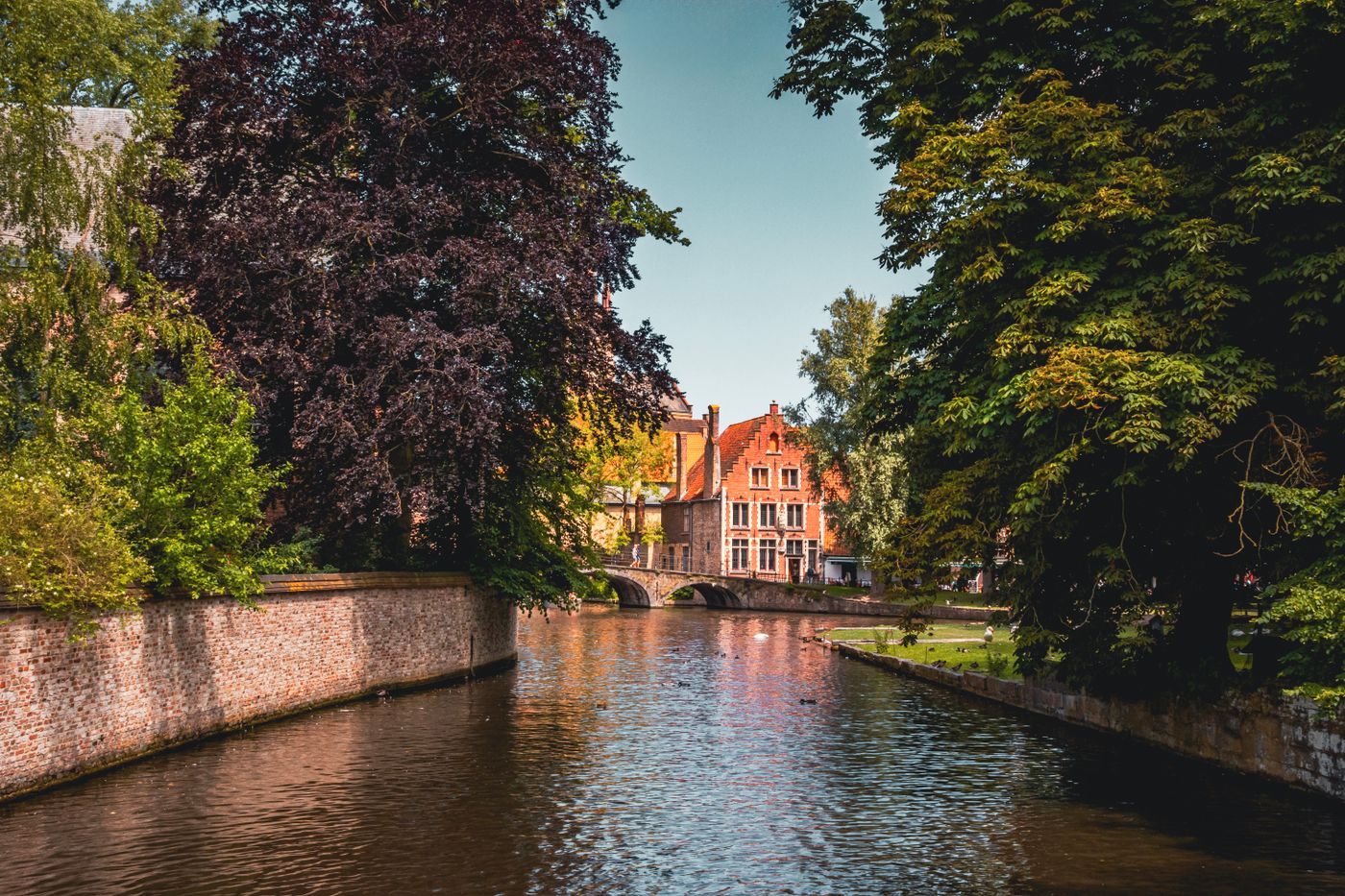
The stretch of canal between the Rozenhoedkaai and the Dijver is the city's most photographed spot: the rises behind the stepped gables, reflected in the still green water. In the late afternoon the light softens and the tour boats thin out, leaving the quayside to a quieter rhythm — a few locals on benches, the occasional swan drifting past. It is the view that defines Bruges for most visitors, and it earns its reputation.
A walled enclave of whitewashed 17th-century houses set around a poplar-shaded lawn, the was once home to a community of lay religious women. Today it is a Benedictine convent, and the silence inside the walls is striking after the busy canals. The small church and the modest museum give a sense of the daily rhythm that has continued here for centuries, and the benches under the trees are the best place in the city to sit and let the day settle.
When we leave the , a good way to close the loop is to follow the canal north along the Bakkersrei — it winds past the back of the old St. John's Hospital and brings us back toward the centre in about fifteen minutes. Having a little data on the phone means pulling up the route on the map without second-guessing the turns, so the walk stays relaxed rather than a navigation puzzle.
Get an eSIMAiraloThe cobblestones and narrow stepped bridges of the historic centre are beautiful but punishing with a heavy bag. If we arrived before check-in or are staying past checkout, there are luggage drop points near the Markt and the station — stashing the bag there means walking the and the canals with nothing on our shoulders.
Store your bagsRadical Storage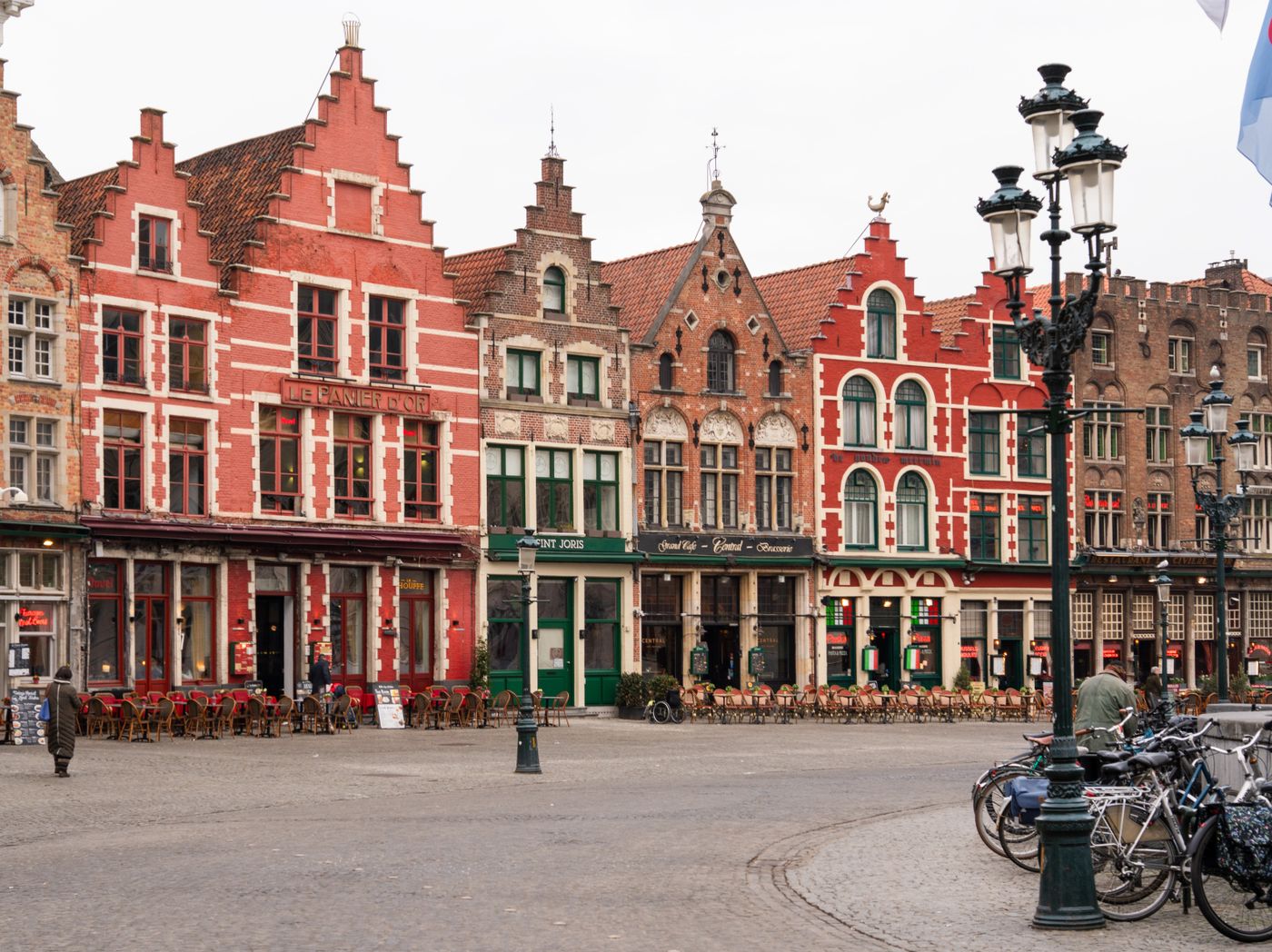 BRUSK, a carillon concert, and a photo walk through Sint-Anna and Sint-Gillis
 Windmills, parks and open-air music — a full day outdoors in Brugge
 Morning photo workshop through the quiet eastern edges, then Jeruzalemkerk and a slow canal-side afternoonParks, beguinage quiet and a rampart walk, with a carillon concert and market along the way
 makes a personal plan in one tap. Tune it by mood, diet, time, budget, squad — and drop in your own places. Works in 65,000+ cities. It learns what you like, so every next plan fits better. Stop Searching. Start going.
Sources give mixed signals about this spot — we recommend confirming before visiting.
Tap outside to close
Tap outside to close
 squad
squad like
like