
📍 8 stops · ⏱ ~7 h

A full day threading through Ghent's compact historic centre, from a UNESCO-listed belfry and the Van Eyck brothers' greatest work to a graffiti-splashed alley and a fairy-tale castle — all in a walkable loop that crosses the Graslei quays as the afternoon light hits the water.
Want your own personalized plan for free?
The tallest belfry in Belgium, this UNESCO-listed tower has watched over the city since the 14th century. The climb passes the dragon weather vane and the carillon of 54 bells before opening onto a panoramic view that stretches across the three iconic towers of Ghent. The lower floors house the former city guards' room and the original 17th-century clock mechanism.
Ghent Belfry · TicketsViator Things to do nearby Hidden Ghent: A Self-Guided Audio Tour Of The Flemish City
Viator
from €18
Hidden Ghent: A Self-Guided Audio Tour Of The Flemish City
Viator
from €18
On Saturdays the carillon often plays a short live concert around midday — the sound carries across Sint-Baafsplein and you can hear it from the cathedral steps. Not every week, but when it happens it stops people mid-stride.
This Gothic cathedral, built on the site of a 10th-century chapel, houses the — the monumental polyptych painted by Hubert and in 1432. The work's central panel, The Adoration of the Mystic Lamb, is one of the most influential paintings in European art history. The cathedral interior also holds a Rubens altarpiece and a striking Baroque pulpit in carved oak and marble.
Saint Bavo Cathedral · Book onlineGetYourGuideThe altarpiece is displayed in a dedicated chapel to the left of the main altar. Entry is ticketed separately from the cathedral itself — the queue forms at a side door on the north transept, not the main portal, and the light on the panels is best before noon.
Officially named , this narrow alley is Ghent's legal graffiti zone — a constantly repainted open-air gallery where local and visiting street artists layer new work over old. The city sanctioned it in the 1990s as a controlled outlet, and the result is a vivid, ever-changing contrast to the medieval stonework a few steps away. Every visit looks different.
Graffiti Street · Book onlineGetYourGuideA specialty coffee spot near St. Michael's Bridge that takes its single-origin beans seriously. The baristas pull a clean, short espresso and the flat white has a loyal following among locals who work in the area. A good pause after the cathedral and before the afternoon churches.
Built in the 13th century from blue-grey Tournai limestone, Saint Nicholas' is the city's finest example of Scheldt Gothic — a regional style characterised by its use of that distinctive stone and a sturdy, vertical silhouette. The interior is quieter than the cathedral, with stained-glass windows that catch the afternoon light and a restored organ loft high above the nave.
Saint Nicholas' Church · Book onlineGetYourGuideA plant-based café with a window seat looking straight onto the water, Ludo Kafe is known for its matcha and its calm, unhurried atmosphere. The menu leans vegetarian and vegan with small plates and bowls that feel lighter than the city's heavier Flemish fare — a good midday reset before the castle.
The is where you'll want to pull up a map or check a photo of the guildhall façades to know which is which — the stepped gable of the and the turret of the are easy to mix up from a distance. A quick search on the spot sorts it out.
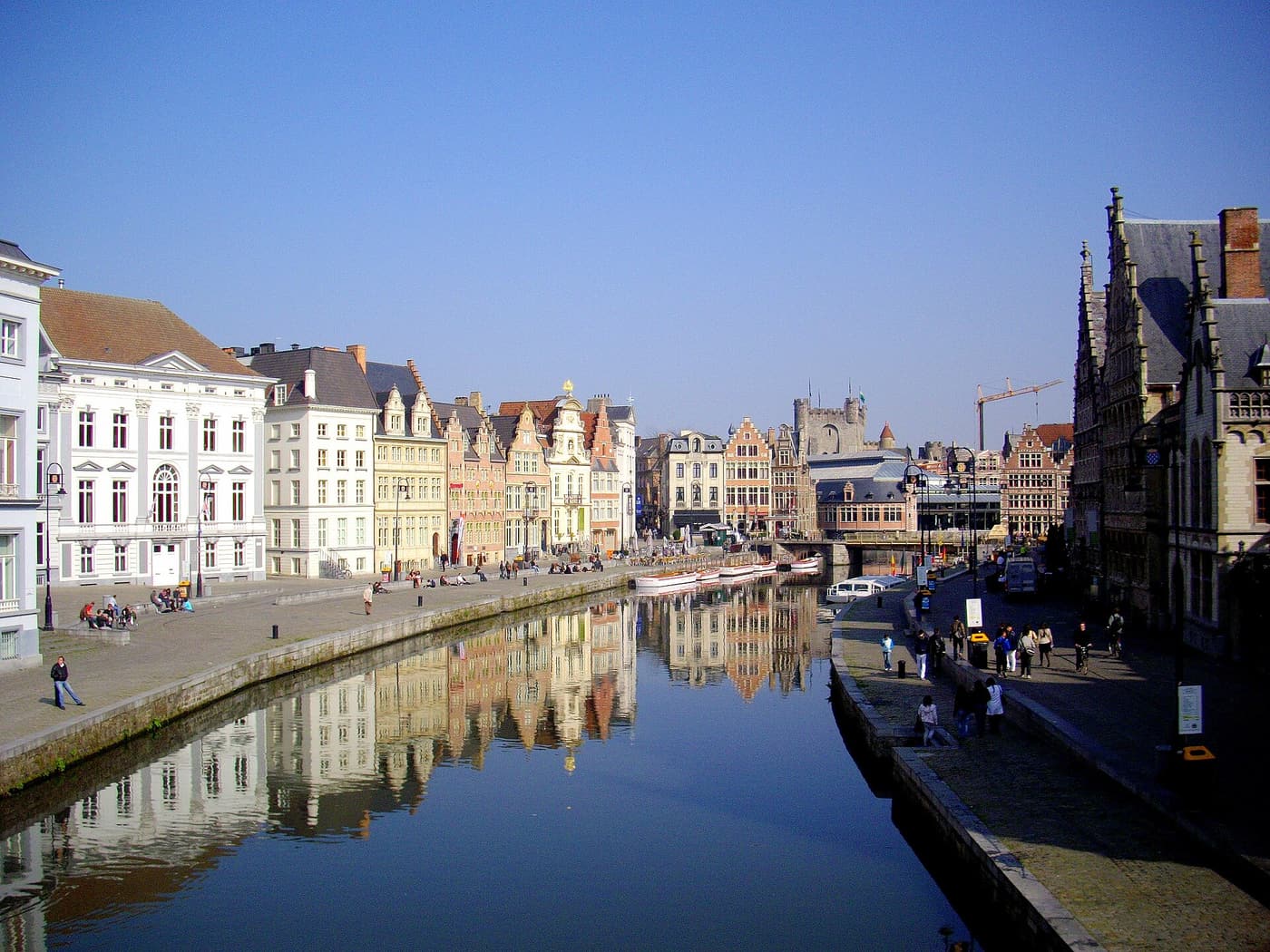
Get an eSIMAiraloThese two facing quays along the were the commercial heart of Ghent from the 11th century onward, when the city was one of the largest in Europe. The guildhalls that line the Graslei — each with its own gable shape and decorative flourishes — housed the grain weighers, the free boatmen, and the masons who controlled river trade. In the late afternoon the western light warms the brick and the reflections stretch across the water, and the whole row looks like a painted backdrop.
The Graslei and the Korenlei face each other across the river Leie, forming the city's most photographed waterfront. The Graslei side holds the grandest guildhalls — look for the stepped gable of the Spijker grain warehouse and the corner turret of the former . In summer the cobbled quays fill with people sitting on the edge with a drink, and the canal boats glide past every few minutes.
Built in 1180 by , Count of Flanders, Gravensteen is a remarkably intact medieval fortress right in the centre of the city. The audio guide — narrated by a Flemish comedian — walks you through the armoury, the count's residence, and the torture museum before leading you up to the ramparts, where the view looks back across the rooftops toward the three towers you climbed earlier in the day. It is the only remaining medieval castle in Flanders with a moat still filled with water.
The audio tour narrated by comedian turns what could be a dry history lesson into something genuinely funny — and it is included with the entry ticket.
The spiral staircases inside are narrow and steep — if you are carrying a daypack or shopping, there is a luggage storage point near the Korenmarkt that lets you walk the ramparts hands-free and then loop back to collect it before heading on.
Store your bagsRadical Storage
 makes a personal plan in one tap. Tune it by mood, diet, time, budget, squad — and drop in your own places. Works in 65,000+ cities. It learns what you like, so every next plan fits better. Stop Searching. Start going.
Sources give mixed signals about this spot — we recommend confirming before visiting.
Tap outside to close
Tap outside to close
 squad
squad like
like