
📍 7 stops · ⏱ ~6.5 h · 🎟 from €10
A walk through the spiritual and artistic heart of Sofia, moving from the city's grand cathedral and ancient churches to its national art collection, a lively market hall, and the theatrical landmarks that frame its public life — a compact, walkable arc that captures the capital's layered character in a single day.
Want your own personalized plan for free?
One of the largest Orthodox cathedrals in the Balkans, built between 1904 and 1912 as a monument to the Russian soldiers who died fighting for Bulgaria's liberation. The interior holds enough space for five thousand worshippers beneath its central dome, with marble from Italy, alabaster from Egypt, and onyx from Brazil worked into the iconostasis. The crypt houses a rich collection of Bulgarian icons spanning the 9th to the 19th century — quieter than the nave above and worth the separate entry.
Alexander Nevsky Cathedral · Book onlineGetYourGuide Things to do nearby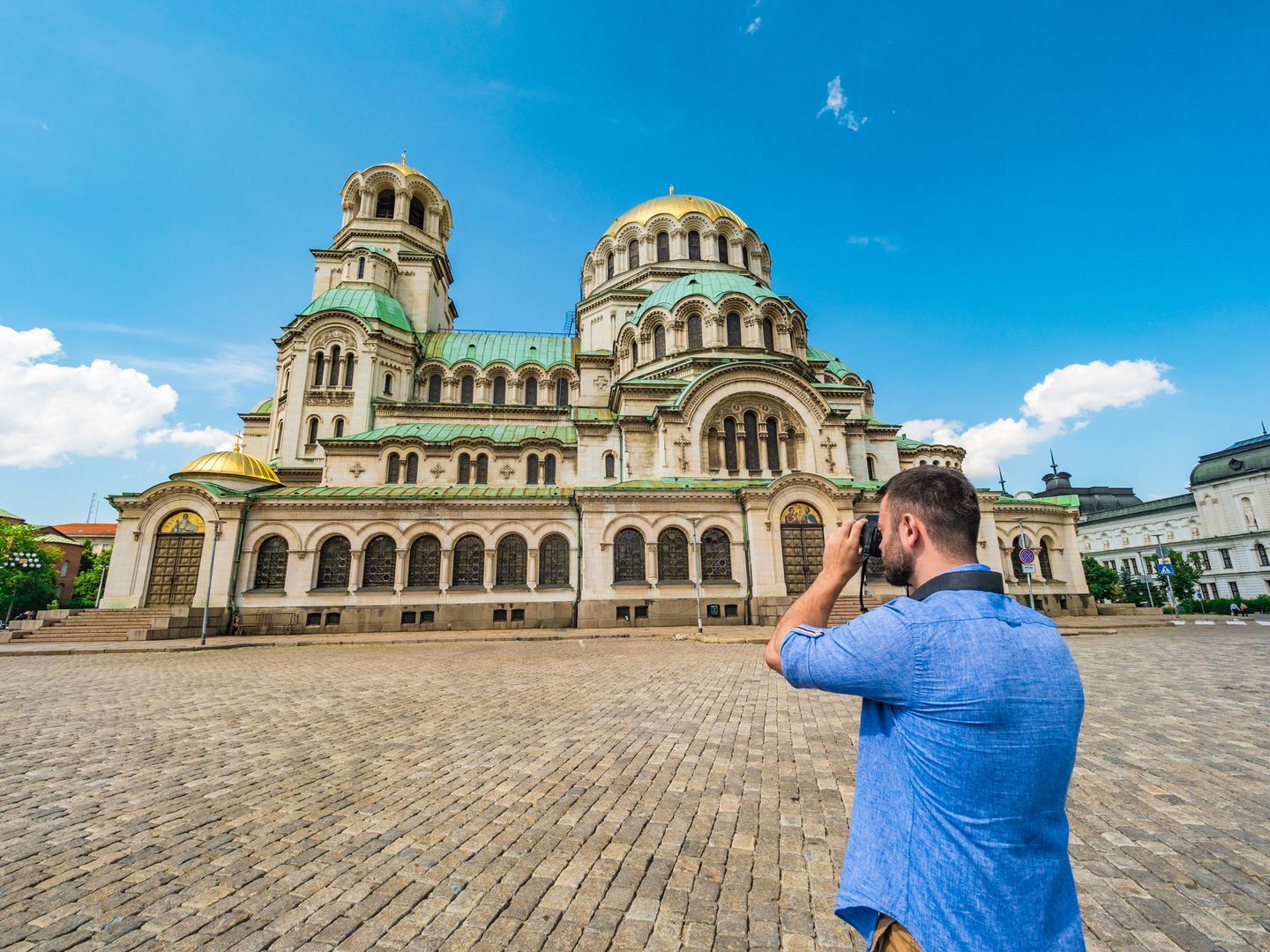 Sofia: Sinners & Saints City Lore Audio Tour
WeGoTrip
from €7
Sofia: Sinners & Saints City Lore Audio Tour
WeGoTrip
from €7
The eastern apse catches the full morning sun and the gold leaf of the domes glows strongest before noon — arrive early and stand on the plaza's eastern edge for the clearest view back at the façade. The crypt entrance is on the left side of the building, easily missed.
A self-guided audio tour that weaves the square's landmarks into a single narrative of faith and imperial power, moving from the cathedral to the and onward. The audio layers historical context over what you see — useful if you want the deeper story without a group. The tour is accessed via an app, so you set your own pace. The vast plaza in front of the cathedral is Sofia's ceremonial heart — the cathedral dominates one end, the National Assembly building frames the other, and the pedestrian expanse between them fills with locals strolling in the early evening. The changing of the guard at the Presidency on the square's southern side happens on the hour and draws a small crowd. By late afternoon the light softens and the cathedral's copper domes take on a warm, green-gold patina.
Sofia: Self-Guided Audio Walk T… · Audio guidewegotrip.tp.stfrom €10The city's namesake, this red-brick basilica dates to the 6th century and stands on an older necropolis — Roman tombs and early Christian mosaics lie beneath the floor, visible through glass panels. The church is notably simple inside, almost austere compared to the cathedral, which makes its age feel immediate. Outside, the Monument to the Unknown Soldier with its eternal flame and stone lion guards the southern wall.
St. Sophia Church · Book onlineGetYourGuideHoused in the former Royal Palace, the holds Bulgaria's most significant collection of fine art from the National Revival period onward. The building itself is a piece of history — the monarchy's residence until 1946 — and the galleries unfold through former state rooms with parquet floors and high ceilings. The collection leans toward 19th- and 20th-century Bulgarian painters, with a strong thread of national identity and landscape running through the works.
National Gallery, Sofia · Book onlineGetYourGuideTemporary exhibitions come and go, but the permanent Bulgarian collection on the upper floor is what earns the visit — the early-20th-century rooms capture the moment Bulgarian art found its own voice, distinct from the European academies. The gallery is usually quiet on weekday afternoons.
Cutting through , three monumental buildings from the 1950s frame a wide pedestrian plaza — the former Party House, the , and the . The architecture is heavy, symmetrical, and deliberately imposing, a sharp contrast to the Ottoman and neoclassical layers we've passed through. Underneath the plaza, a section of the ancient Roman city of lies exposed behind glass.
Built in 1911 as Sofia's first covered market, the Central Hali is a neoclassical iron-and-glass hall that still functions as a working food market. Stalls sell fresh produce, cheeses, cured meats, and Bulgarian wines on the ground floor, with a few quick-eat counters tucked between them — a good spot to grab a banitsa or a bowl of tarator and watch the lunch crowd. The mezzanine level has a handful of sit-down eateries if you want a longer pause.
The cheese stall near the eastern entrance sells fresh sirene and kashkaval by weight — ask for a taste of the sheep's milk sirene, saltier and sharper than the cow's version. Upstairs, the small Bulgarian kitchen does a solid shopska salad and grilled kebapche.
Built in 1566 by the Ottoman architect , this is the only functioning mosque remaining in Sofia. Its name means 'many baths' — it sits over a natural thermal spring, and on cold mornings steam rises through vents in the pavement near the walls. The interior is a single domed space with calligraphic inscriptions and a quiet that feels far from the traffic outside. Visitors are welcome outside prayer times; women should cover their heads.
Bulgaria's national theatre, completed in 1907 by Viennese architects Fellner and Helmer, anchors the City Garden with its white neoclassical façade and pediment sculptures of Apollo and the Muses. The building was heavily damaged by fire in 1923 and rebuilt, and it remains the country's most important stage. Even without a ticket, the park in front is a local gathering spot — benches fill with chess players, students, and families by late afternoon.
The square sits at a natural end point — buses and the metro stop at the university and the National Assembly nearby, and most of the city centre is a short walk from here. If you want to find your way back to a specific spot from earlier in the day, having a steady connection keeps the map loaded without hunting for a signal.
Get an eSIMAiralo
 makes a personal plan in one tap. Tune it by mood, diet, time, budget, squad — and drop in your own places. Works in 65,000+ cities. It learns what you like, so every next plan fits better. Stop Searching. Start going.
Sources give mixed signals about this spot — we recommend confirming before visiting.
Tap outside to close
Tap outside to close
 squad
squad like
like