
📍 7 stops · ⏱ ~7 h

We trace Sofia's long story through its most emblematic buildings, moving from ancient Roman foundations and Ottoman-era market halls to the grand Orthodox cathedrals and neoclassical theatres that define the city's centre. This is a walk through the layers of empire, faith, and culture that have shaped the Bulgarian capital over two millennia.
Want your own personalized plan for free?
Housed in the former , this museum occupies one of Sofia's most striking buildings — an elegant early-20th-century structure with a colourful ceramic facade depicting the city's coat of arms. Inside, the collection walks through Sofia's evolution from a Thracian settlement to a modern capital, with rooms dedicated to the royal family's personal effects, including a gilded chariot and vintage tram carriage. The building itself, with its ornate fountains and detailing, is as much a reason to visit as the exhibits.
Regional History Museum of Sofia · TicketsViator Things to do nearby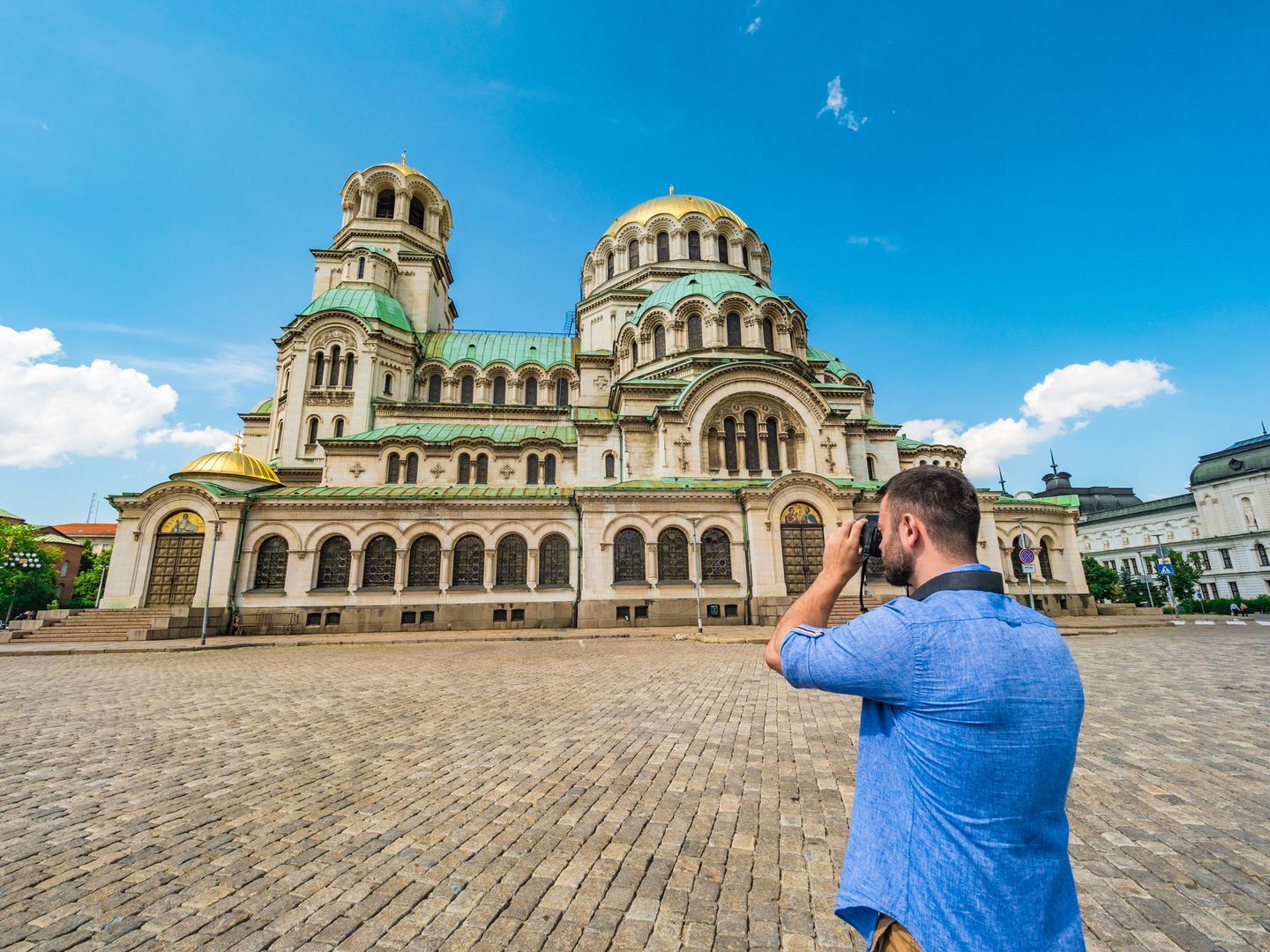 Sofia: Sinners & Saints City Lore Audio Tour
WeGoTrip
from €7
Sofia: Sinners & Saints City Lore Audio Tour
WeGoTrip
from €7
The taps on the building's exterior still run with hot mineral water from Sofia's natural springs — locals fill bottles here throughout the day, a tradition that long predates the museum. The water is free and perfectly safe to drink, though it has a distinct sulphurous smell.
The museum sits at the edge of what was once Sofia's bath district, where Ottoman-era hammams and natural hot springs drew residents for centuries. The square in front opens toward the , built in 1576 by the great Ottoman architect , its slender minaret rising beside the modern buildings. This small patch of the city holds a Roman street grid, an Ottoman place of worship, a synagogue, and a church within a few hundred metres — a compressed map of Sofia's religious and imperial past.
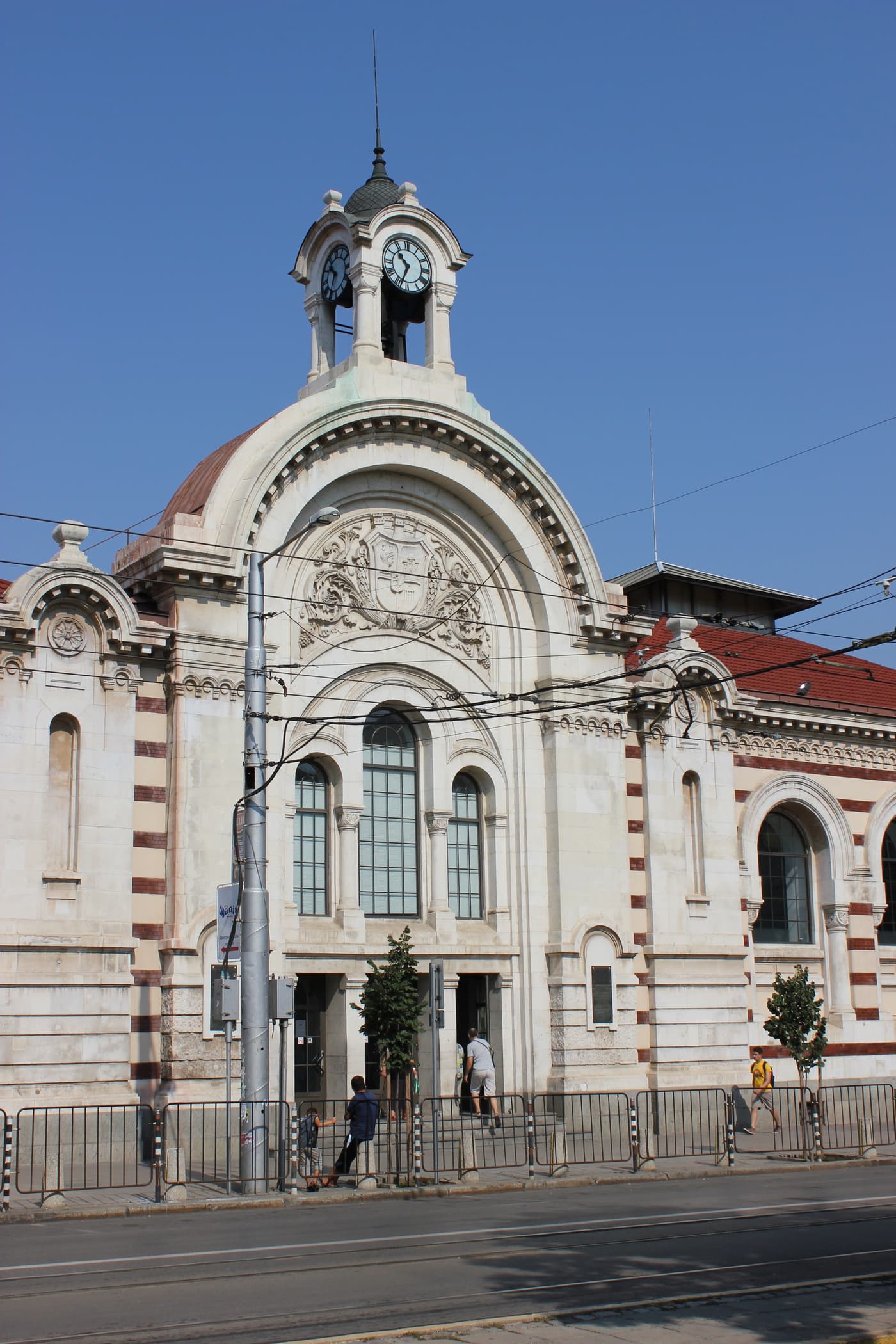
Opened in 1911, the — known locally as — is a covered market built in a neo-Renaissance style with a distinctive clock tower. The wrought-iron interior, reminiscent of the great European market halls of the era, houses dozens of stalls selling fresh produce, Bulgarian cheeses, honey, and traditional pastries. The mezzanine level has small eateries where traders and shoppers stop for a quick banitsa or a glass of ayran. It is a working market, not a tourist set piece, and the best time to see it is mid-morning when the stalls are fully stocked and the aisles are busy with locals doing their daily shop.
The , completed in 1909, is the largest Sephardic synagogue in Europe and a striking example of Moorish Revival architecture in the Balkans. Its interior is dominated by a vast central chandelier weighing nearly two tonnes, suspended beneath a richly decorated dome. The synagogue was designed by the Austrian architect , who also worked on several other important buildings in the city. The small museum inside tells the story of Bulgaria's Jewish community, one of the few in Europe to survive the largely intact thanks to widespread civil resistance against deportation orders.
Sofia Synagogue · TicketsViatorThis small red-brick rotunda, built in the 4th century, is the oldest preserved building in Sofia and originally served as a Roman bathhouse before being converted into a church. Inside, five layers of medieval frescoes survive on the dome and walls, the earliest dating from the 10th century. The rotunda is surrounded by the remains of Roman 's streets and a hypocaust heating system, visible through glass panels in the courtyard. The contrast between the ancient brick cylinder and the surrounding Stalinist-era government buildings is one of Sofia's most surreal urban juxtapositions. This self-guided audio tour picks up where the Rotunda leaves off, leading through the streets of central Sofia while narrating the city's religious and imperial transitions — from Roman Serdica through Byzantine and Ottoman rule to the Bulgarian National Revival. The route connects several of the landmarks already visited and adds context to the streets between them, with stories about the people and events that shaped each layer of the city. The tour is downloaded to a phone and can be paused or replayed at any point, so the pace is entirely flexible. Tickets are booked online in advance.
St. George Rotunda Church · Book onlineGetYourGuideBulgaria's oldest and most prestigious theatre, the opened in 1907 and is named after the country's most celebrated writer. The neoclassical building, with its six-columned portico and sculpted pediment depicting Apollo and the Muses, anchors the — Sofia's oldest public park, laid out in the 1870s. The theatre's interior was rebuilt after a fire in 1923 and retains its original gilded balconies and painted ceiling. Even without a ticket for a performance, the facade and the park in front are a natural pause point, with fountains and benches shaded by mature trees.
Ivan Vazov National Theatre · Book onlineGetYourGuideSofia Summer Fest is an open-air cultural festival running through the warm months, with a programme of storytelling performances, small theatre pieces, and live music. The afternoon slot on this date features a storytelling event, performed in Bulgarian, set in a relaxed park atmosphere where locals spread out on blankets and low chairs. It is a low-key, distinctly local way to spend an hour — the kind of thing you stumble upon and end up staying for the whole set. Tickets are available at the entrance, though it is worth checking the festival's page for any changes to the schedule.
Sofia Summer Fest · Ticketsviagogo.comFrom the festival grounds, the walk toward the cathedral crosses some of Sofia's quietest central streets, where embassy buildings in interwar villas sit behind high hedges. The cathedral dome appears suddenly as you round the corner onto the square — an enormous gold-and-green mass that dominates the skyline. The square itself is paved in pale stone and feels larger than it looks on a map, with the cathedral at one end and the Bulgarian Parliament building at the other. Late afternoon is the best time to be here: the low sun catches the gold leaf on the domes, and the crowds from the morning bus tours have thinned out.
Built between 1882 and 1912 as a memorial to the Russian soldiers who died fighting for Bulgaria's liberation from the Ottoman Empire, the Alexander Nevsky Cathedral is one of the largest Eastern Orthodox cathedrals in the world. Its Neo-Byzantine design, with multiple gold-plated domes and a vast interior that can hold 5,000 worshippers, draws on Russian and Bulgarian medieval church architecture. The crypt houses a museum of Orthodox icons — one of the richest collections in Europe, with pieces dating from the 4th to the 19th centuries. The iconostasis inside the main church is carved from Italian marble and onyx, and the frescoes were painted by a team of Russian and Bulgarian artists over several decades. The cathedral is the defining image of Sofia, and seeing it in the late afternoon, when the gold domes catch the last of the daylight, is the natural close to a day spent following the city's long arc through history.
Alexander Nevsky Cathedral · Book onlineGetYourGuideThe streets behind the cathedral — Oborishte, Shipka, and San Stefano — hold some of Sofia's best-preserved early-20th-century houses, many now embassies or private residences. It is a quiet residential pocket that most visitors miss, and the kind of neighbourhood where a little data quietly lets you trace the back lanes on the map without losing your bearings as you wander.
Get an eSIMAiralo
 makes a personal plan in one tap. Tune it by mood, diet, time, budget, squad — and drop in your own places. Works in 65,000+ cities. It learns what you like, so every next plan fits better. Stop Searching. Start going.
Sources give mixed signals about this spot — we recommend confirming before visiting.
Tap outside to close
Tap outside to close
 squad
squad like
like