
📍 8 stops · ⏱ ~8 h
We start the morning high on the Citadel ramparts, then descend through the old town's ecclesiastical core to the intimate Félicien Rops Museum and the Baroque wonder of Saint-Loup, before a craft beer pause and a cable-car ride back up for a final view, ending with a slow wander through the cobbled Historic Heart down to the Confluence riverside.
Want your own personalized plan for free?
The walk up Route Merveilleuse threads through successive layers of fortification — Vauban's 17th-century stonework, later Dutch modifications, and 19th-century casemates. Each bend reveals a wider slice of the Meuse valley below, and the limestone walls are studded with plaques recounting sieges from the Middle Ages onward. By the time you reach the upper terraces, the city's strategic logic — a rocky spur commanding two rivers — becomes viscerally clear.
One of Europe's largest citadels, this sprawling fortress complex crowns the rocky spur where the Sambre meets the Meuse. Its walls and tunnels span centuries — from medieval counts to Vauban's military engineering — and the upper terraces deliver the city's defining panorama. The underground network of passageways, some open to visitors, tells the story of Namur's role as a contested military prize. On a clear July morning, the light over the Meuse valley is sharp and wide, and the breeze up here carries the scent of wild thyme from the rampart slopes.
Things to do nearby Liège Self-Guided Sherlock Holmes Murder Mystery Game
Viator
from €20
Liège Self-Guided Sherlock Holmes Murder Mystery Game
Viator
from €20
Most visitors arrive through the main Esplanade, but the Terra Nova visitor centre on the eastern flank opens onto a quieter path that climbs past the 17th-century counterscarp and a small herb garden — the thyme and lavender here were planted by a local volunteer group and smell strongest around midday in summer. It adds about ten minutes to the approach but avoids the coach-party flow.
Built between 1751 and 1767 to a design by the Italian-Swiss architect , Saint-Aubain is the only Baroque cathedral in Belgium — a deliberate statement of Counter-Reformation confidence in the Spanish Netherlands. The interior is a cool, pale-stone oval under a high dome, with black-and-white marble flooring and a striking 19th-century organ case. The treasury holds a small but fine collection of Mosan goldsmith work, including a 12th-century reliquary. The square outside, Place Saint-Aubain, is flanked by the classical façade of the former bishop's palace, now the provincial government seat.
Namur's most famous native son, (1833–1898), was a printmaker, illustrator, and painter whose work veered from realist landscapes to the darkly erotic and satanic imagery that scandalised fin-de-siècle Paris. The museum, set in a carefully restored patrician house on Rue Fumal, holds the world's largest collection of his etchings, lithographs, and drawings, alongside letters from and other literary friends. The curatorial approach is intimate — small rooms, low light, and detailed bilingual panels that trace his evolution from a sharp-eyed observer of Walloon peasant life to a darling of the Parisian avant-garde. The temporary exhibition space on the top floor often mounts shows that connect Rops to later symbolist and surrealist artists.
Rue Saint-Loup is one of those streets that seems to have escaped the 20th century entirely. The church dominates the narrow lane, its grey limestone façade rising abruptly from the pavement, but look up and you will see the former Jesuit college buildings next door — now the Athénée Royal François Bovesse — with their rhythmic windows and restrained classical pilasters. The whole block was built in the 1620s and '30s as a single Jesuit ensemble, and the architectural coherence still holds.
Built between 1621 and 1645 as the church of the Jesuit college, Saint-Loup is the most complete Baroque interior in Wallonia — and one of the most theatrical north of the Alps. The architect, , was a Jesuit brother who had studied in Rome, and he brought back a taste for the dramatic: twelve slender columns of red-and-black Rance marble support a richly coffered ceiling, while the high altar is a swirling confection of gilded wood and stucco angels. The light falls in a particular way through the clear upper windows, picking out the veining in the marble. It is a church built to overwhelm the senses — the Counter-Reformation in stone and gold.
A relaxed, unpretentious bar with a rotating tap list that leans heavily on Walloon and Flemish microbreweries — expect to find names like Brasserie de la Lesse, Minne, or alongside Belgian classics. The bottle menu is encyclopaedic, and the staff are happy to guide you through it. The room is simple — exposed brick, long communal tables, a chalkboard behind the bar — and the crowd is a mix of students, off-duty office workers, and the local beer-geek set. It is the kind of place where a quick half turns into a leisurely hour because the conversation and the next pour are both flowing.
The téléphérique runs from the edge of the old town up to the Citadel's upper terrace in under five minutes, but the real draw is the mid-air pause over the Sambre — a brief, silent moment with the entire city spread out below. The cabins are small, open-sided in summer, and the ascent gives you a perspective no street-level walk can match: the grey slate roofs of the Historic Heart, the ribbon of the Meuse curling north, and the wooded hills beyond. It operates daily from 10:00 to 18:30, and the late-afternoon light in July turns the river to a sheet of hammered silver.
The old town of Namur is a dense tangle of narrow streets and small squares, its architecture a layered record of the city's fortunes: medieval stonework at ground level, 17th- and 18th-century brick and limestone above, and the occasional Art Nouveau shopfront inserted around 1900. Rue du Président, Rue de la Croix, and the tiny passages around Place du Marché aux Légumes reward aimless wandering — here a courtyard with a wrought-iron well, there a façade with a carved stone saint in a niche. In the late afternoon, the light slants low through the alleyways and the cafés set out their last terrace tables.
The Historic Heart is not a single monument but a district to drift through — the streets between Place d'Armes and the Sambre are at their best when you have no fixed route. Look for the 16th-century Halle al'Chair (the old meat market) on the riverbank, the Maison de la Poésie on Rue Fumal with its 17th-century stepped gable, and the small bronze statue of Djoseph et Françwès on Place du Marché aux Légumes — two cartoonish Walloon characters locked in an eternal argument, a beloved local landmark. The area's cafés and bakeries are family-run and largely unchanged for decades; the smell of warm Liège waffles drifts from somewhere near Rue de l'Ange most afternoons.
On Place du Marché aux Légumes, the bronze pair of Djoseph et Françwès have been bickering since 2000 — the sculptor, Suzanne Godart, captured them mid-gesture, and locals treat them as a meeting point. The square itself was once the city's vegetable market, and the surrounding buildings still carry the names of the guilds that traded here.
Where the Sambre slides into the Meuse, the Confluence District has transformed in recent years from a quiet backwater into a riverside promenade lined with cafés, restaurants, and small boutiques. The cobbled quays are wide enough for a slow stroll, and the view back toward the — its ramparts glowing in the late-afternoon sun — is the classic postcard shot. The area feels more open and modern than the old town, with repurposed industrial buildings housing galleries and co-working spaces. The water level is high in July, and the river traffic — barges, pleasure boats, the occasional kayak — gives the scene a gentle, unhurried rhythm. It is the natural place to end the day, perhaps with a drink on a terrace as the light fades over the Meuse.
The Confluence quays are the best spot to pull up the cable-car timetable on your phone — if you are finishing the day here and need to loop back up to the for a car or a late view, the last cabin runs at 18:30 in summer. A little data right here saves you an unnecessary climb.
Get an eSIMAiralo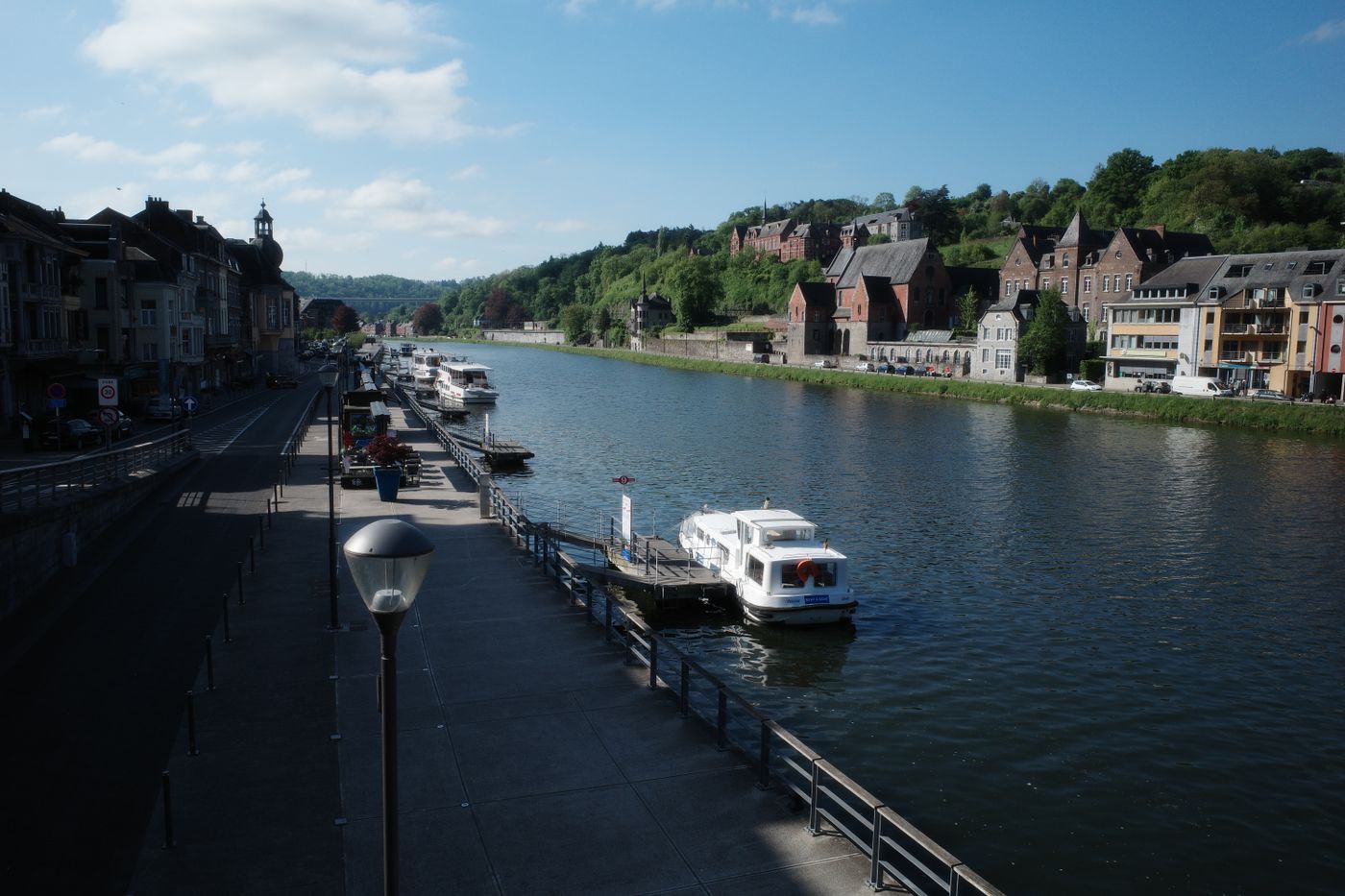 Namur's hidden street art, a waterfront market, and indie shops in the old town
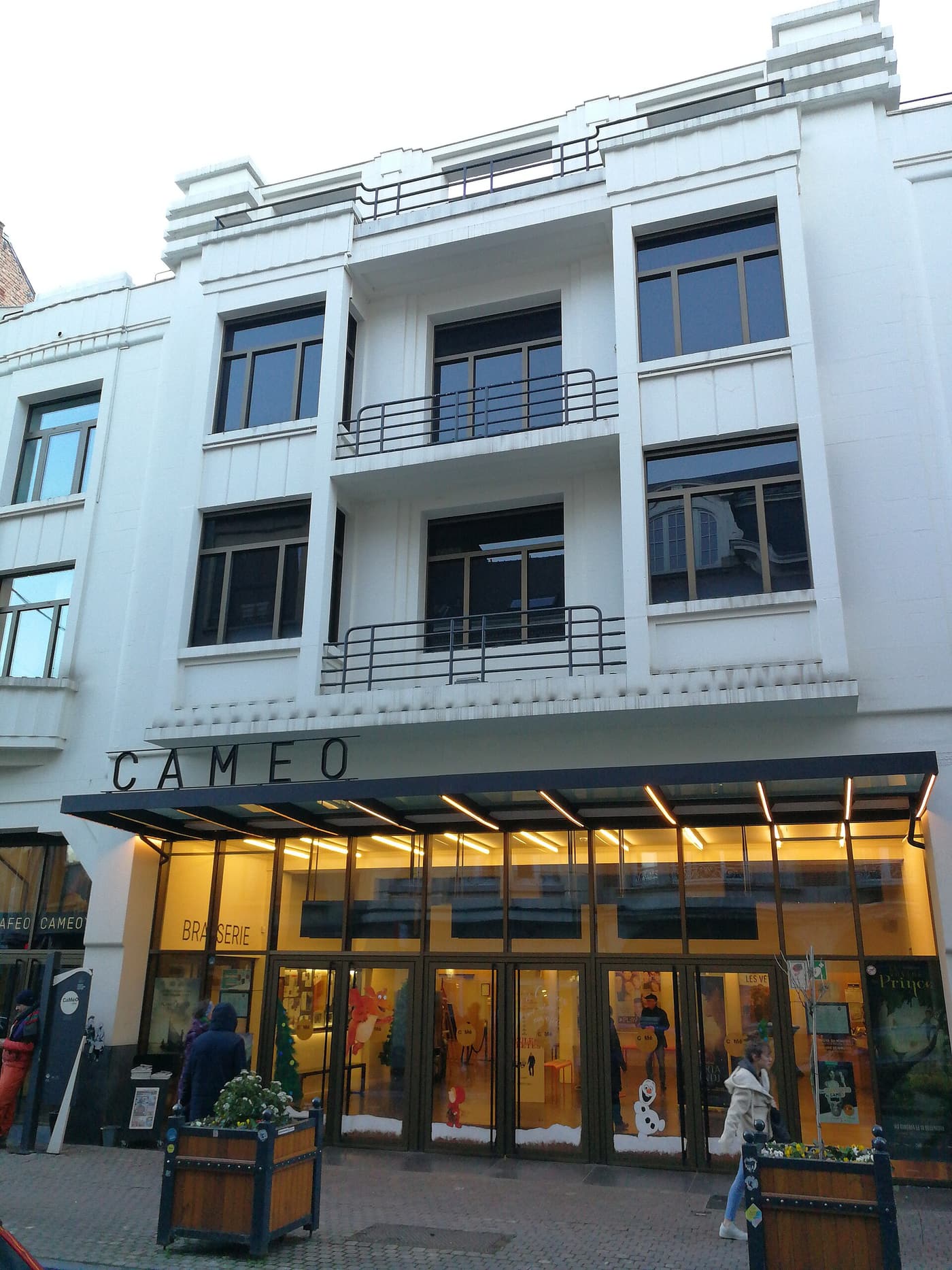 Underground Namur: street art, a Saturday market, and a hidden Art Deco quarter
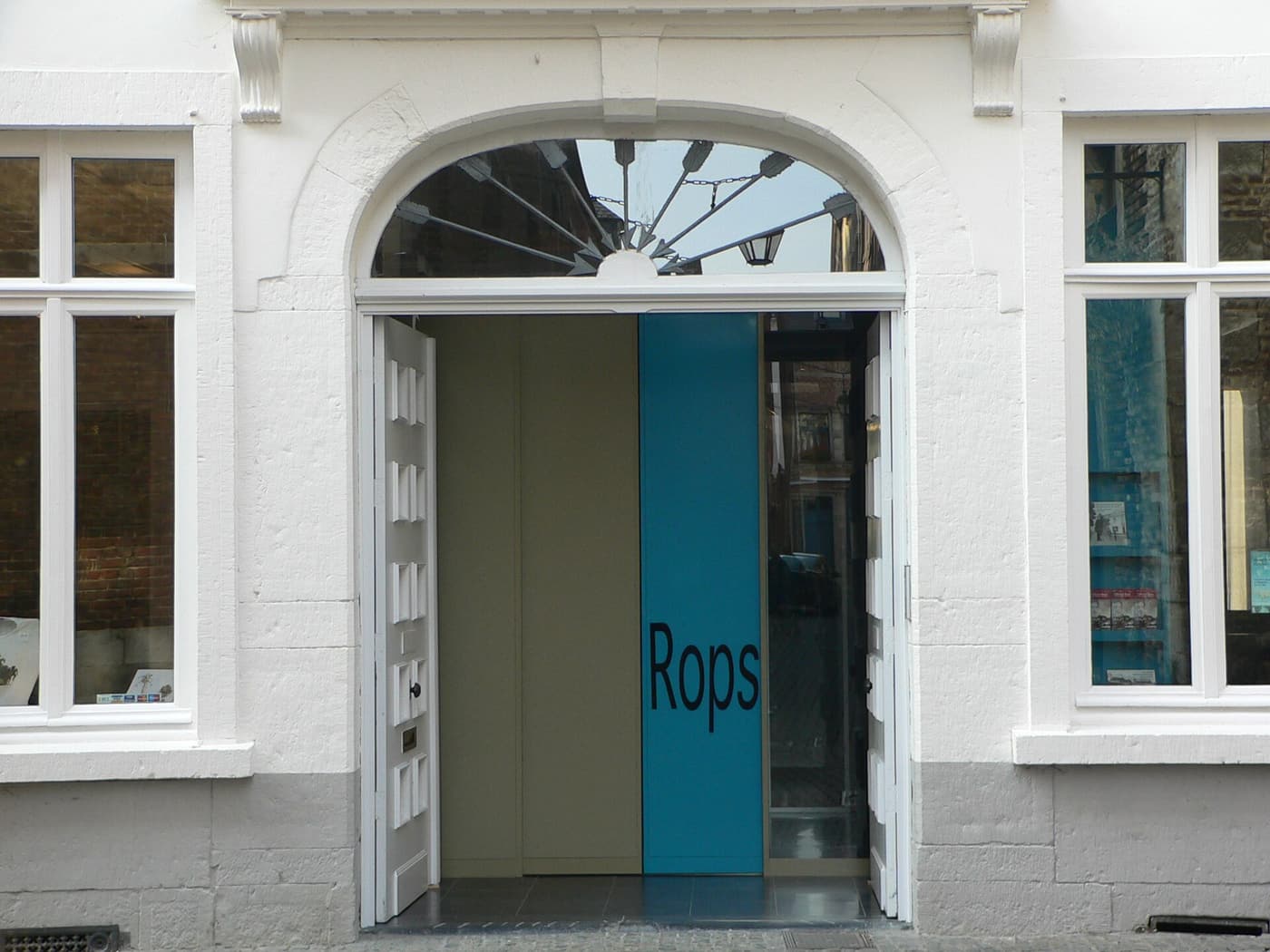 Medieval festival on the citadel, Rops' dark etchings, and live groove into the evening
 A Namur food day: festival beats, market bites, and craft beer
 makes a personal plan in one tap. Tune it by mood, diet, time, budget, squad — and drop in your own places. Works in 65,000+ cities. It learns what you like, so every next plan fits better. Stop Searching. Start going.
Sources give mixed signals about this spot — we recommend confirming before visiting.
Tap outside to close
Tap outside to close
 squad
squad like
like