
📍 6 stops · ⏱ ~8 h
We start the day at the city's best open-air gallery—a parking garage covered in murals—before the Saturday waterfront market spills onto the quay. From there we drift into the Quartier des Carmes, a pocket of Art Deco and paquebot-style houses most visitors never see, then wind down at the Confluence where the two rivers meet.
Want your own personalized plan for free?
A short walk from the Gare, the multi-storey car park beside the is an unlikely canvas. Over the past few years it has become the densest concentration of street art in the city—roughly fifty large-scale pieces by local and visiting artists, changing regularly as new works go up over old ones. The concrete stairwells and ramps turn the whole structure into a vertical gallery, and the morning light on this side of the tracks catches the west-facing walls especially well. Bring a camera with a wide lens; the scale of some pieces only reads from the upper levels.
The multi-storey car park beside the C&A shop is the city's unofficial street-art museum. Several dozen murals cover the walls and stairwells—the collection rotates as new artists add work, so repeat visits rarely look the same. The upper levels give the best vantage points for the largest pieces, and the raw concrete setting keeps the focus on the art rather than any gallery pretence.
Things to do nearby Liège Self-Guided Sherlock Holmes Murder Mystery Game
Viator
from €20
Liège Self-Guided Sherlock Holmes Murder Mystery Game
Viator
from €20
Start on the ground floor and work upwards—the largest murals are on the top two levels. The stairwell between the third and fourth floors has a piece that wraps around all four walls, easy to miss if you only take the ramp.
Every Saturday morning, Boulevard Frère Orban transforms into a long open-air market that runs right along the Sambre. Stalls sell local cheese, seasonal fruit and vegetables, flowers, and the kind of sturdy Belgian bread that weighs as much as a small brick. It is a working market, not a tourist attraction—locals come here with shopping trolleys and the vendors know their regulars by name. The river on one side and the hum of bargaining on the other make it one of the most photogenic stretches of the city on a weekend morning.
The cheese vendor halfway down on the river side carries Boulette de Nivelles and a strong local Herve—ask for a taste before buying; they are generous with samples. The baker at the far end sells cougnou, a brioche-shaped loaf that is especially good still warm.
Tucked between the river and Rue de Bruxelles, the Quartier des Carmes is a small grid of streets where the early twentieth century left a concentrated burst of Art Deco and paquebot-style architecture. Houses here are clad in green ceramic tiles, with rounded corners, porthole windows, and streamlined facades that mimic ocean liners—the 'paquebot' look that swept through Belgium in the 1930s. The neighbourhood is residential and quiet; you are more likely to hear a cat on a windowsill than a car. Walking its streets feels like stepping into an architectural time capsule that the city's main tourist circuit completely overlooks.
The Cameo is the neighbourhood's restored Art Deco cinema, a small single-screen theatre whose facade has been carefully brought back to its 1930s appearance. The marquee, the geometric lettering, and the tile work are all original or faithfully reproduced. Even when there is no screening, the building is worth a stop—it is the most complete paquebot-style facade in the quarter and a good reference point for spotting the same nautical motifs on the surrounding houses.
From the Cameo, walk fifty metres up Rue des Carmes and look for the house with the porthole window above the door—it is one of the best-preserved examples of the style. The green tiles on the facade next door are original; the colour has barely faded in ninety years.
Behind the Hôtel de Ville, the Jardin du Maïeur is a small walled garden that stays cool even on a hot August afternoon. The main draw here is the Fresque des Wallons, a long mural along one wall depicting dozens of figures from Walloon history and culture—artists, writers, scientists, and folk heroes, painted in a lively comic-strip style. The garden itself has benches and a few well-kept flower beds; it is the kind of spot where office workers eat lunch on weekdays, and on a Saturday it is often nearly empty. A good place to sit for ten minutes and let the morning's walking settle.
Miss Miaouw is part tea room, part adoption centre—a cosy space where a handful of resident cats roam between the tables while you drink coffee and eat cake. The cats are all looking for permanent homes, so the lineup changes; the staff know each animal's story and are happy to tell it. The interior is mismatched armchairs and low shelves, more like someone's living room than a café. The hot chocolate comes with a mountain of whipped cream, and the lemon cake is the thing to order if it is available.
The café is small—fewer than ten tables—so on a rainy Saturday it fills up fast. If it is full when you arrive, put your name on the list and browse the vintage shop two doors down; they will call you when a table opens.
Rue des Brasseurs and the streets branching off it hold another cluster of paquebot-style houses—less polished than those in the Quartier des Carmes, but more lived-in. The style gets its name from the French word for ocean liner, and you can see why: curved facades, railings like ship decks, and small round windows that mimic portholes. These were built in the 1930s as optimistic middle-class housing, and many still have their original ironwork and tile. The area is quiet on a Saturday afternoon; you can stand in the middle of the street to photograph a facade without holding up any traffic.
From Rue des Brasseurs, wander up Rue Pépin and Rue des Croisiers—both have good examples of the style, and the afternoon light at this hour catches the green and blue tiles especially well. The whole loop takes about twenty minutes at a slow pace, and there is a small square with a bench halfway along if you want to sit and sketch or just watch the neighbourhood go about its Saturday.
The Confluence is the modern esplanade at the point where the Sambre flows into the Meuse—a wide open space of pale stone and steps that descend to the water. The Grognon, the triangular tip of land at the meeting point, has been reshaped several times over the centuries, but the view has always been the same: the rising on the left, the Meuse curving away to the right, and the old town climbing the hill behind. Late afternoon is the best time to be here; the light comes from the west and turns the water a flat silver, and the esplanade catches the last warmth of the day.
Walk to the far end of the esplanade towards the Pont des Ardennes. Just before the bridge, on the riverbank, stands Le Cheval Bayard—a large bronze statue of a horse and the four sons of Aymon, a figure from medieval Walloon legend. The statue faces the Meuse and is framed by the Citadel behind it; it is one of the best single-frame photographs in the city, especially when the late-afternoon sun hits the bronze.
The lower steps at the very tip of the Grognon are the best place to sit—your feet almost touch the water, and the sound of the two rivers meeting is surprisingly loud. Few people walk all the way down; most stay on the upper esplanade.
A relaxed Saturday afternoon event combining a tournament—the Finnish throwing game that is essentially outdoor skittles—with an apéro. The event is free and walk-in; no registration is needed. Mölkky is easy to pick up even if you have never played, and the atmosphere is more picnic than competition. The hall is on the eastern edge of the city along the Meuse, and the outdoor area where the tournament takes place has a view back towards the . Check the event page for the exact start time of the tournament rounds.
Apéro & tournoi Mölkky · Ticketseventbrite.comPlayers take turns throwing a wooden baton at numbered skittles. The first to reach exactly fifty points wins; go over and your score drops back to twenty-five. It sounds simple, but the strategy of which skittle to aim for gets surprisingly intense after a drink or two.
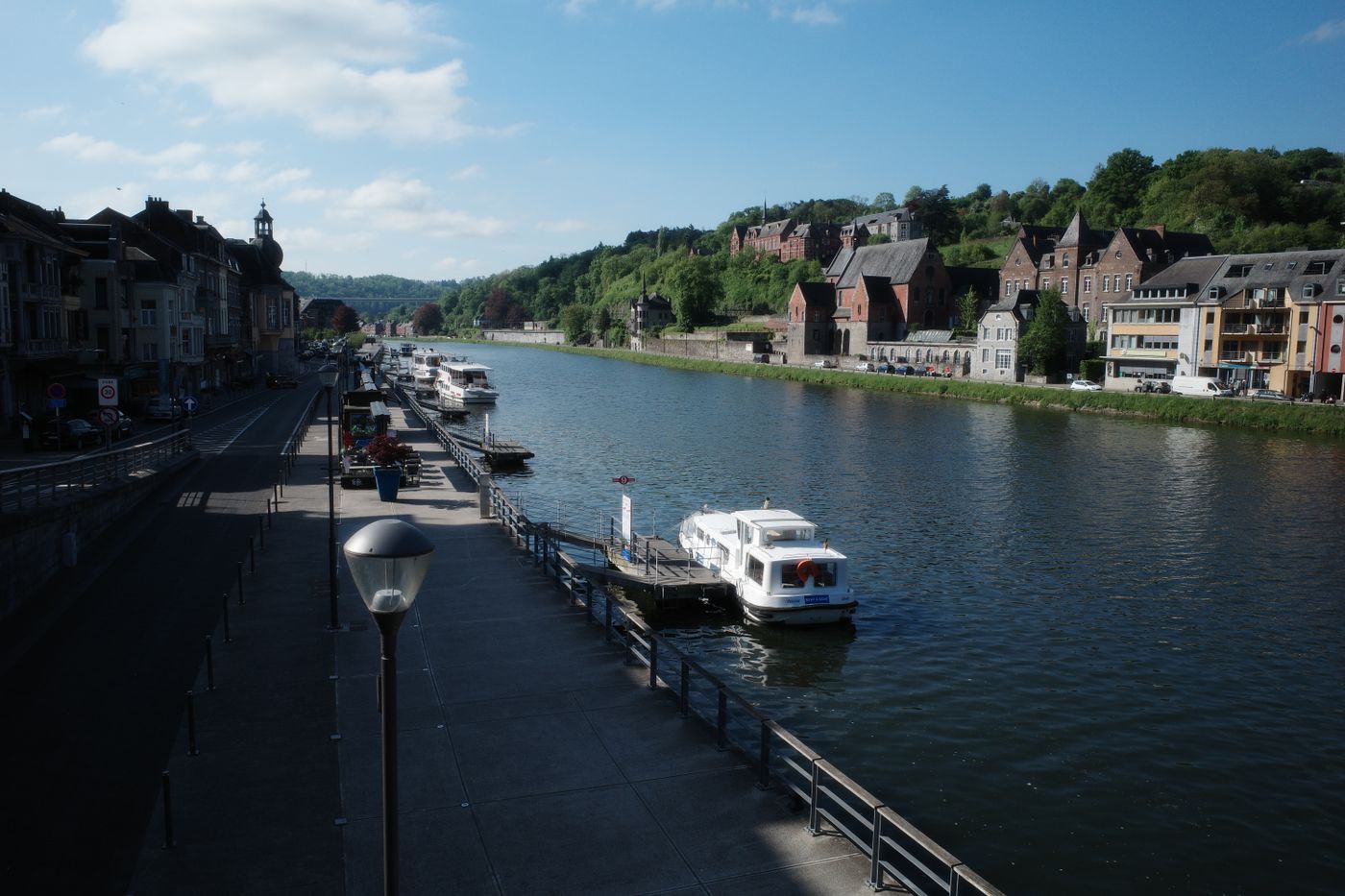 Namur's hidden street art, a waterfront market, and indie shops in the old town
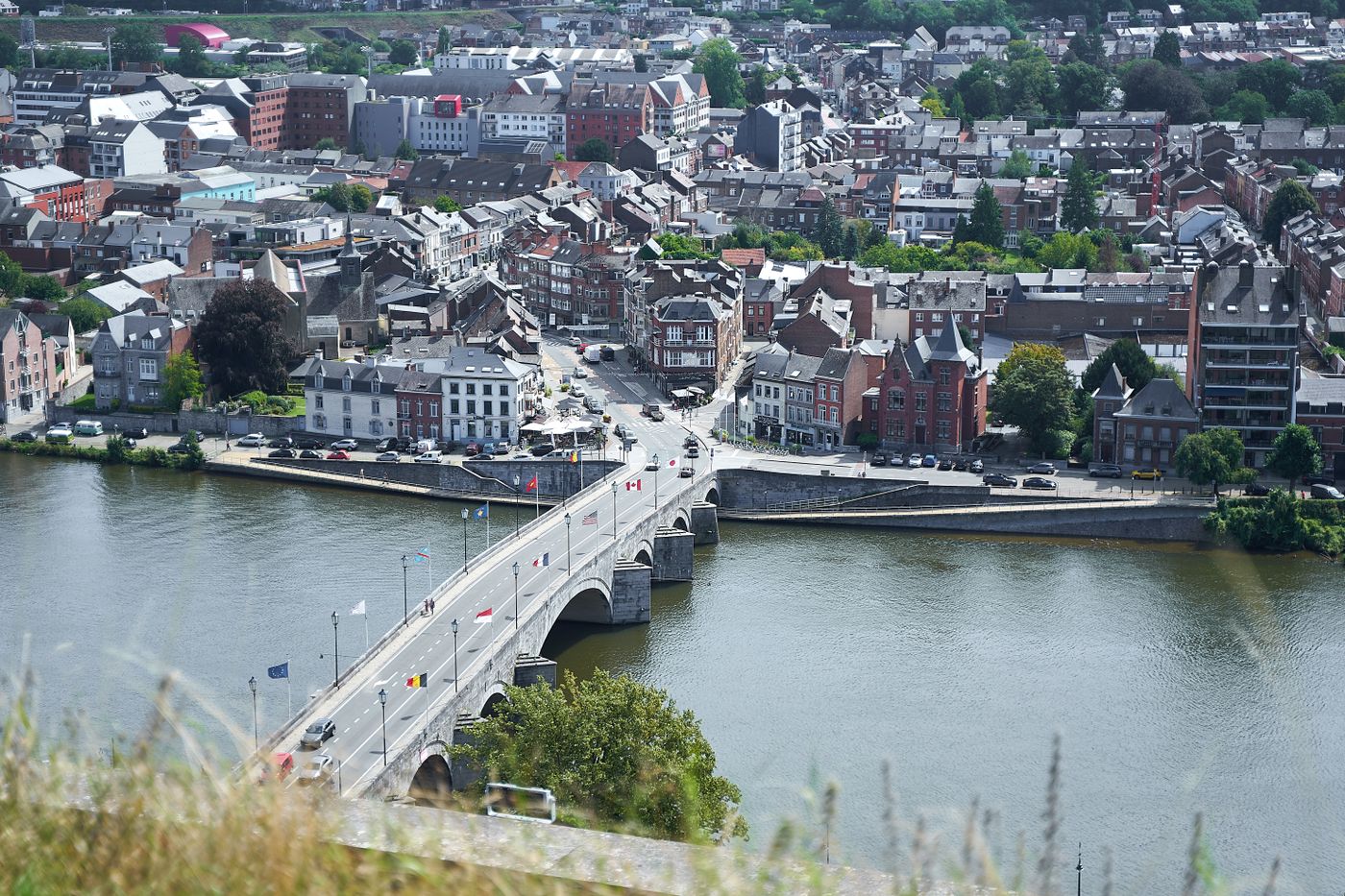 Citadel panoramas, Félicien Rops' dark etchings, and a riverside walk through Namur's historic layers
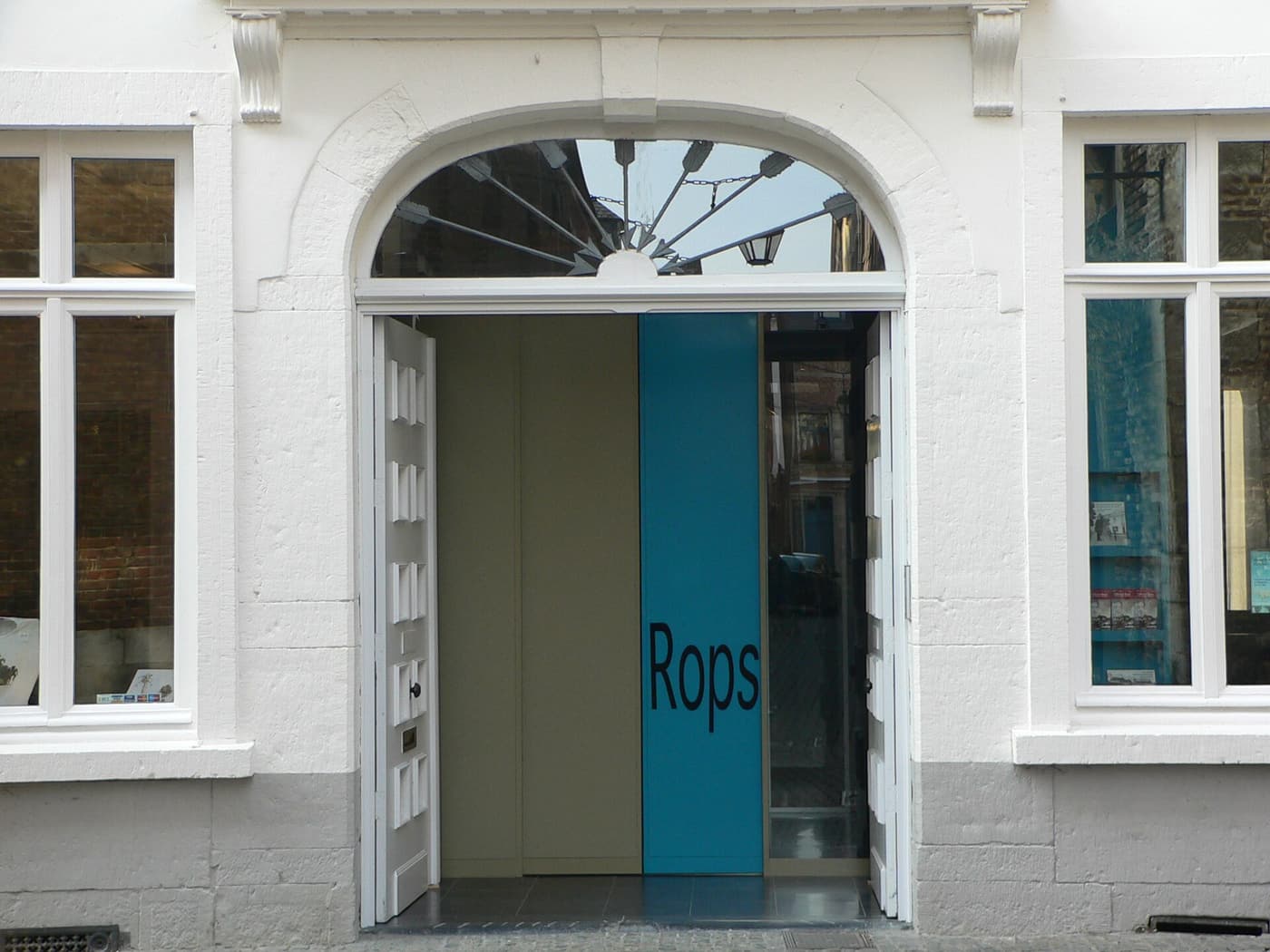 Medieval festival on the citadel, Rops' dark etchings, and live groove into the evening
 A Namur food day: festival beats, market bites, and craft beer
 makes a personal plan in one tap. Tune it by mood, diet, time, budget, squad — and drop in your own places. Works in 65,000+ cities. It learns what you like, so every next plan fits better. Stop Searching. Start going.
Sources give mixed signals about this spot — we recommend confirming before visiting.
Tap outside to close
Tap outside to close
 squad
squad like
like