
📍 8 stops · ⏱ ~7 h

This is a day for Namur's quiet corners: we hunt the tiny sculptures of Isaac Cordal hidden across the old town, browse vinyl and vintage on streets most visitors miss, then settle by the Sambre with a coffee as the afternoon light shifts.
Want your own personalized plan for free?
We start in the tangle of streets between the Sambre and the citadel hill — a medieval grid of cobbled lanes, stone staircases, and sudden small squares. This is where the trail is densest, and the morning light rakes across the old stone, making the miniature figures easier to spot. Look up at drainpipes, window ledges, and cracks in the walls — that is where they hide.
These tiny cement figures — no taller than a finger — are tucked into the old town's walls, gutters, and alcoves. They depict miniature businessmen in grey suits, often in absurd or melancholic situations: one peers into a drainpipe, another dangles from a ledge. There is no official map, just a loose trail that rewards patience and sharp eyes. The scavenger-hunt quality makes it one of the most engaging photography walks in the city.
Things to do nearby Liège Self-Guided Sherlock Holmes Murder Mystery Game
Viator
from €20
Liège Self-Guided Sherlock Holmes Murder Mystery Game
Viator
from €20
Start on Rue des Brasseurs and work outward — the highest concentration is around the narrow lanes near the . Check above doorways and at the base of drainpipes. If you spot one, there are often two more within a twenty-metre radius. No map needed — wandering is the whole point.
By late morning the old town is still waking up — shop shutters rolling up, the first market stalls assembling down by the water. We cut through the , where the stone is worn smooth from centuries of traders, and head toward Rue Haute Marcelle.
A vinyl record shop on Rue Haute Marcelle that feels like stepping into someone's carefully curated living room. The selection leans toward Belgian pressings, jazz, and classic rock, and the owner is usually happy to pull out a record and play it on the shop turntable if you ask. It is the kind of place where you go in for five minutes and stay for half an hour, flipping through crates and talking music.
Saturday mornings are the best time — new arrivals hit the crates on Friday, and the shop is quiet before the afternoon crowd.
On Saturday mornings the boulevard transforms into a long, colourful market that runs alongside the river. Stalls sell fresh produce, cheeses, flowers, and local breads. It is a working market, not a tourist attraction — locals do their weekly shop here, and the rhythm is unhurried. The reflections of the old town ripple on the water just beyond the stalls.
The Saturday market on Boulevard Frère Orban is the real thing — a weekly ritual where Namur's residents come for the best produce, bread, and flowers in town. The stalls line the riverbank, and the vendors call out in Walloon French. Even if you are not buying, it is the best place to absorb the city's Saturday-morning energy. Pick up a pastry or a piece of fruit and eat it on one of the benches facing the water.
The market is busiest between 10:00 and 12:00 — by the time we arrive, the initial rush has eased and vendors are more relaxed and chatty. The best cheese stalls are near the middle of the boulevard, closer to the Pont de France.
A neighbourhood café-restaurant on a quiet side street, far from the tourist footfall of the main squares. The menu is straightforward Walloon brasserie fare — grilled meats, hearty salads, and a solid Belgian beer list. Locals come here for a relaxed lunch where nobody rushes you, and the terrace in summer is shaded and cool. It is the kind of spot you would not find unless someone told you to turn off the main road.
The daily special is usually the best value and the freshest thing on the menu — ask what it is before opening the full card.
Tucked between two busy streets, the Passage de la Bourse is a narrow covered arcade that opens into a small, quiet courtyard. The architecture here is a mix of 19th-century ironwork and worn stone, and the acoustics change noticeably as you step inside — the city noise drops away. It is one of those spots that feels like a secret even though it sits in plain sight, because there is no reason to walk through it unless you know it is there.
A covered passageway and courtyard that connects two streets in the old town, built in the late 19th century. The iron-and-glass roof casts patterned shadows on the flagstones, and the courtyard at the centre has a few benches where you can sit and watch the light change. It is rarely busy — most shoppers use the main streets — so it doubles as a quiet pause point between the market energy and the vintage browsing ahead.
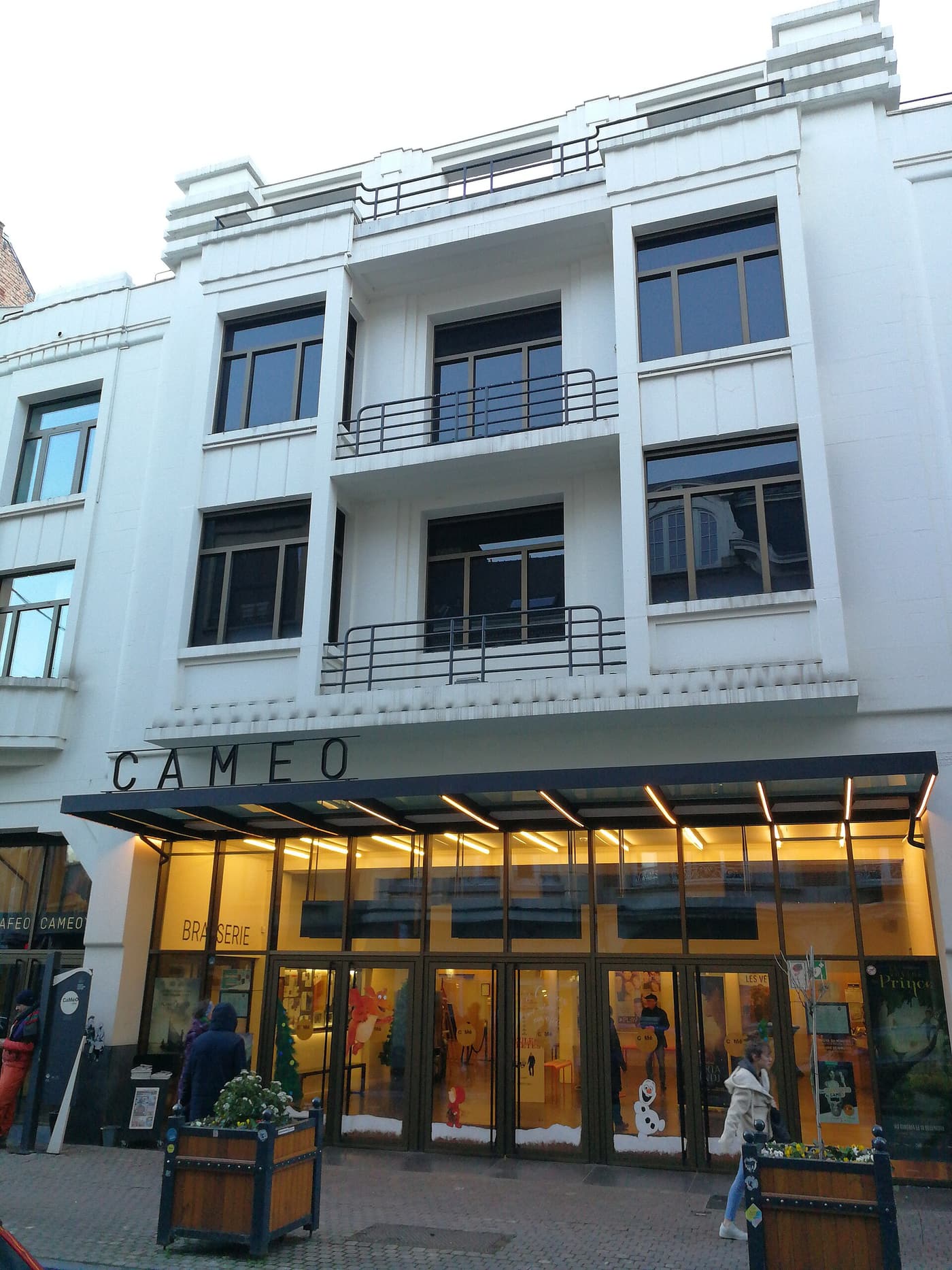
These two streets are Namur's quiet answer to the big vintage districts of Brussels or Antwerp — smaller in scale but dense with character. Antigua Cabana and Sapristi are the standout furniture and decoration boutiques, both run with a responsible, reuse-first philosophy. Alongside them are smaller second-hand clothing shops, a book dealer, and a few artisan workshops. The streets themselves are narrow and residential, with Art Deco facades from the Quartier des Carmes adding architectural interest between shops.
While browsing, look up — the Quartier des Carmes is an unexpected pocket of Art Deco architecture in a city better known for its medieval and 18th-century stone. The facades here date from the 1920s and 1930s, with geometric ironwork and stained-glass fanlights above the shop doors.
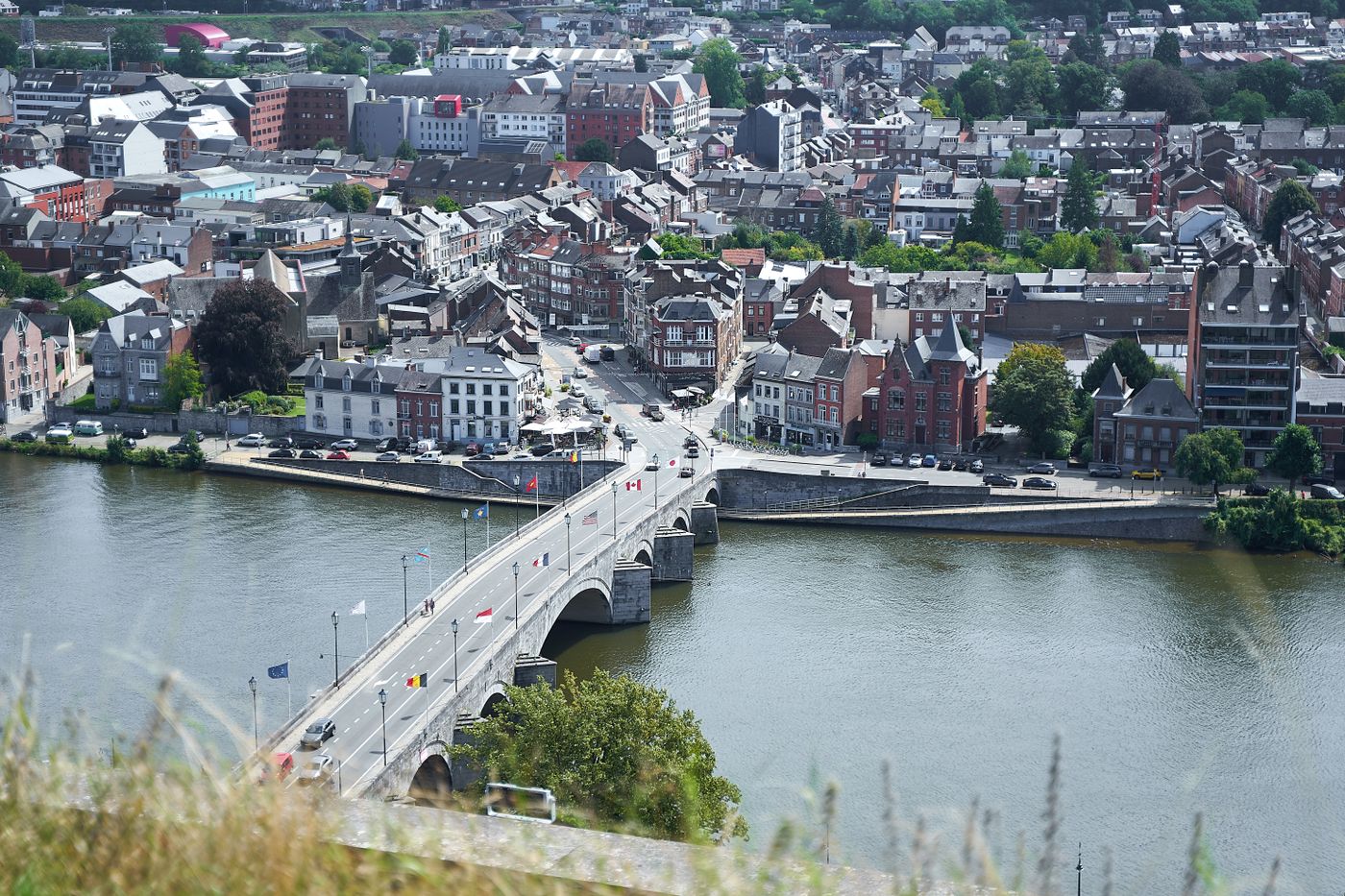
By late afternoon the light on the Sambre turns soft and golden, and the riverbank becomes the best place in the city to sit and do nothing. The water moves slowly here, reflecting the old town's rooftops and the citadel hill above. A few boats drift past, and the terrace of Café Nomade fills with people winding down their Saturday.
Part café, part coworking space, part decoration boutique — Café Nomade sits right on the Sambre with a view of the citadel that is hard to beat. The coffee is good, the interior is filled with plants and locally-made ceramics, and the terrace is the real draw: a handful of tables right at the water's edge. It attracts a mix of freelancers on laptops and friends catching up, and the atmosphere is relaxed without being sleepy.
If you want to keep the afternoon going after coffee, the riverbank path continues east past the Pont des Ardennes toward the quieter stretches of the Sambre. It is a flat, easy walk with good light for photography as the sun drops behind the citadel. Having a data connection here means you can pull up the map and trace exactly how far the path goes without doubling back — it runs further than it looks from the café terrace.
Get an eSIMAiraloThe stretch of riverbank just east of Café Nomade is the best place to end the day. The path is lined with plane trees, and the view takes in the full sweep of the old town from the water level — the rooftops, the belfry, and the citadel rising behind. In late afternoon the light hits the stone facades at a low angle, and the reflections on the water are still and clear. It is a quiet, unmonumental spot — no plaque, no viewpoint sign — which is exactly why it feels like a local secret.
The light is best about an hour before sunset — the stone facades glow warm and the river turns glassy. Bring a camera.
 Underground Namur: street art, a Saturday market, and a hidden Art Deco quarter
 Citadel panoramas, Félicien Rops' dark etchings, and a riverside walk through Namur's historic layers
 Medieval festival on the citadel, Rops' dark etchings, and live groove into the evening
 A Namur food day: festival beats, market bites, and craft beer
 makes a personal plan in one tap. Tune it by mood, diet, time, budget, squad — and drop in your own places. Works in 65,000+ cities. It learns what you like, so every next plan fits better. Stop Searching. Start going.
Sources give mixed signals about this spot — we recommend confirming before visiting.
Tap outside to close
Tap outside to close
 squad
squad like
like