
📍 7 stops · ⏱ ~10 h

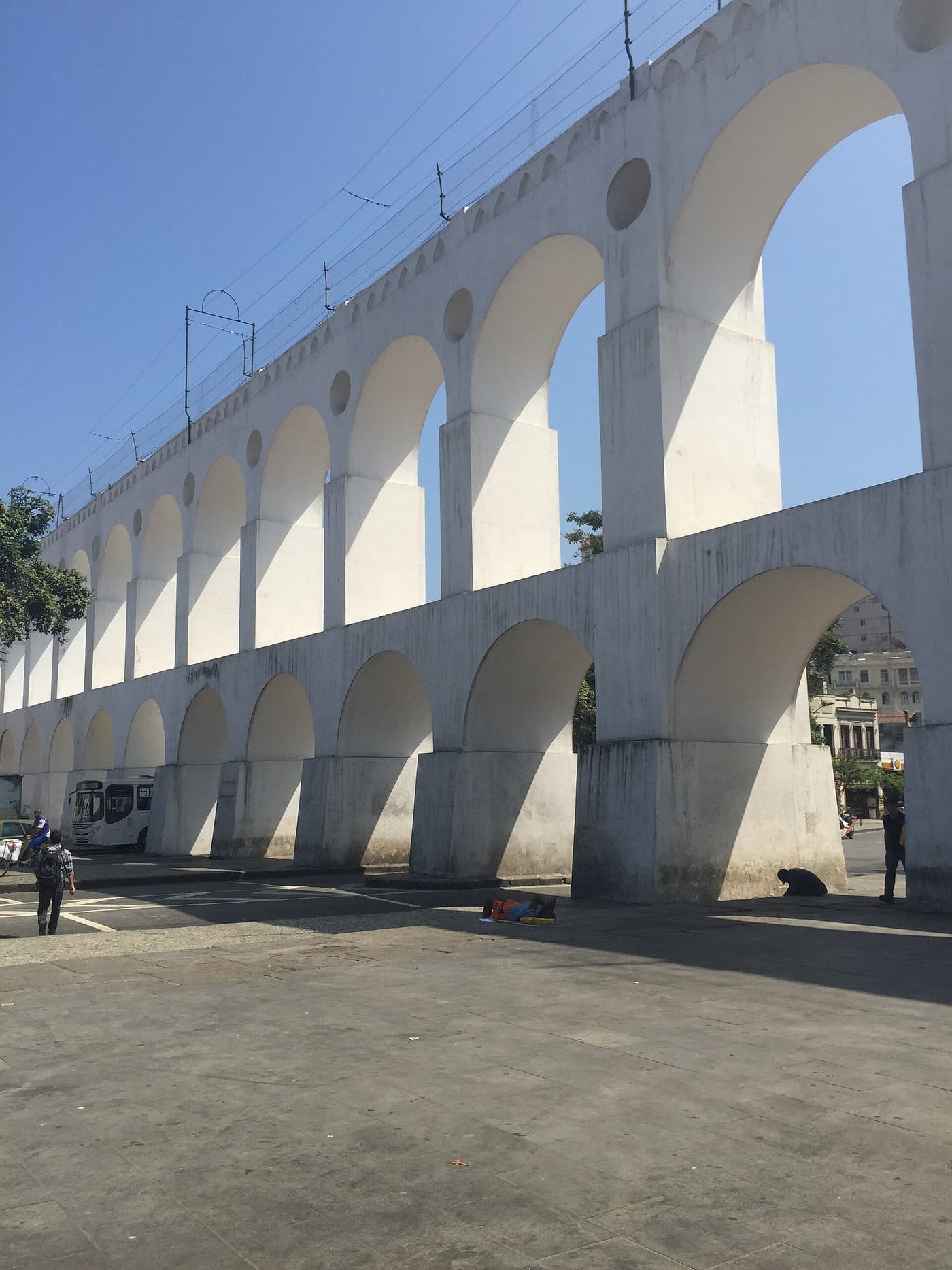
This food day starts with breakfast in the bohemian hills of Santa Teresa, winds down through the historic streets of Centro for lunch at a culinary institution and an afternoon market feast, then crosses into Lapa for an evening of live samba and street food under the Arches.
Want your own personalized plan for free?
sits on a hill above the city centre, a neighborhood of steep cobbled lanes, crumbling colonial mansions turned into artists' ateliers, and tiny bars tucked into corners where the tram tracks bend. The air here is cooler in the morning, and the views down toward open up between the trees. The yellow bondinho tram still rattles across the old aqueduct on its way up — it is the last remaining tram line in the city and the most atmospheric way to arrive.
A colourful breakfast spot in run by a family from Alagoas, serving tapioca pancakes stuffed with Northeast Brazilian ingredients — carne de sol with coalho cheese, or sweet banana with cinnamon. The walls are painted in bright folk-art patterns, and on weekends there is often a small forró circle in the corner. Order the tapioca with jerked beef and a cup of strong black coffee, and grab a table on the narrow balcony overlooking the street.
The kitchen opens onto the street through a small window where you can watch the cook spread the tapioca starch across the hot griddle. It takes about ninety seconds per pancake — the edges curl up and the cheese melts into the folds. Mornings are quieter here; by noon the weekend crowd fills every table and the wait stretches to half an hour.
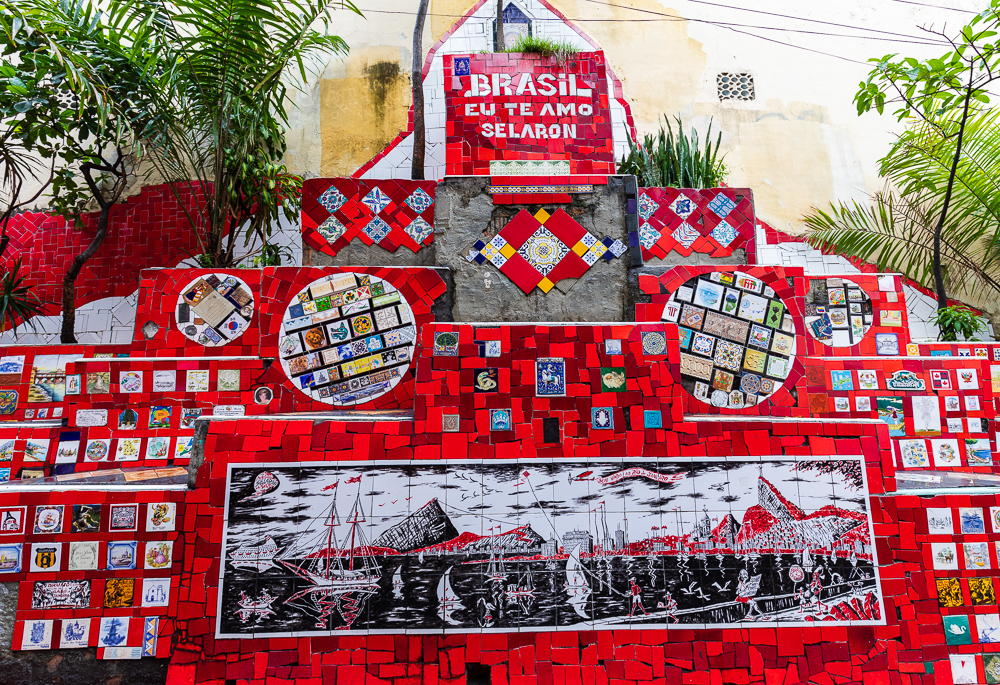
After breakfast, walk Rua Almirante Alexandrino — the main artery of — where open studio doors reveal painters, ceramicists, and printmakers at work. The street itself is a gallery: murals cover entire building facades, and the mosaic fragments that spill from the nearby creep up the walls in places. Stop into any door that is open; the artists are used to curious visitors and are happy to talk about their work.
The shell of a mansion that belonged to the socialite Laurinda Santos Lobo, now a free cultural centre with a viewing platform wrapped around the old brick walls. From the top, the whole sweep of and the bay opens out — the Cathedral's cone, the port cranes, and Sugarloaf in the distance. There is a small café on the ground floor if you want a second coffee.
Parque das Ruínas · Book onlineGetYourGuide Things to do nearby Rio de Janeiro: Exploring the Iconic Downtown Architecture of the Wonderful City
WeGoTrip
from €9
Rio de Janeiro: Exploring the Iconic Downtown Architecture of the Wonderful City
WeGoTrip
from €9
is Rio's old commercial heart, a grid of narrow streets lined with neoclassical facades, ornate churches, and the hum of street commerce. The area around Rua Gonçalves Dias is particularly dense with buildings — their interiors are often more spectacular than their outsides suggest, with soaring stained-glass ceilings, carved jacarandá wood, and towering mirrors imported from Belgium at the turn of the last century.
Opened in 1894, this is Rio's most famous confectionery — a vast hall of floor-to-ceiling jacarandá-framed mirrors, Belgian stained glass, and marble-topped tables. The menu runs from a full lunch of bacalhau à Zé do Pipo to the classic afternoon tea with pastéis de nata and empadinhas de palmito. Come for the pastries and the room itself — the light through the stained-glass ceiling in the early afternoon is worth the visit alone. The waiters still wear black bow ties and white jackets, and the pace is unhurried.
Confeitaria Colombo · TicketsGetYourGuideMost visitors stay on the ground floor, but there is a narrow staircase to the mezzanine where the view down into the main hall is far better — you can see the full sweep of the stained glass and the buzz of the room from above. Tables up here are quieter and usually available even when the ground floor is full.
On the first Saturday of every month, Rua do Lavradio closes to traffic and turns into the — a sprawling street market of antique furniture, vintage clothing, vinyl records, and street food stalls. Samba circles form spontaneously at the intersections, and the whole street fills with the smell of grilling meat and the sound of cavaquinhos. The surrounding Lapa district is Rio's historic nightlife quarter, its streets lined with old sobrados that now house bars, live music venues, and late-night restaurants.
The takes over Rua do Lavradio once a month, drawing antique dealers, vintage sellers, and craftspeople from across the city. Food stalls line the side streets — look for the acarajé vendor near the Rua do Senado corner, frying black-eyed-pea fritters in dendê oil and splitting them open to stuff with vatapá and dried shrimp. Further down, a churrasquinho stand grills skewers of beef with farofa on the side. Wander, eat, and listen to the impromptu samba circles that spring up as the afternoon goes on.
The best acarajé in the market comes from a Bahian woman who sets up near Rua do Senado — her dendê oil is fresh and the vatapá is made with real dried shrimp, not the paste version some stalls use. She usually sells out by 16:00, so go early in the afternoon.
A three-story antique shop turned restaurant and live music venue, is the anchor of Lapa's nightlife. The walls are covered in old clocks, carnival masks, and vintage pharmacy cabinets — the owner collected antiques for decades before opening the space. The kitchen serves solid Brazilian bar food: bolinhos de bacalhau, pastéis, and a good feijoada on Saturdays. Live samba and forró bands play from early evening, and the dance floor fills with a mix of locals and visitors. Book a table on the mezzanine for the best view of the stage.
Rio Scenarium · TicketsGetYourGuideThe mezzanine tables overlook the stage and the dance floor — book ahead on weekends, especially for the Saturday feijoada, or arrive before 17:00 to get a spot at the bar downstairs.
is a small square at the foot of a granite outcrop in the old port district of , historically the heart of Afro-Brazilian culture in Rio. The stone steps were carved by enslaved dockworkers in the nineteenth century, and the neighbourhood around it — known as Little Africa — was home to the first samba circles. On Monday and Friday nights the square fills with musicians and dancers for a free roda de samba that has been running for decades, and the energy spills into the surrounding streets.
The roda de samba at is one of Rio's most authentic musical experiences — a free, open-air gathering where musicians sit in a circle on the stone steps and play samba de raiz, the older, rootsier style that predates the carnival spectacle. Street vendors sell cold beer, caipirinhas, and skewers of grilled meat from coolers and portable grills. The crowd is a mix of locals from the surrounding and neighbourhoods, samba purists, and a few in-the-know visitors. Arrive by early evening to get a spot on the steps; by 20:00 the square is packed and the dancing spills into the street.
Pedra do Sal · Book onlineGetYourGuideLook for the vendor selling caldo de feijão — a thick black-bean soup served in a plastic cup with a sprinkle of farofa and a dash of hot sauce. It is cheap, filling, and the perfect thing to hold while standing on the steps listening to the samba circle. The caipirinha cart near the corner of Rua Argemiro Bulcão uses fresh limes and a heavy pour of cachaça — the best in the square.
After the samba winds down, walk a few blocks deeper into — the neighbourhood is quiet at night, its old warehouses now housing small bars and cultural spaces. on Rua Sacadura Cabral is a good spot for a final drink: a low-lit corner bar with exposed brick walls and a short menu of cachaças and petiscos. The crowd is mostly locals from the surrounding streets, and the vibe is calm after the energy of .
A neighbourhood bar in Gamboa with exposed brick, low lighting, and a serious selection of cachaças from small producers across Minas Gerais and the interior. The petisco menu is short and good: bolinhos de feijoada, deep-fried balls of feijoada with a crispy crust, and a plate of pastéis de queijo. The bar is small — maybe eight tables — and on weekends it fills with a mix of samba musicians after their sets and locals from the surrounding streets.
The streets between and are safe to walk at night, but the area is quiet and the street lighting is dim in places. Pulling up a map on your phone makes the walk back to the main avenues straightforward — the grid is simple but the landmarks are not always obvious after dark.
Get an eSIMAiralo
 makes a personal plan in one tap. Tune it by mood, diet, time, budget, squad — and drop in your own places. Works in 65,000+ cities. It learns what you like, so every next plan fits better. Stop Searching. Start going.
Sources give mixed signals about this spot — we recommend confirming before visiting.
Tap outside to close
Tap outside to close
 squad
squad like
like