
📍 7 stops · ⏱ ~9 h

We start the day up on Corcovado Mountain with the city's most famous view, then wind our way down through the revitalized port district, the grand belle-époque cafés of Centro, the mosaic steps of Lapa, and finally across the bay to Urca for a sunset cable-car ride up Sugarloaf Mountain — a full sweep of the city's essential icons in one continuous arc.
Want your own personalized plan for free?
The early train up through the is half the experience — the track cuts through dense Atlantic rainforest, and on a clear morning the first glimpse of the statue through the trees stops everyone mid-sentence. At the top, the 30-metre Art Deco figure of Christ the Redeemer stands with arms outstretched over the entire city, and the 360-degree panorama takes in Sugarloaf, the bay, and the sprawl of the Zona Sul all the way to the ocean. Go early to catch the light before the midday haze rolls in and the platforms get crowded.
Corcovado Train & Christ the Re… · TicketsTiqets Things to do nearby Rio de Janeiro: Exploring the Iconic Downtown Architecture of the Wonderful City
WeGoTrip
from €9
Rio de Janeiro: Exploring the Iconic Downtown Architecture of the Wonderful City
WeGoTrip
from €9
The first train up leaves at 8:00 — arriving at the station by 9:30 puts you on the platform before the big tour buses roll in around 11:00. On a Saturday in August the morning light is crisp and the visibility is usually at its best before noon. The small chapel tucked behind the statue's base is easy to miss but worth a quiet moment.
Tickets for the train sell out on weekends — book a timed slot online at least a day before and aim for the earliest available departure.
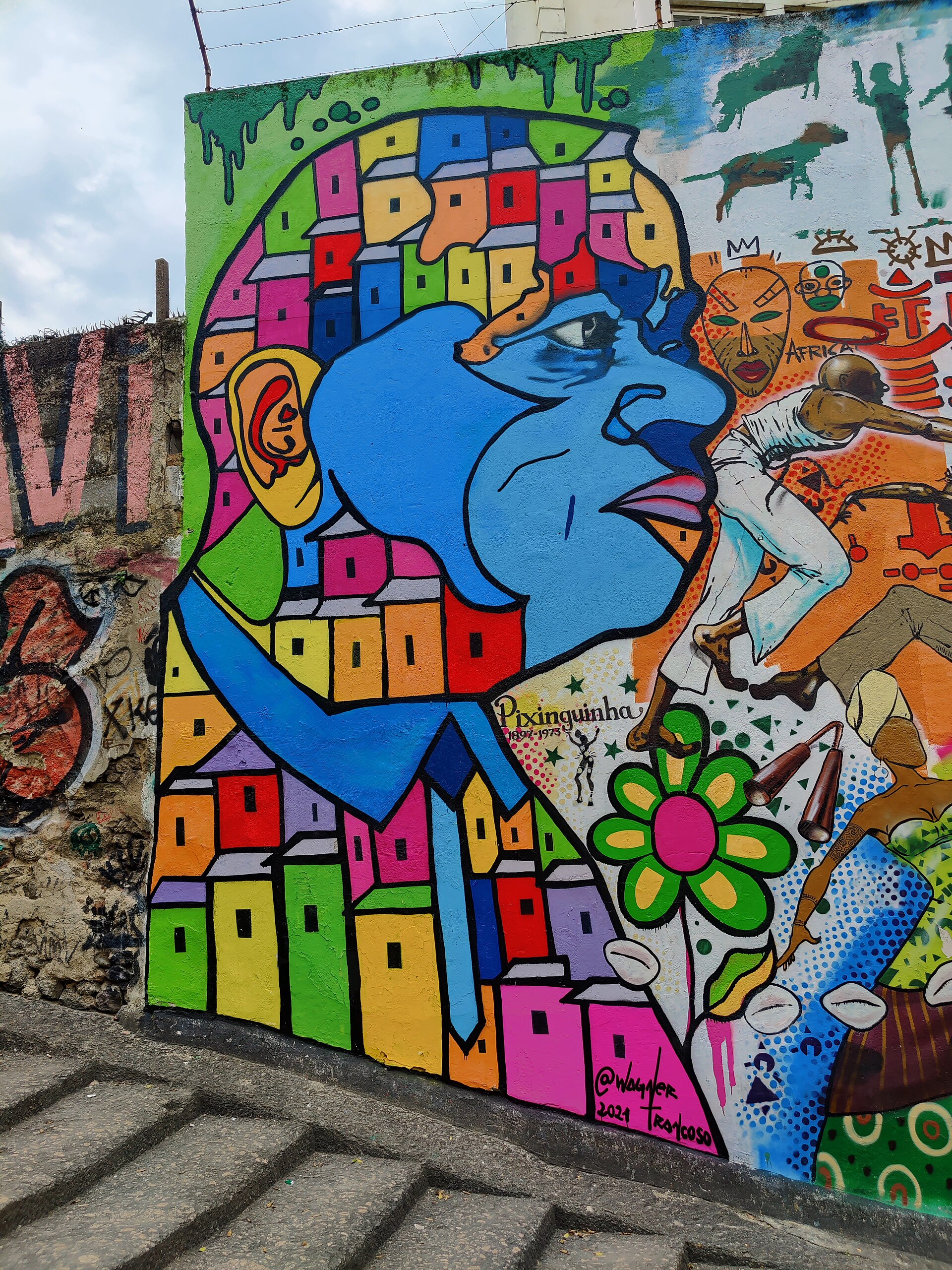
Once a neglected docklands, this stretch of the port was overhauled for the 2016 and is now an open-air gallery of massive street-art murals. The standout is the 3,000-square-metre mural by on the side of a warehouse — a kaleidoscopic tribute to the world's cultures that holds the Guinness record for largest street-art mural. The wide pedestrian boulevard runs alongside the bay, and on a Saturday afternoon it fills with families, skateboarders, and food carts.
's futuristic white structure juts out over the water like a spaceship docked at the pier, and inside the exhibitions are built around the idea of possible futures — climate, technology, and human society explored through immersive installations that feel more like an art experience than a science museum. The building itself is the real draw: the long cantilevered roof and the reflecting pools around it create a sense of floating above the bay, and the sunset light through the glass ribs is spectacular. Give yourself a solid hour and a half to move through the main galleries.
Museu do Amanhã · Book onlineGetYourGuideThe café on the museum's mezzanine has floor-to-ceiling windows looking straight across the bay to — it is a good spot to sit with a coffee without buying a full ticket if you would rather just take in the architecture and the view.
Opened in 1894, the is a fever dream of Belgian mirrors, jacaranda-wood cabinets, and stained glass — it feels less like a café and more like a Viennese opera house that happens to serve pastéis de nata. The afternoon crowd is a mix of elderly regulars reading the paper and tourists craning their necks at the ceiling. Order a cafezinho and a pastel de nata at the standing balcony on the mezzanine level — it is the best spot to take in the room without the table-service wait.
Confeitaria Colombo · TicketsGetYourGuideThe ground-floor salon is the one everyone photographs, but the mezzanine balcony has a faster counter-service line and the same view over the chandeliers — locals who just want a quick coffee and a pastry head straight upstairs.
Lapa has been the city's nightlife and counterculture hub since the early 20th century, and it still feels slightly unpolished in the best way — samba bars spill onto the sidewalks, the streets are lined with faded colonial townhouses, and the sound of live music drifts out of doorways long before dark. The neighbourhood's centrepiece is the , a towering white aqueduct built in the 18th century that now carries the Santa Teresa tram across the valley.
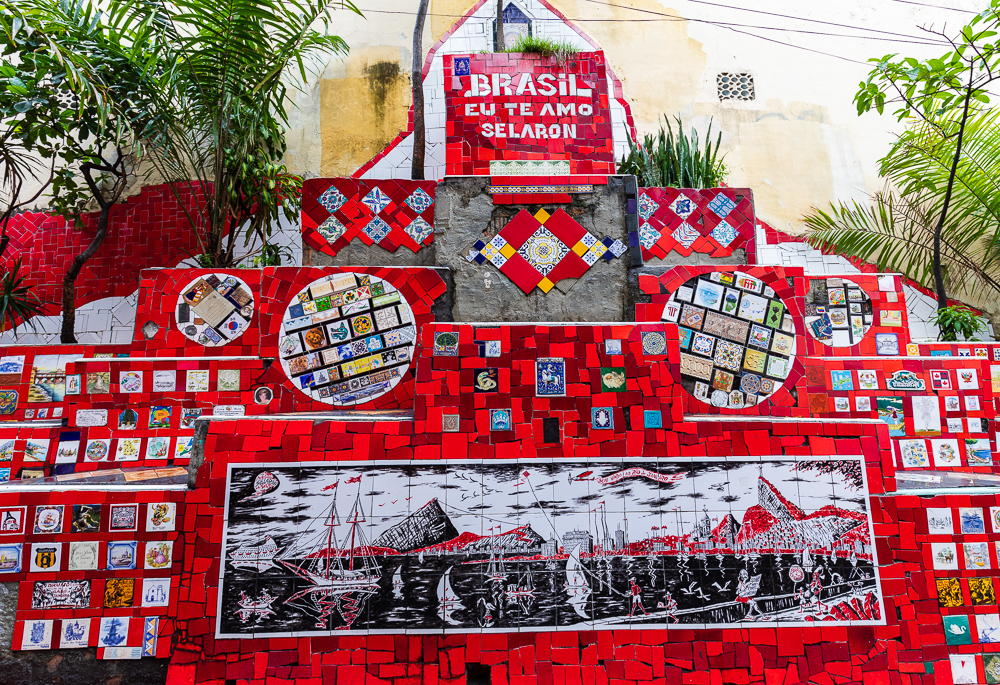
The Chilean artist spent over twenty years covering these 215 steps in a patchwork of more than 2,000 tiles collected from over 60 countries — the result is a dizzying, ever-changing mosaic that climbs from Lapa up toward Santa Teresa. Every few months Selarón would swap out sections, so the steps never looked the same twice, and after his death in 2013 the local community has kept adding tiles. The best light for photos is late afternoon, when the sun angles down the staircase and the red tiles glow.
Escadaria Selarón · TicketsViatorBuilt in 1723 to carry water from the into the city, the is a double-tiered Roman-style aqueduct that now serves as a bridge for the bright yellow Santa Teresa tram. Standing beneath its 42 arches in the late afternoon, with the tram rattling overhead and samba drifting from a nearby bar, is one of those moments that feels unmistakably Rio. The square in front fills up with street vendors and musicians as the evening starts.
Arcos da Lapa · Book onlineGetYourGuideThe streets around Lapa twist unpredictably, and the best samba bars are often tucked down alleys with no sign — pulling up a live map as we walk from the toward the keeps the route clear without stopping to ask.
Get an eSIMAiralois a no-frills neighbourhood boteco that has been serving cold beer and fresh seafood to locals since the 1930s — its real magic is the ritual of grabbing a drink at the counter and then crossing the street to sit on the low seawall with your glass, watching the boats bob in the bay as the sun drops behind the Dois Irmãos peaks. The pastéis de camarão are the thing to order — crisp, hot, and stuffed with shrimp. Locals have been doing this exact sunset routine here for decades, and on a Saturday evening the seawall fills up with a cross-section of the whole city.
Grab your drink inside at the counter first, then cross the street to the seawall — the bar staff are used to it and will hand you everything in plastic cups.
The cable car rises in two stages — first to Morro da Urca, a lower peak with a restaurant and wide terraces, and then up to the summit of itself, a sheer granite dome that juts 396 metres straight out of the water. The final ascent is the moment that sticks: the city spreads out below in every direction, curves away to the south, and the lights of blink on across the bay. Arriving in the last hour before closing means smaller crowds and the full transition from dusk to dark over the water. The summit can be windy even on warm evenings, so bring a light layer.
Sugarloaf & Urca Mountain: Skip… · TicketsTiqetsThe last cable car up departs about an hour before closing — aiming for the 20:14 slot means we ride up in the final daylight and watch the city transition to night from the summit. The terraces on Morro da Urca, the midway station, have the best angle back toward itself for photos.
The neighbourhood is quiet and residential, and there is a luggage-storage point near the cable-car station — if we have been carrying a daypack since the morning, leaving it here before the ascent means hands-free on the summit terraces and no juggling bags on the cable car.
Store your bagsRadical Storage
 makes a personal plan in one tap. Tune it by mood, diet, time, budget, squad — and drop in your own places. Works in 65,000+ cities. It learns what you like, so every next plan fits better. Stop Searching. Start going.
Sources give mixed signals about this spot — we recommend confirming before visiting.
Tap outside to close
Tap outside to close
 squad
squad like
like