
📍 8 stops · ⏱ ~7.5 h

This is a day for falling in love with Rio's soul, not its postcard. We'll wind through the cobbled hills of Santa Teresa — an old-world district of artists' studios, crumbling mansions, and tiny bars — before descending the mosaic steps into the bohemian hum of Lapa. It's a walk that layers art, history, and the city's best views into one long, unhurried Saturday.
Want your own personalized plan for free?
Perched on a hill above the city, feels like a separate town. Its steep, narrow streets are lined with colonial houses, many now home to ateliers and independent galleries. The old tram still rattles over the on its way up, and the air carries a mix of tropical greenery and the faint sound of samba drifting from a corner bar. This is where Rio's artists and writers have always come to breathe.
Tucked into a quiet street, this former home of art collector Raymundo Ottoni de Castro Maya holds one of Brazil's finest private collections. Inside, you'll find works by , , and , displayed in rooms that still feel lived-in rather than sterile. The real surprise is the sloping garden out back, where the city suddenly drops away and you're standing in tropical calm with a view straight across to the bay.
Museu da Chácara do Céu · Book onlineGetYourGuide Things to do nearby Rio de Janeiro: Exploring the Iconic Downtown Architecture of the Wonderful City
WeGoTrip
from €9
Rio de Janeiro: Exploring the Iconic Downtown Architecture of the Wonderful City
WeGoTrip
from €9
After the last gallery, push through the glass doors at the back. The garden is small but the sightline across the bay is one of the quietest, most unexpected views in the city — no queues, no selfie sticks.
A working artist's studio that opens its doors to visitors, 's atelier is a one-room glimpse into 's living creative scene. The walls are dense with canvases — bold, colourful takes on Rio's landscapes and street life — and the artist himself is often there, brush in hand, happy to talk about his process. It's the kind of unpolished, personal art stop that feels a world away from a white-cube gallery.
The beating heart of 's food scene, has been packing in locals and visitors for decades with its no-nonsense Minas Gerais cooking. The feijoada is the star — a rich, slow-cooked black bean stew with pork, served with rice, collard greens, and farofa — but the pastéis and ice-cold chopp are just as much part of the ritual. Come early or be prepared to wait; the buzz is part of the experience.
The kitchen doesn't take reservations and the lunch rush is real. Aim to arrive right at opening or after 14:00 if you want a table without a wait — otherwise, grab a caipirinha from the bar and soak in the chaos.
The main square of is where the neighbourhood comes to sit, chat, and watch the world go by. The historic bondinho tram terminates here, and the surrounding streets are lined with small bars, art shops, and the kind of crumbling colonial facades that give the area its faded charm. On a Saturday afternoon, it's a relaxed, lived-in scene — families, artists, and a few tourists all sharing the same benches.
A cheerful, yellow-walled café on the corner of the , serves northeastern Brazilian comfort food alongside strong coffee and fresh juices. The tapioca crepes — stuffed with cheese, sun-dried meat, or banana and cinnamon — are the thing to order, and the outdoor tables give you a front-row seat to the square's slow afternoon rhythm. It's unpretentious, friendly, and deeply local.
The shell of a grand 19th-century mansion, now a free cultural centre and one of Rio's most striking viewpoints. The building's bones — bare brick walls, iron staircases, open sky where the roof used to be — frame a panoramic view that sweeps from Sugarloaf to the bay. There's often a small art exhibition inside, and a café on the ground floor. Climb to the top terrace and you'll understand why this place has become a favourite local escape.
Parque das Ruínas · Book onlineGetYourGuideThe upper terrace faces west — if you time it right, the late-afternoon light turns the whole bay golden. It's the kind of spot where you linger longer than you planned.
A tiny, unmarked lookout tucked behind a bend in the road, the 'Wet Rat Viewpoint' is a local secret with one of the best straight-on views of . There's no ticket booth, no crowd — just a railing and the city spread out below. The name is pure Carioca humour, and the scene is pure Rio.
Leaving 's heights, the walk down to is a journey through Rio's layers. The quiet, leafy lanes give way to steeper streets, then suddenly you're at the top of the , looking down a cascade of coloured tiles into one of the city's most vibrant neighbourhoods. The shift in atmosphere is immediate — from residential calm to the pulsing, music-filled streets of Rio's nightlife heart.
The 215 steps that Chilean artist spent over 20 years covering in a kaleidoscope of tiles from around the world. More than 2,000 tiles — many sent by visitors — form a living artwork that connects the bohemian hilltop to the samba-filled streets of below. It's one of Rio's most photographed spots, but walking it slowly, noticing the individual tiles and the story they tell, still feels like discovering something personal.
Escadaria Selarón · Book onlineGetYourGuide's winding lanes can disorient even a local after a few caipirinhas. Having a data connection lets you keep the walking route on screen as you weave between the ateliers and the lookout points — no wrong turns, no missed views.
Get an eSIMAiraloIf you're carrying luggage from an early flight, stash it near the end before you head up into . The cobbled hills are steep and the ateliers have narrow doorways — you'll enjoy the whole day more with your hands free.
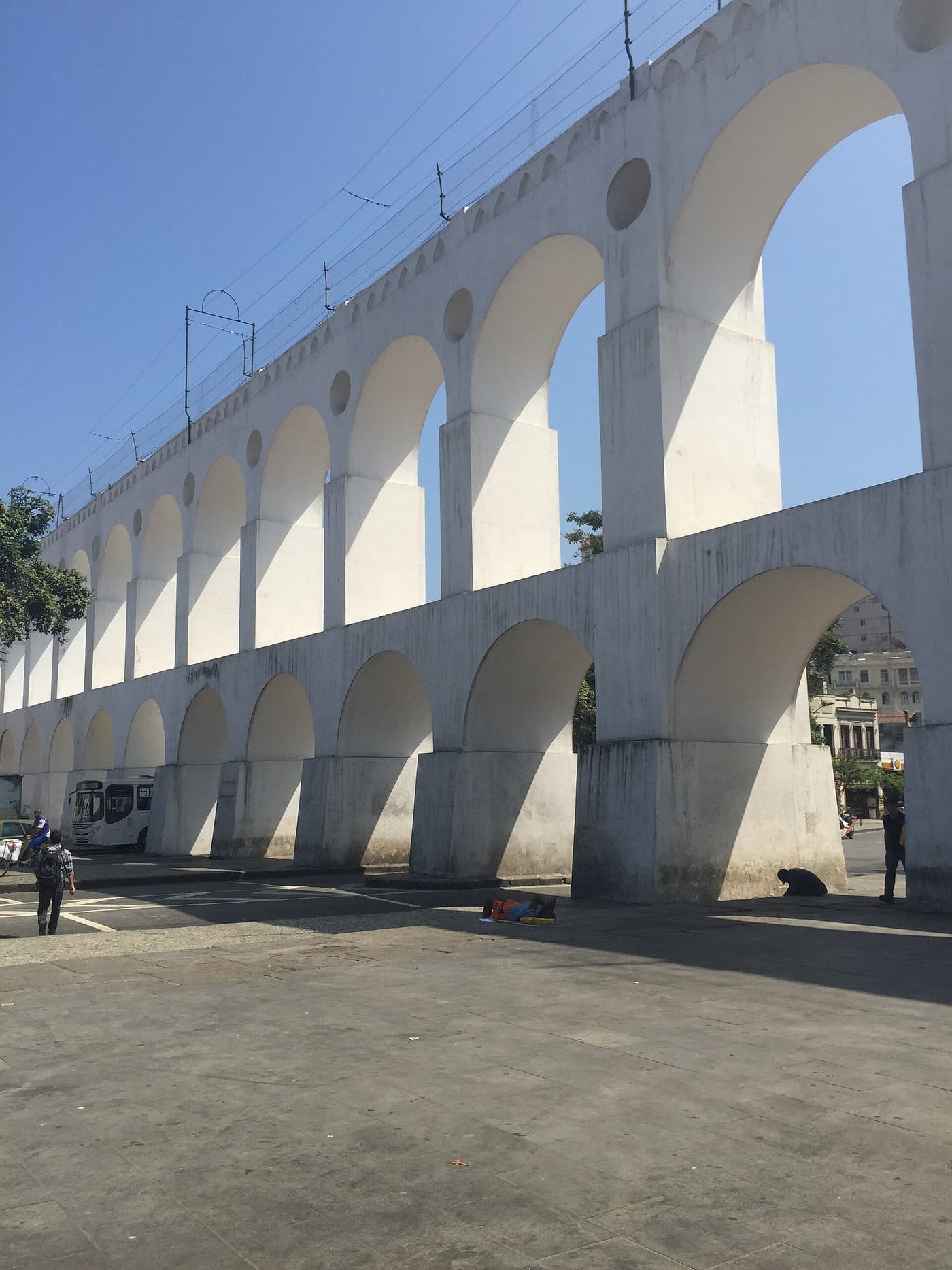
Store your bagsRadical StorageYou're now at the doorstep of Rio's most famous nightlife district. The are a two-minute walk away, and the streets around here fill with samba, forró, and cold beer as the evening goes on.
 makes a personal plan in one tap. Tune it by mood, diet, time, budget, squad — and drop in your own places. Works in 65,000+ cities. It learns what you like, so every next plan fits better. Stop Searching. Start going.
Sources give mixed signals about this spot — we recommend confirming before visiting.
Tap outside to close
Tap outside to close


 squad
squad like
like