
📍 8 stops · ⏱ ~7 h

A first-timer's walk through Bariloche's civic heart and its most storied streets, from the stone-and-timber square that anchors the city to the cathedral with its Patagonian stained glass, ending by the lake where the afternoon light hits the water. This is the day that shows why the city feels part alpine refuge, part Argentine mountain town — compact, walkable, and full of small surprises in between the landmarks.
Want your own personalized plan for free?
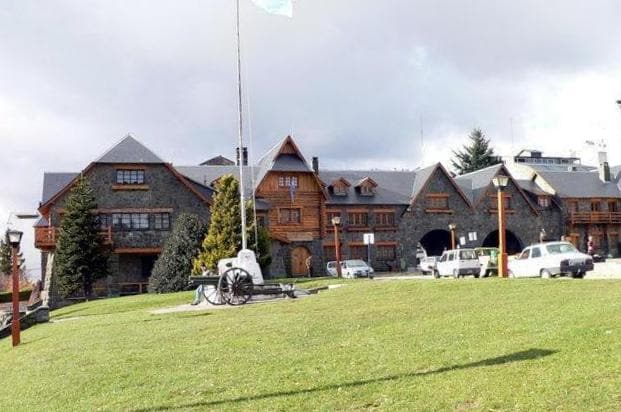
The is the postcard image of Bariloche, and it earns that status. Built in the 1940s, the complex wraps three sides of a sloping plaza with buildings of local green stone and heavy timber, their steep roofs and galleries borrowed straight from alpine architecture. The fourth side opens toward the lake, so the whole square feels like a stage with Nahuel Huapi as its backdrop. Mornings here are quiet — a few locals crossing the plaza, the sound of boots on stone — and the scale is smaller and more intimate than the photos suggest. The stonework alone is worth a pause: the masons used a local andesite that catches the morning light with a faint green-grey shimmer.
The plaza is the city's living room, built in 1940 under a national plan to give Bariloche a civic face. The three buildings — the municipal hall, the police station, and the former post office — frame a sloping square that opens to the lake, and the whole thing was designed by Ernesto de Estrada in a style that mixes Patagonian stone with Central European alpine motifs. The clock tower on the central building chimes at noon, and the wooden galleries on the upper floors are a good place to stand and watch the square wake up.
Centro Cívico · Book onlineGetYourGuideThe clock mechanism was imported from Switzerland in the 1940s and still runs on its original gears. If you're in the square at noon, the chime sequence plays a few bars of a Patagonian folk tune — a small detail most visitors miss because they're already walking away.
Just off the main plaza, the Feria Artesanal sets up in a small covered arcade — a permanent market of wooden stalls where local craftspeople sell leatherwork, knitted wool, mate gourds, and silver jewelry. The knitwear here is genuinely local: the wool comes from Patagonian sheep, and many of the weavers are from communities in the surrounding valleys. It's a good place to see what regional craft looks like when it's not made for an airport gift shop.
The stalls are run by the artisans themselves, which means you can ask about the materials and the process directly — the leatherworker who stamps belts by hand, the silversmith who casts -inspired pendants. Prices are fair, and the quality is a clear step above the souvenir shops on Mitre Street. Even if you're not buying, the arcade is a warm, wood-scented break from the plaza.
Housed in the eastern wing of the Civic Center, this museum tells the story of Patagonia from its geological formation through its Indigenous cultures and into the colonial period. The collection is strongest on natural history — there are well-preserved fossils of the giant sloths and sabre-toothed cats that once roamed the region, and a room of taxidermy that includes condors, pumas, and the tiny pudú deer. The cultural anthropology section covers Mapuche and Tehuelche life with textiles, tools, and a reconstructed ruca (traditional hut). The museum is named for , the 19th-century explorer who mapped much of Patagonia and donated the land that became .
Start in the paleontology hall on the ground floor — the giant ground sloth skeleton is the museum's star, and the room is usually empty first thing.
A small, independent café on the main commercial strip that takes its coffee seriously. The beans are sourced from small Argentine and Colombian producers and roasted in-house, and the baristas pull a properly short, strong espresso — the kind that stands up to the Patagonian cold outside. The food menu is short and fresh: sandwiches on crusty bread, salads, and a few pastries baked each morning. The room is narrow and warm, with a handful of tables by the window where you can watch Mitre Street's morning pace pick up.
Locals order the cortado — an espresso cut with a small amount of warm milk — and a medialuna (the Argentine croissant, slightly sweeter and denser than the French version). The combination is a mid-morning ritual here, and this café does both well.
Calle Mitre is the city's commercial spine, running east-west through the center with the lake at one end and the mountains rising at the other. The street is lined with chocolate shops — Bariloche is Argentina's chocolate capital, a legacy of mid-century European immigration — and the facades are a mix of alpine chalet and mid-century Argentine stonework. In the afternoon, the sidewalks fill with a mix of tourists and locals running errands, and the chocolate shops hand out samples of their latest batches. The smell of roasting cocoa drifts out of doorways, and the window displays are elaborate, almost theatrical.
The street is worth walking for its own sake — the architecture alone tells the story of Bariloche's mid-century growth — but the chocolate shops are the main event. The big names are Mamuschka and Rapanui, both local institutions with elaborate displays and free samples, but the smaller shops further east often have more interesting single-origin bars and less crowd. The handicraft stores between the chocolate shops sell mate sets, leather goods, and wool ponchos, and the quality varies widely — the best stuff is in the smaller shops, not the big storefronts.
Look for the single-origin bars made with Patagonian berries — calafate and sauco. They're tart, dark, and nothing like the milk-chocolate slabs in the tourist boxes.
The cathedral sits on a small rise just back from the lake, its single spire visible from most of the city center. Built between 1944 and 1947, it's a neo-Gothic structure of local stone with a surprisingly light interior — the stained-glass windows are the reason to come. Instead of biblical scenes, they depict the history of Patagonia: communities, the Jesuit missions, the arrival of the first European settlers, and the landscape itself. The effect is a church that feels rooted in this specific place, not imported from Europe.
The interior is quiet and cool, with the Patagonian-history windows casting colored light across the stone floor. The window on the left as you enter shows the people and the region's heritage; the one on the right depicts the Jesuit missions and the colonial era. The altar is simple, and the wooden pews are worn smooth by decades of use. The cathedral is still an active parish, so there may be a service or a few locals praying — it's a living space, not a museum.
The stained-glass windows were designed by an Argentine artist who spent months traveling through Patagonia sketching the landscapes and communities before creating the designs. The figures in the windows are based on real people he met — a rare instance of representation in Argentine church art of that era.
The is one of Bariloche's classic lakeside hotels, built in the alpine-lodge style that defines the city's architecture. The lobby has a large stone fireplace and heavy timber beams, and the bar on the ground floor serves coffee and drinks with a view of through floor-to-ceiling windows. It's a good place to sit for a moment and take in the lake — the hotel is a landmark in its own right, and the public spaces are open to non-guests.
The armchairs by the far-right window have the clearest view of the lake and the mountains beyond. The bar makes a decent submarino — hot milk with a bar of chocolate dropped in to melt — which feels right on a cold afternoon.
El Barco is a small café with a nautical theme — the walls are hung with old maritime maps and ship wheels, and the room feels like the cabin of a wooden boat. The coffee is excellent, the pastries are baked on-site, and the whole place has the unhurried, slightly tucked-away feel of a spot that locals prefer. It sits a block back from the lake, so it's quieter than the cafés on the main drag, and the windows look out onto a residential street where the afternoon light filters through the trees.
The pastel de membrillo — a crumbly pastry filled with quince paste — is the house specialty and sells out by late afternoon.
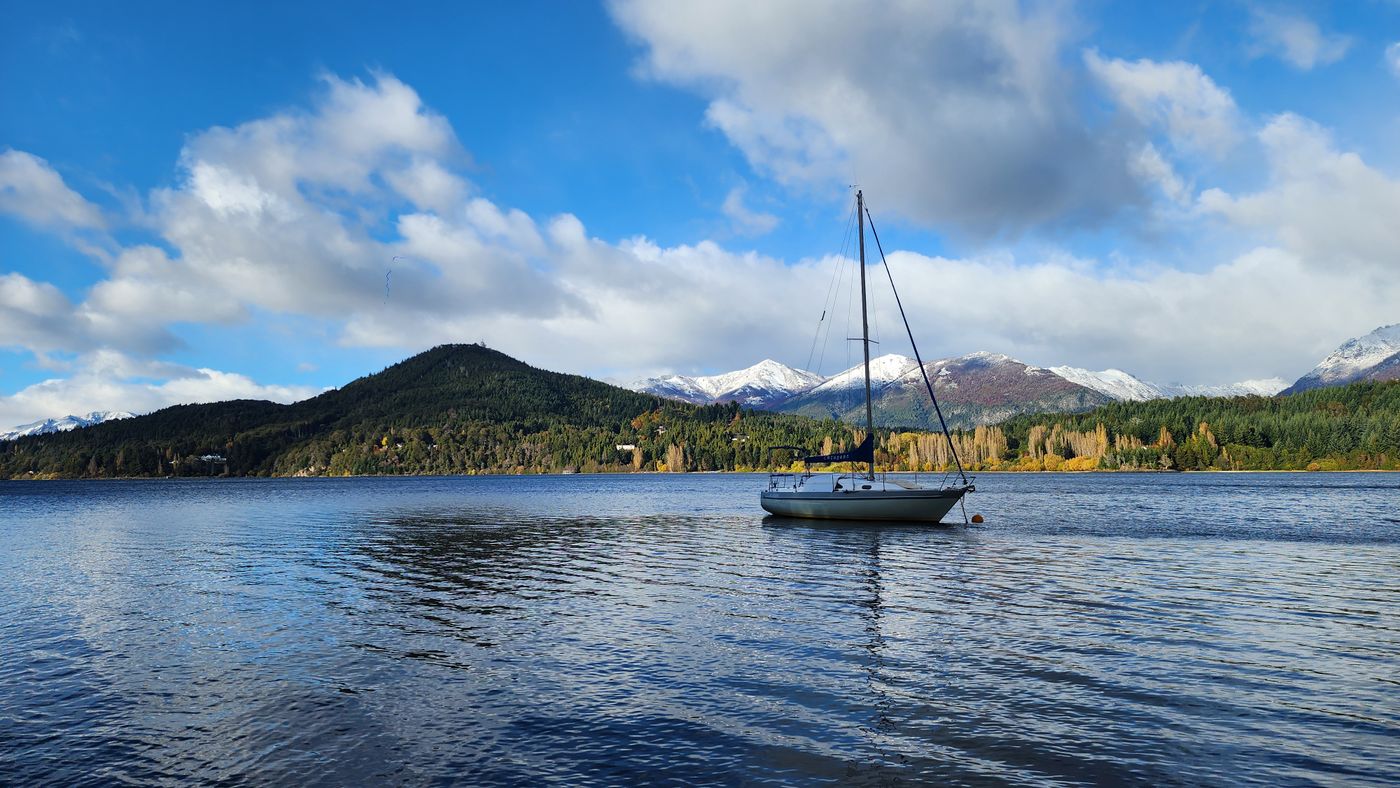
The lakeshore path between the and El Barco winds past a small marina and a few benches with unobstructed views of the water. If you want to pull up the route back to your hotel or find a dinner spot, this is the stretch where the signal is steady and the scenery makes even a phone screen feel like part of the day.
Get an eSIMAiraloIf you arrived with a daypack or a small bag, the lockers at the bus terminal are a practical drop-off before the lakeside walk — the path is flat but long, and doing it without a bag on your shoulder makes the last stretch feel like a real evening paseo instead of a commute.
Store your bagsRadical Storage Bariloche's food scene: breakfast beer to lakeside chocolate
 Smoked meats, lakeside chocolate, and a concert to close the day
 Bariloche's civic heart and lakeside soul: a first-timer's day through history, chocolate, and Nahuel Huapi views
 Bariloche's alpine soul: Civic Center, Patagonian history, chocolate, and the Circuito Chico panorama
 makes a personal plan in one tap. Tune it by mood, diet, time, budget, squad — and drop in your own places. Works in 65,000+ cities. It learns what you like, so every next plan fits better. Stop Searching. Start going.
Sources give mixed signals about this spot — we recommend confirming before visiting.
Tap outside to close
Tap outside to close
 squad
squad like
like